Official channel of the Embassy of Russia in Ethiopia containing up-to-date information about Russian politics
Subscribers3.1K +0 24h
Reach per post (ERR)10.5%326 avg views
Posting3.2/daylast 7 hours ago
Reactions per 1K views6.7👍 ❤ 💯
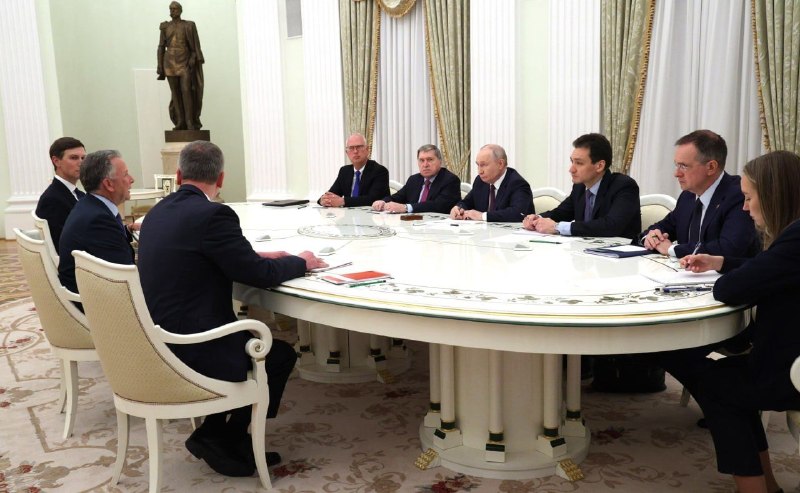
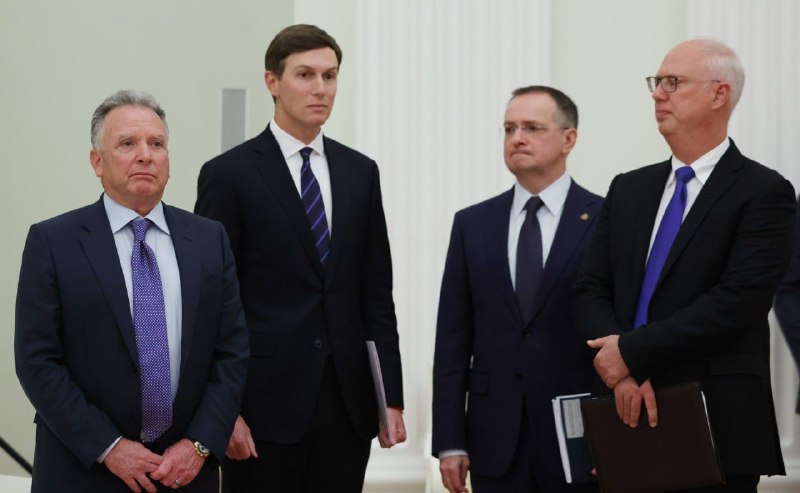
🎙 Comment by Aide to the President of Russia Yury Ushakov following a meeting between Vladimir Putin, US President’s Special Envoy Steve Witkoff and Jared Kushner (November 12, 2026)
💬 Yury Ushakov: Good evening, friends.
All of you are certainly aware that President of Russia Vladimir Putin received US President’s Special Envoy Steve Witkoff and Jared Kushner today.
The conversation was very substantive, constructive, frank and productive – just like all their previous conversations.
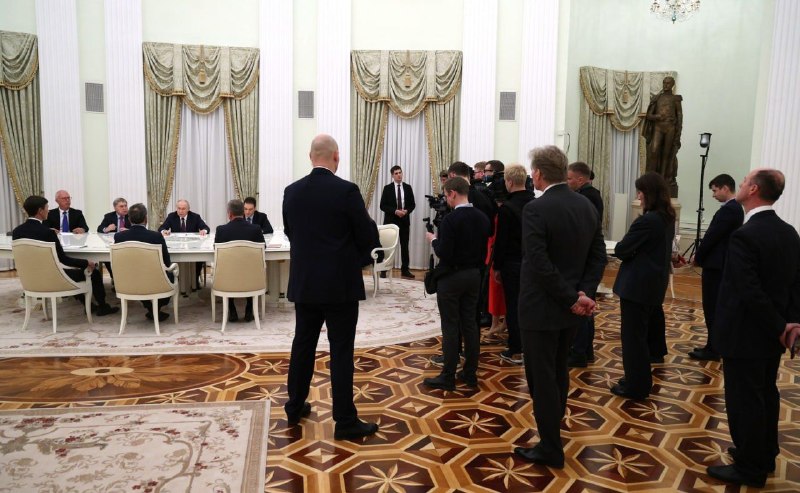
At the outset of the meeting, the Russian President made several important statements in the presence of the press, setting the tone for the discussion that followed.
Notably, the American negotiators actively supported the Russian President’s proposal to apply the approach used in the successful humanitarian operation in Aleshki to another city beyond the line of contact, namely, Konstantinovka. <...>
👉 We are ready to begin demining operations immediately.
***
The President of Russia has once again supported the American side’s proposal to move towards resolving security issues for both Russia and Ukraine as part of efforts to shape a future post-conflict system of European security. <...>
The President recalled our vision of the key pillars of the architecture of indivisible security, which we presented back in 2021 in the form of draft agreements with the United States and NATO on security guarantees.
📄 These include:
• the non-expansion of the NATO bloc,
• the non-deployment of threatening weapons systems near Russia’s borders,
• a return to the configuration of the alliance’s forces as it stood at the time the Russia-NATO Founding Act was signed.
To this list, which is not limited to the points I have outlined, we would like to add certain new considerations of our own, based on the lessons that we cannot – simply cannot – fail to draw from the present situation, in which the collective West has taken up arms against us, making no secret of its desire to save the Kiev regime and to inflict a strategic defeat on Russia.
For our part, the position of the Europeans has been comprehensively outlined. They are striving by every means possible to join the negotiations, but, as our President has said, they must decide whether they want peace or the continuation of the war.
☝️ So far, all their practical actions point precisely to the latter.
***
In the course of today’s negotiations, the behaviour of the head of the Kiev regime was also discussed – namely, the “friendly greetings” he publicly extends to the President of the United States.
It was also noted that in Kiev they do not want to end the war, because they would immediately have to call general elections, and no one wants to lose power.
Our President did not overlook the fact that the current American administration is working very insistently and persistently to achieve a genuinely lasting settlement of the Ukrainian conflict. <...>
Both we and the American side see great value in the upcoming trilateral summit in Shenzhen, which our Chinese hosts are organising.
During the talks, Steve Witkoff and Jared Kushner gave a detailed account of their assessments of the trilateral contacts that took place in Abu Dhabi on November 10–11.
Both we and the Americans regard those discussions and contacts as constructive and productive. It was agreed that this negotiation process and this track of talks will continue.
In particular, support was expressed for an initiative discussed in Abu Dhabi to carry out another prisoner exchange, which would likely be the largest to date. The parameters of this exchange are currently being finalised.
***
Following these in-depth discussions at the Kremlin, the American negotiators have departed for Dublin, where they are due to meet with Zelensky and representatives of various European capitals.
We hope that the signals from Moscow will be conveyed to them with the utmost care.
Read in full
🎙 Opening remarks by President of Russia Vladimir Putin at a meeting with US Presidential Special Envoy Steve Witkoff and entrepreneur Jared Kushner (Moscow, November 12, 2026)
💬 Vladimir Putin: First of all, I would like to thank you and ask you to convey my thanks to President Trump for arranging our contacts with the Ukrainian side.
I know we have made progress on at least one front – the humanitarian one. There have been POW exchanges, and another major step in this direction is now taking shape.
I would also ask you to convey my thanks to the First Lady of the US Melania Trump for her active role in addressing the humanitarian situation in and around the town of Alyoshki in the Kherson Region.
We fully appreciate that this would have been impossible without the support of President Trump’s entire team, including the State Department, the Department of War and other agencies, and without your personal involvement.
There was also a suggestion that we could continue this work with the involvement of representatives of the human rights commissioners of both Russia and Ukraine.
***
❗️ As for how long peace should last and how sound and secure it should be, we too would like it to last forever.
We know that the two sides see territorial issues differently. What matters more to us is the people who live there – their traditions, their culture and their right to live by their own rules and in keeping with their traditional values.
We know that the Ukrainian side is raising the issue of so-called “grey zones”. As I have already said, this will always be a bone of contention. For us, there is only one line of demarcation – the state border. That would make things perfectly clear. You are on one side and we are on the other.
As soon as we get drawn into discussions about “grey zones”, each side understands them differently. Disputes arise immediately, any agreement becomes shaky and there can be no lasting peace.
We still hear the Kiev authorities saying that they control this or that area, or that we do not control some other area. This could go on indefinitely. Given the weapons in use today, it is no easy matter to go there and see for oneself what is actually happening.
As I mentioned earlier, we worked well together on humanitarian issues in Alyoshki. Let us continue that work together.
There is a town in Donbass called Konstantinovka. The Ukrainian side considers it part of its strategic line of defence. Some 400-500 civilians are still there. Let us do what we did in Alyoshki. Let us invite members of the foreign press, including American journalists, as well as the Russian media. Let us entrust this work to those responsible for human rights on both sides – the Russian and Ukrainian human rights commissioners.
***
As for the Europeans, we have always been open to dialogue with Europe. We have never broken off that dialogue. It was the Europeans who broke off dialogue with Russia.
❌ We have said from the outset that the presence of any foreign troops on Ukrainian territory is absolutely unacceptable to us because we believe it threatens Russia’s security. Everyone agreed on that in principle. At any rate, that was the understanding at the talks in Istanbul, and until now no one seems to have objected.
The Europeans know this. Yet what do we hear from them? That as soon as peace is concluded, they will send troops into Ukraine. What does that mean? We have said this before. We would regard those troops as a legitimate target, which means the war would resume immediately.
It is an unusual way to put the question, but we would very much like you, gentlemen, and the US administration as a whole to work with your European allies so that they can finally make up their minds. 👉 What do they want in Ukraine – peace or war?
And we are, of course, ready to work with them.
Read in full
edited
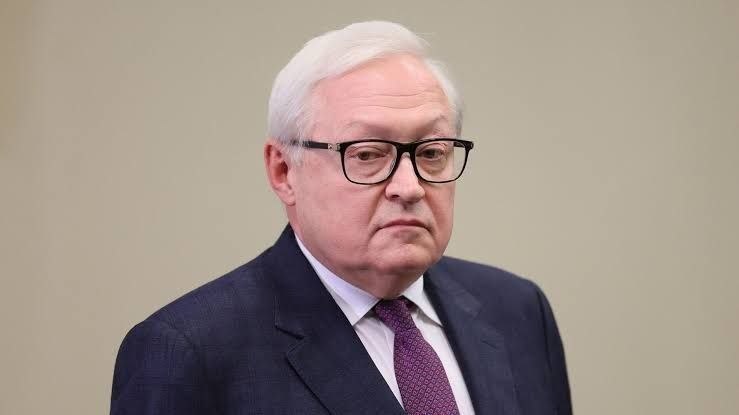
❗️Key takeaways from Russian Deputy Foreign Minister Sergey Ryabkov’s commentary to the RT TV channel:
• The results of the #AbuDhabi talks show that something functional can be built, avoiding any escalation
• The latest round of trilateral talks on #Ukraine differed from the previous ones because Moscow focused on specific security issues
• President Vladimir #Putin will convey Russia’s position to US negotiators, while the US will then have to bring its proteges in Europe to their senses
• The sides made undeniable progress following the Abu Dhabi #talks, but it is important to avoid setbacks and collapses
• There is a serious gap between the #US and #EU approaches, so European involvement in Ukraine talks could undermine useful efforts
• #Europe has a negative attitude towards US proposals on the Ukraine settlement
• The presence of the #NATO commander at the Abu Dhabi talks added professionalism to discussions about security in Europe
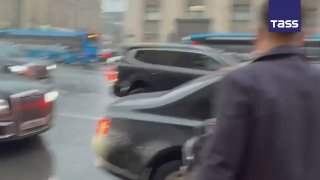
🇷🇺🇺🇸 US envoys Steve Witkoff and Jared Kushner have arrived at a hotel in Moscow ahead of their meeting with Russian President Vladimir Putin.
📸Video: Ruptly/TASS
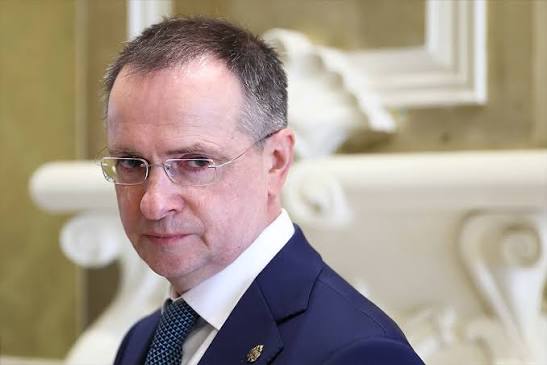
⚡️ Press briefing by the Russian delegation, led by Presidential Aide Vladimir Medinskiy, following the talks in Abu Dhabi (November 11, 2026)
💬 Vladimir Medinskiy: First of all, on behalf of the entire Russian delegation, I would like to thank the leadership of the UAE and Abu Dhabi for the excellent organisation of the trilateral talks and for creating a friendly, businesslike atmosphere.
***
Answers to media questions:
❓ Question: How did the discussion on shaping Europe’s future security architecture proceed?
💬 Vladimir Medinskiy: We believe it is right to raise the question of what will happen after the inevitable end of the conflict in Ukraine.
❗️ Russia has repeatedly raised the issue of European security architecture and the need to establish a new, comprehensive and fair security system in Europe.
We did so in 2008, when we proposed the relevant draft European Security Treaty, and in 2021, when we sent the relevant documents to NATO, the US and European countries.
But, as the saying goes, it is easier said than done.
Many years have passed, and this issue has finally gained attention, with a growing recognition that it must be addressed.
The conflict in Ukraine has shown that the entire European security system in place since Yalta and Potsdam functions very poorly. In essence, the entire body is diseased, and Ukraine is simply where the abscess has burst.
With the US Side participating, we exchanged views. We found common ground on some points, but not on others. This discussion will certainly continue.
☝️ The world needs a new, modern, renewed security system that is fair and does not come at the expense of individual countries. We will work towards that.
❓ Question: EU representatives were also in Abu Dhabi. Did you speak to them, and are any meetings with them planned?
💬 Vladimir Medinskiy: We did not speak to them.
We are not quite sure in what capacity they are here. The talks are being held in the agreed trilateral format.
As for the stance taken by the leadership of a number of European countries, they are, in essence, collectively deceiving the Ukrainian people. They finance and supply weapons to one of the warring parties. In effect, they are contributing to civilian deaths on a massive scale.
We are not quite sure what there is to discuss with them. We have not received a single peace initiative or a single concrete peace proposal from European countries. Therefore, it is unclear what there is to discuss.
They would do well to learn, for example, from the American envoys when it comes to common sense, realism and a desire to achieve peace.
❓ Question: Were humanitarian issues raised during the meeting? In previous rounds held in Turkiye and Switzerland, you managed to reach agreements with the Ukrainians on POW exchanges, for example. Was such an agreement reached in Abu Dhabi?
💬 Vladimir Medinskiy: We have agreed in principle on a new large-scale prisoner exchange. The specific details will be announced shortly.
❓ Question: How do you assess the role of Steven Witkoff and Jared Kushner, and the Trump administration more broadly, in the rounds of talks? What role do you believe they can play in reaching agreements?
💬 Vladimir Medinskiy: The US Side played an active role in the talks. The role of individuals in history matters here. President Donald Trump’s envoys are certainly sincere, effective people and, most importantly, focused on results, rather than empty talk.
What matters is not how we assess them, but how many lives will be saved through their active mediation efforts.
We are therefore very grateful to them as well.
❓ Question: Under what conditions could the Europeans become full participants in the talks? What conditions must they meet to be admitted to the negotiating table?
💬 Vladimir Medinskiy: I think as soon as their conscience awakens, they can become participants in peace talks.
Until then, as I have said, they are taking part in the collective deception of the Ukrainian people and are, in effect, complicit in civilian deaths.
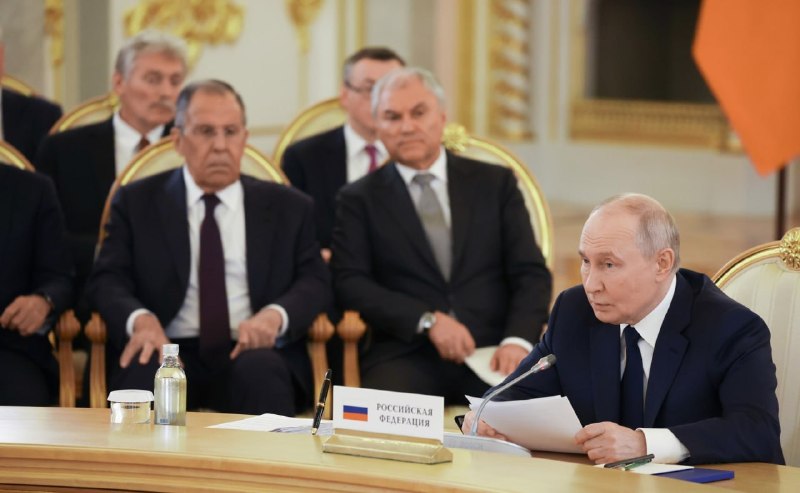
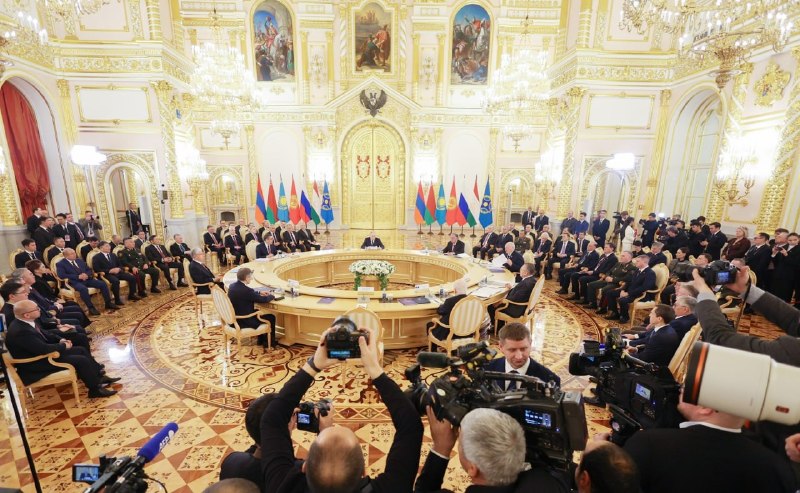
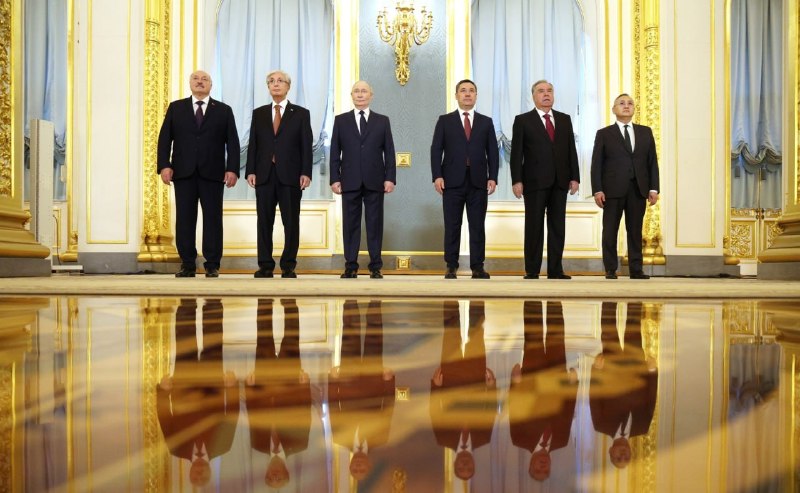
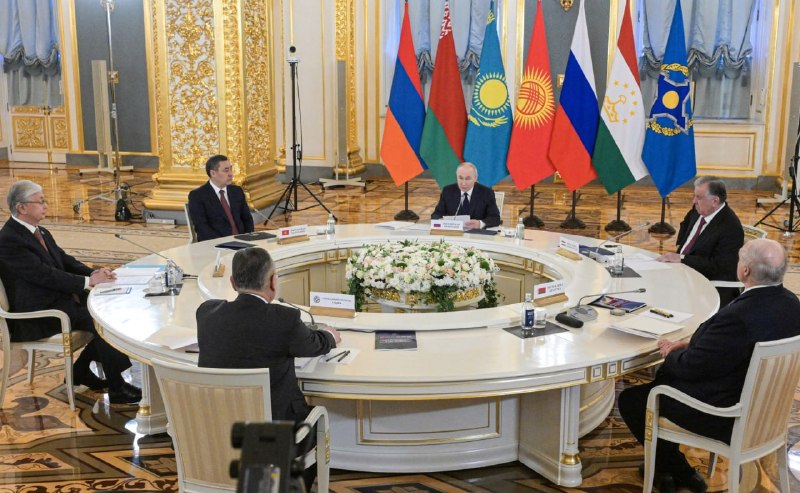
🎙 President of Russia Vladimir Putin chaired a meeting of the Collective Security Council of the Collective Security Treaty Organisation in St Andrew’s Hall of the Grand Kremlin Palace (Moscow, November 11, 2026)
A package of documents was signed following the meeting, including the Declaration of the CSTO Collective Security Council.
💬 Vladimir Putin: My colleagues and I have just held a thorough and productive exchange of views in a restricted format on pressing global and regional security issues.
We reached full mutual understanding on virtually every issue discussed. We reaffirmed our commitment to further joint efforts to counter acute challenges and threats to collective security.
I am pleased to note that Council members gave a positive assessment of the results of Russia’s CSTO chairmanship in 2026. Our chairmanship benefited from the friendly assistance and support of our colleagues across the Organisation.
🤝 Together, we held more than a hundred events across key areas of cooperation. We took coordinated steps to promote our common position on the international stage, including at the UN and other multilateral forums.
Our shared approaches to the current situation in the world and our region, and our vision of the priorities for the CSTO’s development, are reflected in the draft Declaration of the Collective Security Council, which Russia has proposed adopting at today’s meeting.
As always, considerable attention was paid to improving the operational and combat readiness of the forces and assets within the collective security system. A series of major joint exercises took place in Belarus, Kazakhstan, Tajikistan and, of course, Russia. In particular, the CSTO Collective Rapid Reaction Forces successfully held the Interaction 2026 exercise in the Chelyabinsk Region alongside the Centre-2026 strategic command post exercise.
We also continued our systematic efforts to equip our collective forces with modern weapons and equipment. I would like to stress that today we are to take important decisions on the further development of the CSTO Collective Forces. These concern, among other things, their aviation component and the formation of mobile air defence units for joint military operations.
Close operational contacts among our security agencies, law enforcement bodies and relevant services helped strengthen coordination between our countries in combating terrorism, extremism, illicit drugs, drug trafficking and illegal migration. We also closely monitored the situation in Afghanistan as part of our efforts to strengthen security along the Organisation’s external borders.
Partnership among CSTO member states in ensuring biological safety and countering the spread of dangerous infections has gained considerable momentum.
☝️ Next year, 2027, will be particularly significant for our Organisation, marking two anniversaries: 35 years since the signing of the Collective Security Treaty and 25 years since the establishment of the CSTO.
Our friends in Tajikistan, who will assume the chairmanship, therefore face a substantial and demanding task: both taking stock of our many years of cooperation and defining the strategic prospects for its further development.
Naturally, CSTO Member States will provide their colleagues in Tajikistan with all the assistance they need.
Read in full
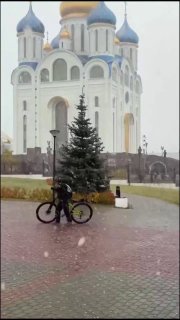
Winter has officially begun on Russia's Pacific edge. Watch Sakhalin turn white… 🌬️❄️
🎙 Russian Foreign Minister Sergey Lavrov's answers to questions from the programme “Moscow. Kremlin. Putin” (Moscow, November 11, 2026)
❓ Question: How do you assess the trilateral talks in Abu Dhabi?
💬 Sergey Lavrov: In this case, the trilateral format makes the most sense. As I understand it, the comments from all sides following the talks in Abu Dhabi were, overall, positive.
I’m leaving Zelensky out of this. He’s always playing his own games.
The negotiators themselves, though, seem to have been ready to get down to business. We’ll hear what Vladimir Medinskiy has to say when he returns with his delegation.
❓ Question: The Americans say they are coming to Moscow. A possible meeting between Vladimir Putin and Donald Trump in China is just days away. Could the talks that have just concluded help lay the groundwork for discussions between the two Presidents?
💬 Sergey Lavrov: My understanding is that, as announced, the American negotiators are coming to Moscow to brief President Vladimir Putin.
He will, of course, also receive a report from Vladimir Medinskiy’s delegation, as he regularly does. The President will decide how we proceed based on what he hears from the Americans.
The course we take will be geared towards achieving the objectives of the special military operation. The President set out those objectives in June 2024, and they have remained unchanged ever since.
viral
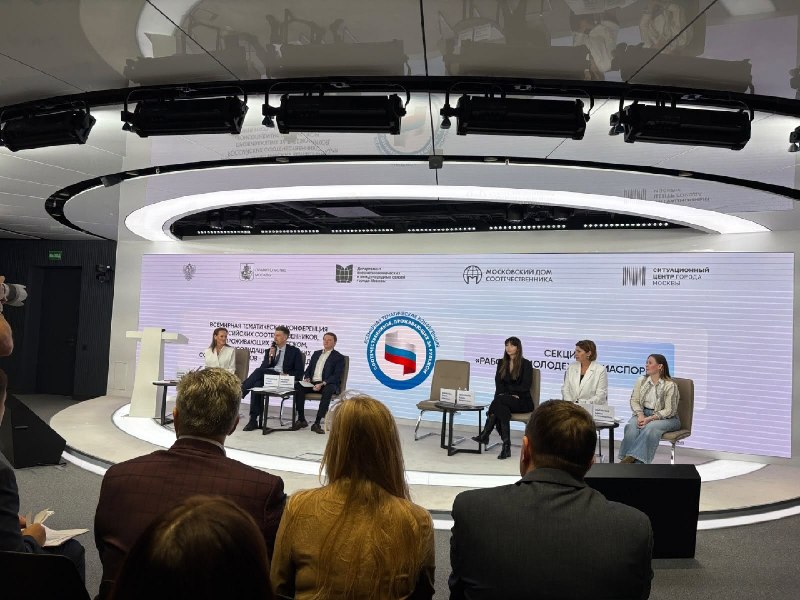
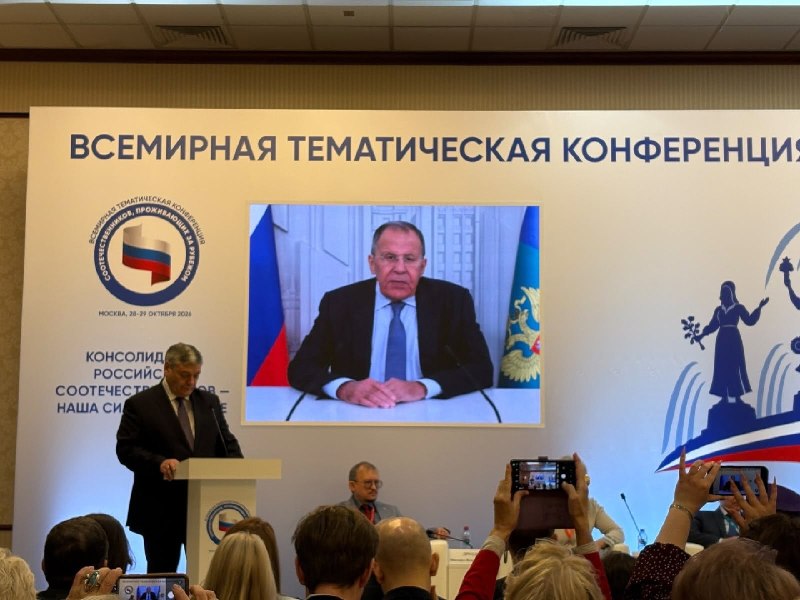
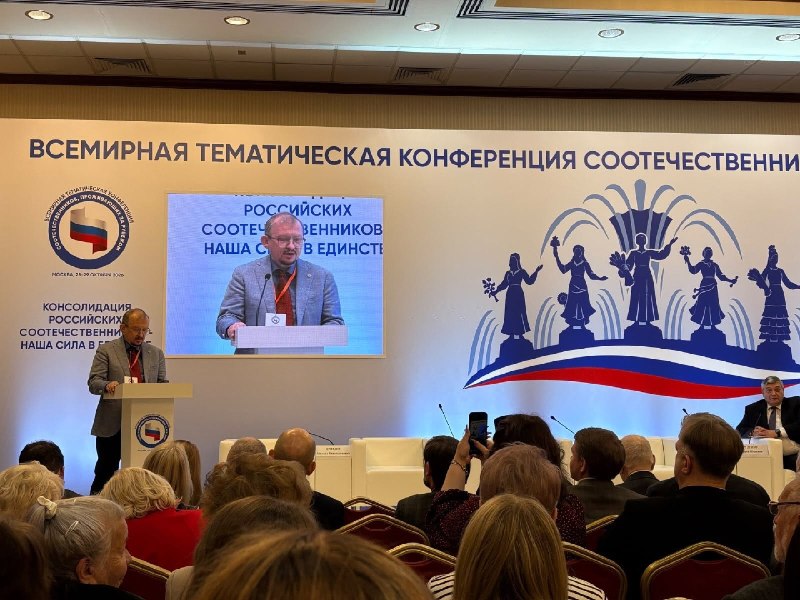
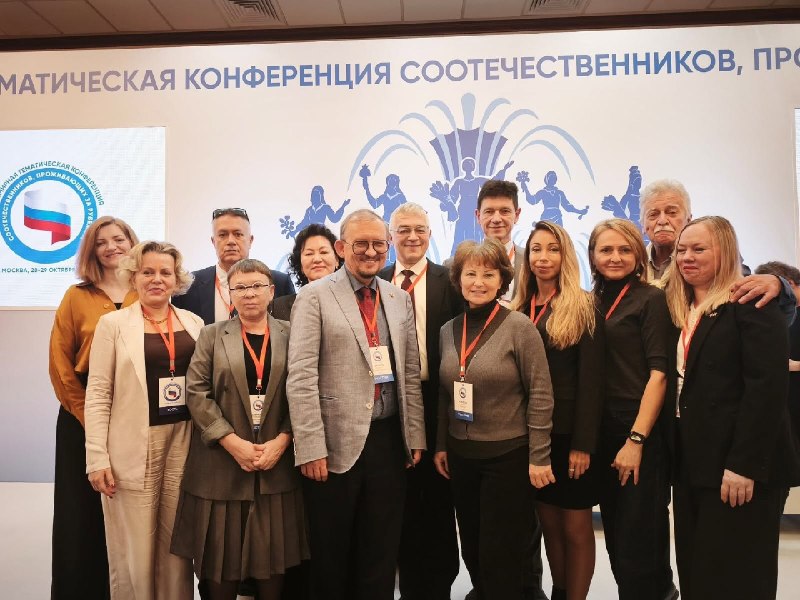
On October 28-29, 2026, Moscow hosted the World Thematic Conference of Russian Compatriots Living Abroad under the motto “Consolidation of Russian Compatriots – Our Strength Is in Unity.” It was one of the key events of the Year of Unity of the Peoples of Russia.
About 200 delegates from more than 90 countries took part, along with representatives of government bodies and religious denominations. Participants discussed initiatives of young compatriots, the preservation of the Russian language and historical memory, spiritual values, the protection of compatriots’ rights, and the state resettlement program.
The unity of compatriots around the world is our shared strength. 🌍
#Compatriots #RussianWorld #Rossotrudnichestvo #UnityYear
💬 Director of the Russian MFA Department for Multilateral Human Rights Cooperation Grigory Lukyantsev:
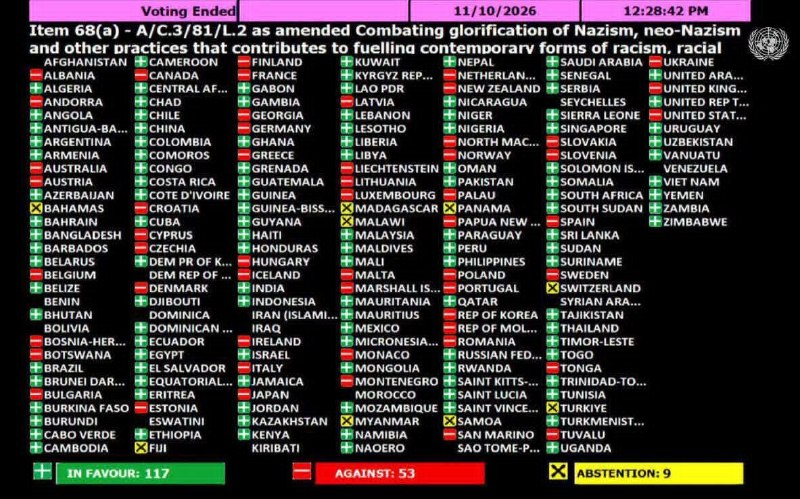
On November 10 in New York, the Third Committee of the 81st Session of the UN General Assembly approved a key Russian initiative at the UN – the resolution entitled “Combating glorification of Nazism, neo-Nazism and other practices that contribute to fuelling contemporary forms of racism, racial discrimination, xenophobia and related intolerance”.
✅ 117 votes in favour
❌ 53 votes against
🟨 9 abstentions
The resolution’s approval this year holds particular significance as we mark the 80th anniversary of the Nuremberg Tribunal’s Verdict and the 25th anniversary of the Durban Declaration and Programme of Action.
Co-sponsored by 45 countries from every region of the world, Russia’s initiative is intended to serve as an important international legal instrument for countering the falsification of history, efforts to revise the outcomes of the Second World War and attempts to whitewash the crimes of the Nazis and their collaborators.
The resolution pays particular attention to the destruction of monuments honouring those who fought Nazism and attempts to ban symbols of the Great Victory.
The resolution also stresses that ideologies asserting the superiority of one group over another on grounds of race, ethnicity or religion are unacceptable. This issue remains particularly pressing as various forms of intolerance continue to spread, including Islamophobia, Christianophobia, Afrophobia, Arabophobia, Russophobia and antisemitism.
☝️ Despite the clear importance of these issues, several Western countries once again sought to politicise the debate and replace substantive discussion of how to combat the glorification of Nazism with politically expedient accusations against Russia.
👉 The vote once again demonstrated broad support for Russia’s initiative among countries of the #GlobalMajority.
Russia will continue to call for resolute action to combat the glorification of Nazism, preserve historical memory and prevent a recurrence of the tragedy of the Second World War.
Russian Embassy Newsletter
President
💒Vladimir Putin met with Patriarch Kirill of Moscow and All Russia and Patriarch Theophilos III of Jerusalem;
Ministry of Foreign Affairs
🎙Remarks and answers to media questions by Russia’s Foreign Minister Sergey Lavrov following the G20 Foreign Ministers’ Meeting;
🔗Remarks by Russia’s Foreign Minister Sergey Lavrov at the High-Level Plenary Session of the Fourth Minsk International Conference on Eurasian Security;
💬Foreign Minister Sergey Lavrov’s answer to a media question at a joint news conference with Peru’s Foreign Minister Carlos Espa;
🔹Russian Foreign Ministry Spokeswoman Maria Zakharova's statement on the International Day to End Impunity for Crimes against Journalists;
🔹On October 30, the UN Security Council failed to extend the mandate of the UN Mission for the Referendum in Western Sahara;
***
🔹Maxim Grigoryev, the Сhairman of the International Public Tribunal on the Crimes of Ukrainian neo-Nazis, which includes representatives of civil society from more than 30 countries, continues to gather evidence and testimonies, exposing crimes committed in Starobelsk;
🔹Statement of the Delegation of the Russian Federation to UNESCO regarding publication of the Director-General’s Report on the Safety of Journalists and the Issue of Impunity;
🔹The “Crimean Gold” Exhibition Opens at the Russian House;
🔹MOSCOW: A Journey Through History, Diplomacy and Friendship From Addis Ababa to Russia: My Experience at the Third Russia-Africa Summit;
🔹On November 4, 1612, the people’s volunteer army led by Kuzma Minin and Prince Dmitry Pozharsky, liberated Moscow from Polish-Lithuanian invaders;
🔹National Unity Day Celebrations in Addis Ababa;
🔹5 surprising facts about Dagestan.
https://disk.yandex.ru/i/qfnP32rv6w3YCg
repost
THE 2026 RUSSIAN GEOGRAPHICAL SOCIETY AWARD
Grand prize 1 000 000 RUB (is currently equivalent to 1,950,000 birr)
The winner of the Award in the category Young Explorers. Children’s project receives a certificate for a tour of Russia for themselves and two accompanying persons.
Submission period: August 17, 2026–January 18, 2027
For more details on the contest rules, please visit the website
***
Премия Русского географического общества — 2026
Главный приз 1 000 000 ₽
Победитель детской Премии в номинации «Юные первооткрыватели» награждается туристической поездкой по России с двумя
сопровождающими.
Срок приема работ: 17.08.26-18.01.27
Подробнее с условиями конкурса можно ознакомиться на сайте
edited
📰On November 10, The Ethiopian Herald newspaper published an article entitled "From Rhetoric to Realpolitic: Inside the Third Russia-Africa Summit"
✍️ Read in full
Key points:
• The Third Russia–Africa Summit in Moscow has solidified an evolving geopolitical alignment, pairing continental ambitions for sovereign development with tangible economic, technological, and bilateral commitments.
• Despite an aggressive Western campaign aimed at derailing the forum through financial leverage and political pressure, the turnout surpassed previous records. Sixty-one official delegations arrived in the Russian capital, exceeding the attendance of the second summit by eight nations.
• Crucially, the Moscow summit inaugurated a historic level of engagement with Africa’s regional economic communities. Ten regional integration bodies took part, with eight executive heads present, creating an unprecedented multilateral bridge between Eurasia and the African continent.
• At a dedicated high-level session on continental integration, leaders from the African Union Commission, the African Continental Free Trade Area Secretariat, Afreximbank, the East African Community, the Intergovernmental Authority on Development, COMESA, SADC, the Arab Maghreb Union, ECCAS, and ECOWAS met with President Putin.
• Held under the banner of peace, security, and development, the summit placed economic realpolitik at the forefront of the multilateral agenda. President Putin noted that while mutual trade has reached 27 billion dollars, it remains far below potential, issuing a direct mandate to double bilateral turnover to over 50 billion dollars in the near term.
• Moscow unveiled plans to link national payment systems directly with pan-African clearing networks, while extending sanitary-epidemiologic capacity-building programs through 2029 and expanding academic quotas for African specialists.
• On the ministerial track, Foreign Minister Sergey Lavrov hosted forty-one foreign ministry delegations, including thirty-four foreign ministers, affirming shared stances on the Iran nuclear issue, Middle Eastern de-escalation, and opposition to the politicization of international legal tribunals. Reaffirming the tenet of African solutions to African problems, the ministers resolved to advance United Nations Security Council reform rooted in the Ezulwini Consensus and Sirte Declaration.
• Within this broad multilateral framework, the participation of Ethiopian Prime Minister Abiy Ahmed emerged as one of the summit's central geopolitical and economic axes. Representing both a diplomatic capital of the continent and an ascendant member of the expanded BRICS grouping, the Ethiopian leader utilized bilateral deliberations with President Putin to recalibrate ties around high-impact industrial and strategic projects
• The two Sides examined avenues for peaceful nuclear technology applications through civil-use frameworks, alongside targeted knowledge transfers in high-performance computing, artificial intelligence, and digital government administration.
• As the host nation of both the African Union and the United Nations Economic Commission for Africa, Ethiopia emphasized infrastructure interconnectivity and economic resilience across the Horn of Africa. Prime Minister Abiy and his delegation participated actively in sideline discussions, advocating for regional logistical integration and conflict mitigation mechanisms free from extra-regional intervention.
• The summit culminated in the adoption of three pillar documents: a comprehensive Political Declaration, a three-year Partnership Forum Action Plan for 2027–2029, and a landmark Declaration on Cooperation in the Civil Application of Artificial Intelligence.
• Ethiopia also secured a package of sideline agreements designed to operationalize its strategic partnership with Russia. Among them the two governments concluded agreements on media exchanges and on modernization of Russian Red Cross Society Hospital named after Dedjazmach Balcha in Addis-Ababa.
🎙 Highlights from Deputy Foreign Minister Sergey Ryabkov's remarks at the international round-table discussion "The Militarisation of Europe: What Next?" (Vienna, 9 November 2026)
• The military and political situation in Europe is deteriorating rapidly. NATO and European Union countries are pursuing an accelerated course of militarisation. Industrial production, and indeed the economy as a whole, is being geared towards war. Military expenditure is rising at an unprecedented rate.
• We are witnessing an increase in hostile and provocative Western activity in the Baltic Sea region. Our shipping is being obstructed in violation of international law. Such actions have led to a number of dangerous incidents.
• We are aware of our adversaries’ plans to blockade the Kaliningrad Region and subject it to other forms of destructive interference. It must be clear that any attempt to implement these plans would lead directly to catastrophe. We will counter any threats to Russia’s sovereignty and security by all means at our disposal.
• We are observing our adversaries’ efforts to expand their military capabilities in the northern latitudes. Particular importance is being attached to the Arctic region, where Russia is regarded as a threat and, according to their logic, must be driven out.
• Equally dismaying are the attempts by certain European elites, motivated by domestic political considerations, to "brainwash" their own citizens by perpetuating the myth of a Russian threat and the idea that war is inevitable. They have turned Russophobia into a marketable commodity and a driving force behind militarisation.
• Military unpredictability is being exacerbated by an increase in the number of provocative incidents and military exercises conducted according to scenarios directed against Russia. For example, in 2025, at least 120 exercises were held under NATO auspices, while its member states conducted over 700 national military manoeuvres.
• NATO and EU countries are deeply involved in the armed conflict in Ukraine, effectively directing it and bearing responsibility for their part in it. This is how we view the actions of those who supply Kiev with large quantities of weapons and military equipment, provide "expert assistance" on the ground, designate targets, and supply intelligence and other means intended to inflict damage on Russia.
• We note the absence of any genuine commitment on the part of a number of European governments to bringing the conflict to an end. The conflict could have been resolved as early as spring 2022 had the legitimate interests of all parties, including Russia, been considered. Instead, acting through London, the West pushed the Kiev regime to reject a reasonable settlement and chose war.
• We seek to avoid a new conflict, but not at the expense of Russia’s interests. We are convinced that, sooner or later, European capitals will come to recognise the need for dialogue based on the principles of equal and indivisible security, pragmatism and mutual consideration of interests. It will be possible to discuss the principles of peaceful coexistence within a future Eurasian security architecture with those who are prepared to do so, and who can set aside attempts to dictate terms.
⚡ Article by Foreign Minister of the Russian Federation Sergey Lavrov, The Impact of Global Economy on International Security (based on remarks at the G20 Foreign Ministers’ Meeting on October 30-31, 2026)
✍️ A meeting of G20 Foreign Ministers took place in the United States not long ago. The participants focused on the global economy and its interconnection and interdependence with international security.
I offered a number of assessments in my remarks at the meeting that I would like to share with a wider readership.
Key points:
👉 Geopolitical Context
• In an ideal world, the global economy and international security should complement each other and jointly provide a foundation for peaceful coexistence and shared prosperity. Instead, the economy is increasingly becoming an arena of confrontation, with trade wars being unleashed to suppress geopolitical competitors in the wake of hot wars.
• The objective process of the emergence of a multipolar world order is being met with outright hostility in the West. <...> Protectionist barriers, and even outright blockades, in the way of the dissemination of advanced technologies are multiplying.
• The European Union, which is turning itself into a military bloc <...> has harked back to the days of slavery and piracy and taken to openly seizing foreign vessels and stealing their cargoes. To justify this plunder, it has invented the term “shadow fleet,” which has no basis in international law.
👉 All these actions by the West are in direct violation of international law. They create uncertainty and additional costs, and undermine global economic connectivity and long-term resilience. In effect, they are dismantling the very globalisation model that the West itself created and promoted for decades as the ideal system of global economic governance, a kind of “economic end of history.”
👉 Global energy and food security
• A stable global energy system is an essential prerequisite for sustained economic growth and the adoption of innovative technologies. <...> However, the normal functioning of energy markets is being undermined by a number of factors.
• Feeling emboldened by the EU’s unconditional support, the Kiev regime has come to believe that it can act with impunity carrying out terrorist attacks against critical infrastructure.
• US President Donald Trump’s calls on Ukraine to stop fuelling the energy crisis have been ignored. ❗️
To this day, those who organised the acts of sabotage against the Nord Stream pipelines mentioned above have not been brought to justice.
• The aggression against Iran, which led to the closure of the Strait of Hormuz, was a serious destabilising factor that has dealt a severe blow to the energy sector.
• Food security is another important component of global security. <...> This year, G20 trade ministers condemned the weaponisation of food supplies 👉 What is needed now is to translate words into concrete action.
👉 Russia in the global economy: A constructive contribution despite challenges
• The illegitimate sanctions have inflicted losses running into trillions on Europe, fuelled inflation in the United States, and reduced living standards in many countries (hence the surge in protest sentiment across the European Union).
• Russia will continue to contribute to normalising global fuel and energy markets. <...> We are among the leading exporters of hydrocarbons to Asia, Africa, and Latin America.
***
We are convinced that the future lies in the democratisation of international economic relations and the restructuring of the global economy on a genuinely multipolar basis. Global markets and supply chains must be open, competitive, and inclusive, while trade and investment cooperation must be based on equality and predictability. <...>
For its part, Russia and its partners and like-minded countries, primarily within BRICS, the SCO, the EAEU, and the CIS, will continue working to advance a constructive agenda aimed at building a fairer and more prosperous world for all countries without exception.
Read in full
#Announcement
📣 Dear friends!
⚛️ On November 10, Rosatom holds the Global Atomic Quiz to mark World Science Day for Peace and Development.
This year’s topic, “One Atomic Day,” highlights the role of peaceful nuclear technologies in everyday life — from food and electricity to nuclear medicine and space exploration.
The quiz offers participants an opportunity to explore the practical applications of nuclear science and learn interesting facts about modern technologies.
🏆 The top three performers will win a trip to Russia and visit the world’s first nuclear power plant. All participants will receive an electronic certificate.
Since 2020, the Global Atomic Quiz has attracted over 111,000 participants from more than 100 countries and is available in 16 languages.
👉 More details: https://quiz.atomforyou.com/
🎙 Foreign Minister Sergey Lavrov’s answer to a media question at a joint news conference with Peru’s Foreign Minister Carlos Espa (Moscow, November 9, 2026)
❓ Question: What are your expectations for the upcoming talks in Abu Dhabi? Speaking about the talks earlier, US Secretary of State Marco Rubio said that the conflict would have to be resolved before discussions could begin on security guarantees for Ukraine and Europe. We noticed that the Russian delegation has been expanded this time to include Russia's Deputy Foreign Minister Sergey Ryabkov. Does this mean there will be a separate negotiating track?
💬 Sergey Lavrov: I heard US Secretary of State Marco Rubio’s remarks about the growing importance of security issues, both at the Abu Dhabi talks and in the broader context of the Ukraine conflict.
In fact, the first item on the agenda in Abu Dhabi is the security of Russia, Ukraine and the region as a whole. We can only welcome this approach.
Let me remind you what we did to avert what would otherwise have been inevitable. We know what plans the Kiev regime was making in late 2021 and early 2022 to resolve the Donbass issue by force. In December 2021, acting on instructions from President Vladimir Putin, we presented the US and NATO members with two draft treaties aimed at strengthening the foundations of equal and indivisible security.
Several meetings followed. A Russian interagency delegation met with our NATO counterparts. I then met in Geneva with Antony Blinken, who was US Secretary of State at the time. We explained to him in detail why it was essential to do everything in our power to put the principles of indivisible security into practice. These principles had been proclaimed loud and clear at the highest level of the OSCE, 👉yet they were being swept under the carpet.
One of them states that no organisation in the Euro-Atlantic area has the right to claim military and political dominance. NATO was doing precisely the opposite.
That principle was endorsed as far back as 1999 at the Istanbul Summit and reaffirmed in 2010 at the Astana Summit.
After the talks between the Russian and US delegations, during which we pressed these points, Antony Blinken asked to speak to me in private. He told me we would get nowhere. The US had already made its decision, he said. By then, the Americans had withdrawn from the Intermediate-Range Nuclear Forces Treaty and were preparing to deploy these missiles in various parts of the world.
☝️ Antony Blinken said the only assurance they could give us was that there might be limits on the deployment in Ukraine of intermediate- and shorter-range missiles aimed at Russia. As for a guarantee that Ukraine would stay out of NATO, he said that was out of the question. They would never make such a promise.
In other words, the administration of then US President Joe Biden could not have cared less about “European security”, particularly the security of Russia, which is our primary concern.
We can only welcome the fact that the current US negotiators, acting on instructions from President Donald Trump, have proposed putting collective security at the top of the agenda for the talks on a settlement in Ukraine.
👉 Everyone understands that the purpose of these talks is to agree on the principles to be endorsed at the conclusion of negotiations on a comprehensive settlement.
It is entirely natural that another of my deputies, Sergey Ryabkov, should join Mikhail Galuzin in the delegation. His responsibilities cover North Atlantic affairs and arms control in the broadest sense. He has also spent a considerable part of his career working on OSCE matters.
⚡️ Foreign Intelligence Service of the Russian Federation:
“Cannon fodder” for Europe’s war against Russia
The Press Bureau of the Foreign Intelligence Service of the Russian Federation (#SVR) reports that, according to information reaching the SVR, EU leaders are intensifying efforts to replenish the ranks of the Ukrainian armed forces after catastrophic losses.
Their attention has now turned to Ukrainian citizens who have found refuge in EU countries. Brussels sees the more than one million Ukrainian men living in the EU as expendable – a means of giving the European regimes’ aggression against Russia a “second wind”.
👉 The plan is to use every means available to force them back home.
The first step was the EU Council’s decision to stop granting temporary protection status to Ukrainians of conscription age as of August 2026. Without that status, their access to the benefits of Europe’s “consumer society” is severely limited.
By the end of the year, Brussels plans to make life even more difficult for Ukrainian draft evaders by making it harder for them to access financial services, find work or rent a home in Europe.
EU bureaucrats expect these measures to force many Ukrainians back home, where they will immediately be thrown into the thick of the fighting.
☝️ In its anti-Russian frenzy, Brussels gives no thought to the future of the eurozone, which desperately needs cheap Ukrainian labour amid the economic crisis, or to that of Ukraine itself, which stands on the brink of demographic catastrophe.
European estimates suggest that in ten to twenty years’ time, just over ten million people will live in the territory under Kiev’s control. Only a third of them will be able to work, putting Ukraine below the threshold for national survival.