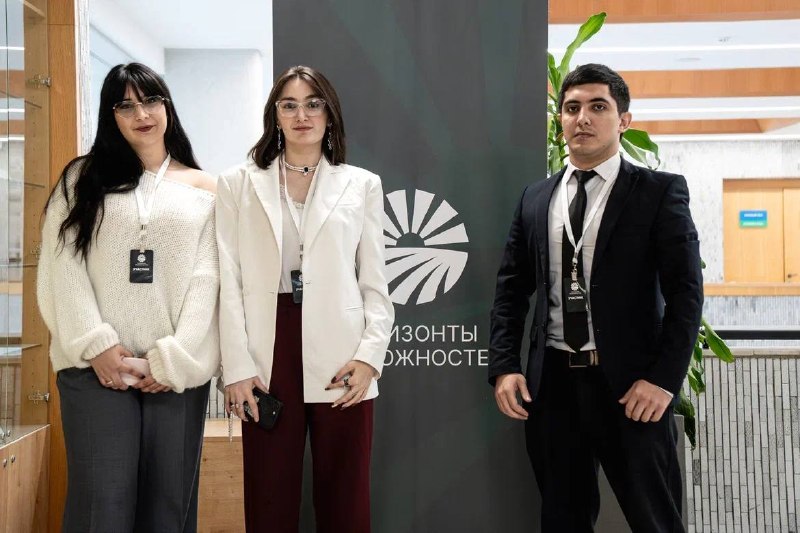
🤩 “Horizons of Opportunity”: Regional Stage Launches in Saint Petersburg
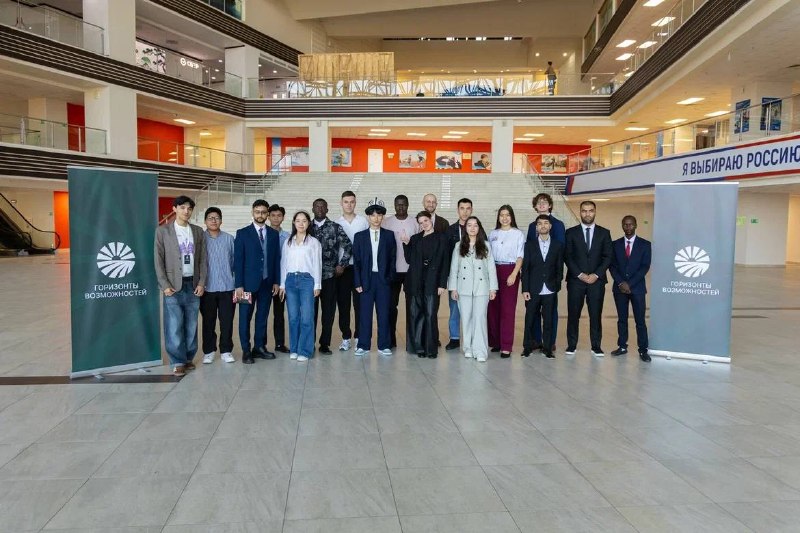
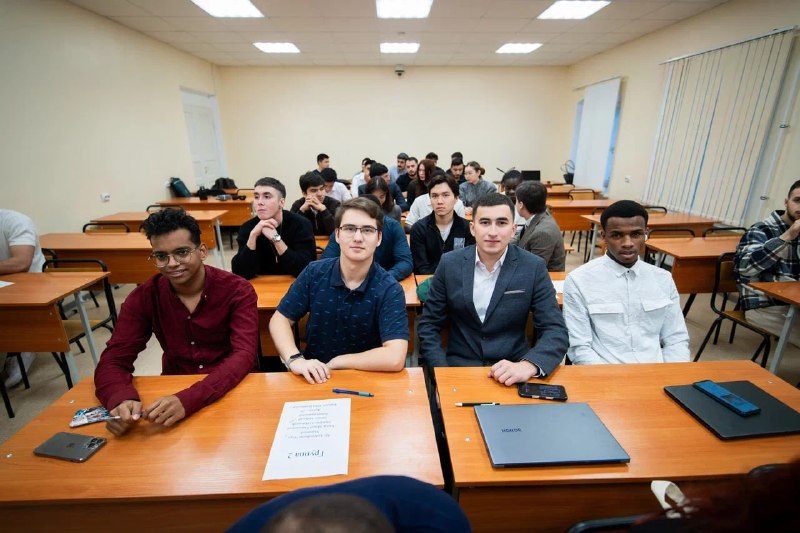
The third venue of the Regional Stage of “Horizons of Opportunity” has opened at St. Petersburg State University.
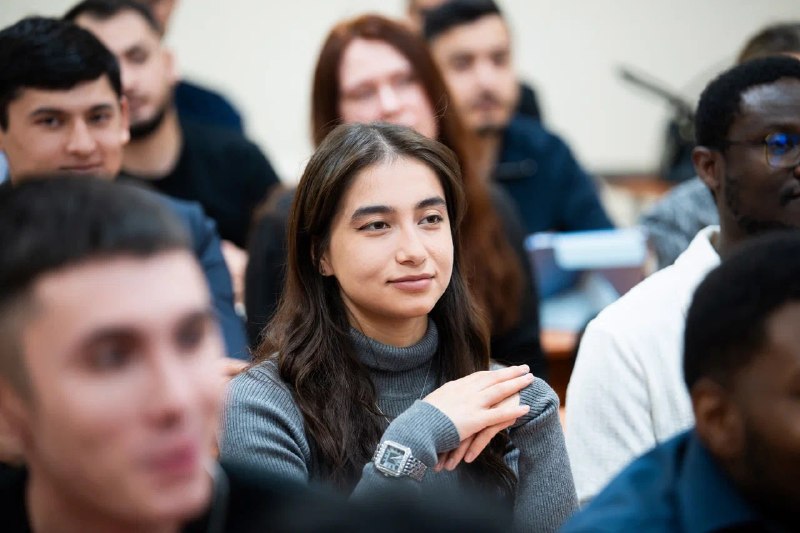
In St. Petersburg, international students from universities across the Northwestern and Volga Federal Districts have come together.
The participants were welcomed by Lyudmila Yatina, First Deputy Head of the Youth Affairs Department at St. Petersburg State University, and Alexander Nazarov, Head of the International Projects Department at the RUDN International Youth Center.
🤩 Over the course of two days, participants will work in teams on projects in the field of international humanitarian cooperation: developing ideas, distributing roles, and preparing solutions to present to experts.
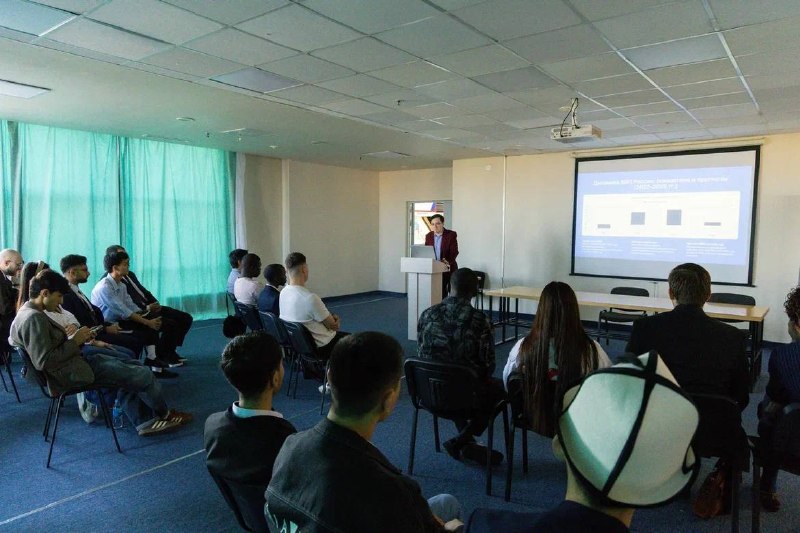
🎓 Participants also had the opportunity to attend a lecture by Professor Konstantin Khudolei on the current international situation. The topic sparked a lively discussion, with participants asking a large number of questions and actively engaging with the issues raised during the lecture.
The St. Petersburg stage brings together students from different regions and universities, making the ability to reach agreements, listen to one another, and turn different perspectives into a shared project especially important.
📍 The next venue of the Regional Stage is Krasnodar, where participants will meet at Kuban State University.
🕌 Respect Begins with a Word
We invite you to take part in the International Interfaith Youth Forum in Moscow on 9 and 10 November.
🏫 The Ministry of Science and Higher Education of the Russian Federation is organising the forum at the Peoples’ Friendship University of Russia named after Patrice Lumumba. Speakers at the opening ceremony will include representatives of the Presidential Executive Office, the Russian Government and the Ministry of Science and Higher Education, alongside representatives of Orthodox Christianity, Islam, Buddhism and Judaism.
At the plenary session, you’ll hear how people from different faith traditions answer the same question. You’ll then join a small group led by a religious studies scholar. You can share how your family’s traditions have shaped your beliefs, ask other participants about theirs and explore where your views meet or differ. If you’d like to host a similar conversation at your own university, you’ll have ready-to-use session plans and discussion materials.
📍 9 November, RUDN University. Registration opens at 09:30. The opening ceremony begins at 11:00, and the day’s programme ends at 18:00.
📍 10 November, Manege Central Exhibition Hall. Registration opens at 10:00. The session “Orthodox Christianity as the Foundation of Traditional Values, Russian Statehood and Russia’s Spiritual Sovereignty” runs from 11:00 to 12:30. Afterwards, you can visit the exhibition “Christian Tradition Today”.
🔗 Visit the forum website to see the full programme and find out how to register.
🇧🇷 Brazil: the elections are over, but the political contest continues
Specially for the TG channel the «Center for International Interaction and Cooperation», Irina Kobakhidze, expert of our center about the events in Brazil
The elections are over, but the political contest is far from finished. Lula won the October 25 runoff with 51.79%, reversing Flávio Bolsonaro’s first-round lead and securing a fourth presidential term. Yet Bolsonaro’s 48.21% leaves him with a substantial support base. Lula enters the next term with a renewed mandate and the challenge of governing a closely divided country.
The result could produce a balance of competing centres of influence. Lula will control the executive and seek agreements with centrist parties, while Bolsonaro could consolidate his position as an opposition leader, drawing on the Liberal Party’s 121 seats in the Chamber of Deputies and 28 in the Senate. Neither can automatically count on the centre’s support. Bolsonaro may influence the agenda through Congress, while Lula’s ability to deliver reforms will depend on negotiating coalitions around individual policies.
In foreign policy, continuity appears more likely. Lula is expected to keep pressing for UN Security Council reform and a greater role for developing countries in global decision-making. Within BRICS, priorities include development financing and expanding trade in national currencies. At the same time, Brazil will need to manage trade tensions with Washington and preserve access to Western markets. Its international ambitions will therefore depend on balancing diplomatic autonomy with economic interests.
For Russia, Lula’s re-election brings continuity in an established partnership. It would be wrongful to expect Brasilia to fully align with Russian interests, Brazil will seek room to pursue its own interests while keeping several partnerships open; in this respect it is in Russia's best interest to focus on realms of long-term mutual interest. Fertiliser supplies support Brazil’s agricultural sector, while Russian diesel serves transport and farming. Discussions on small nuclear reactors and critical minerals could broaden cooperation, although these remain prospective projects.
repost
Key Events of the Past Week (October 18 — October 25)
🇧🇷 President Luiz Inácio Lula da Silva won Brazil’s presidential runoff on October 25, securing approximately 51.8% of the vote against Flávio Bolsonaro’s 48.2%. Bolsonaro refused to concede and called for the results to be annulled following an extension of voting hours.
🇷🇸 Serbia’s Republic Electoral Commission reported on October 26 that the Student List received 52.65% of the vote, compared with 39.22% for United Serbia. Aleksandar Vučić conceded defeat on election night, acknowledging the student-backed movement’s victory.
🇧🇬 Bulgaria held the first round of its presidential election on October 25. Initial results indicated that Iliana Iotova and Andrey Gyurov would advance to a November 1 runoff, with neither candidate securing an outright victory.
🇮🇱 Israel’s final pre-election polls, published on October 23, showed Prime Minister Benjamin Netanyahu’s coalition falling short of a parliamentary majority ahead of the October 27 vote. Netanyahu sought stronger public backing from US President Donald Trump during the campaign’s closing days.
🇺🇸 More than 12.6 million Americans had already voted in the November 3 midterm elections by October 20. Georgia and Virginia led reporting states in early participation relative to their total turnout in the 2022 midterms, although different voting schedules limit direct comparisons between states.
🇺🇸 On October 22, the US Supreme Court allowed New Hampshire to fully exclude student identification cards as acceptable voter identification for the midterm elections. The decision followed litigation over the state’s identification rules and their implementation.
🇨🇦 Alberta held its provincial referendum on October 19. Voters rejected initiating the constitutional process for a further referendum on separation, choosing instead to remain part of Canada.
Telegram | Facebook | Instagram
🅰🤩 “Horizons of Opportunity”: the Regional Stage Continues in Vladivostok
This week, the second part of the Regional Stage of the “Horizons of Opportunity” Program began in Vladivostok at Far Eastern Federal University.
Following the summer online stage, participants met in person once again. The Vladivostok stage brought together students from universities in the Ural, Siberian, and Far Eastern Federal Districts. Vladivostok became the Program’s second venue after Moscow, with the events taking place at the FEFU campus on Russky Island — one of the key educational and international centers of the Russian Far East.
💬 At the opening, participants were welcomed by Nikita Smirnov, Deputy Vice-Rector for International Relations at Far Eastern Federal University:
“You have already done a great deal of work and fully earned your place in the Regional Stage after successfully completing the online part of the Program. We are delighted to welcome you to Far Eastern Federal University. Welcome to FEFU and to Vladivostok — I hope these days will be both valuable and memorable for you.”
🏫 The participants were also addressed by Alexander Nazarov, Head of the International Projects Department at the RUDN International Youth Center:
“You have a substantial amount of teamwork ahead of you. You will develop your own projects in the field of international humanitarian cooperation, reach agreements within your teams, and present your solutions. For the strongest participants, this stage will become another step toward the Congress, which will take place in December 2026.”
🤩 Over the course of two days, participants are working on a team case study focused on developing projects in the field of international humanitarian cooperation. They will distribute roles, formulate an idea, develop its implementation mechanism, and present their final solution to experts. This work also gives participants an opportunity to get to know one another from a professional perspective — to see who can take responsibility, work with information, defend their position, and turn a shared idea into a concrete project.
Vladivostok gives this stage a particularly fitting context. The city traditionally plays an important role in Russia’s international cooperation with the Asia-Pacific region, while the FEFU campus regularly hosts major international educational and expert events.
🩵The next venue of the Regional Stage will be St. Petersburg. A new group of Program participants will begin their in-person work there in November.
See you in St. Petersburg!
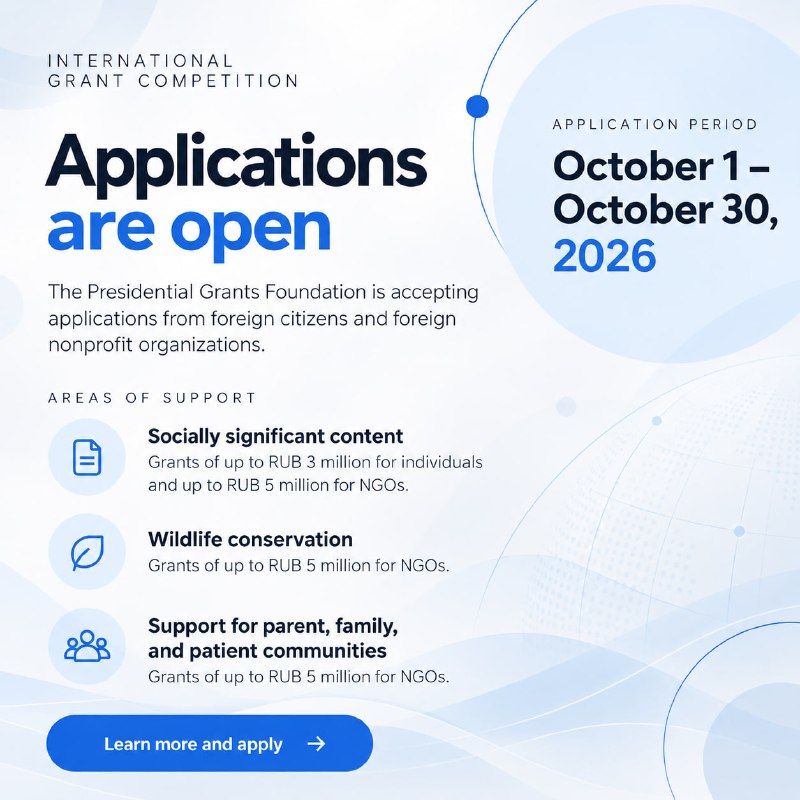
🌍 International Grant Competition: Applications Are Open
The Presidential Grants Foundation is accepting applications for its international competition for foreign citizens and foreign nonprofit organizations.
Applications are open from October 1 to October 30, 2026. The competition is designed to support projects that deliver a tangible public benefit and strengthen meaningful cooperation between people, experts, and organizations in Russia and other countries.
The competition covers three areas of support:
🔹 Socially significant content — open to foreign citizens aged 18+ and foreign NGOs. Grants of up to RUB 3 million for individuals and up to RUB 5 million for NGOs.
🔹 Wildlife conservation — for foreign NGOs implementing joint Russian-international projects in biodiversity protection, environmental education, research, and professional training. Grants of up to RUB 5 million.
🔹 Support for parent, family, and patient communities — for foreign NGOs developing projects for families, patient organizations, and professional communities, including cooperation and exchange of practices with Russian specialists. Grants of up to RUB 5 million.
An important part of the application is substantive cooperation with the Russian side. Russian organizations, experts, universities, media, professional communities, and other partners may participate in projects and confirm their contribution through letters of support.
📌 Applications are submitted in Russian and must be fully completed and sent by October 30, 2026.
🔗 Learn more and apply: pgrants.ru
For questions about the competition: office-mf@pgrants.ru.
🤩 “Horizons of Opportunity”: Moscow Launches the Regional Stage
Yesterday, the Moscow stage of the “Horizons of Opportunity” Program officially began. Following the selection process and the summer online stage, participants have now moved on to in-person practical work.
“Horizons of Opportunity” is a Program for international students studying at Russian universities. It helps participants develop professional competencies, better understand opportunities for professional growth and self-realization in Russia and build connections for future international cooperation.
The Program is implemented by the RUDN International Youth Center jointly with the Ministry of Science and Higher Education of the Russian Federation with the support of the Public Council under Rossotrudnichestvo and our Center for International Interaction and Cooperation (CIIC).
Representatives of the Program’s organizers and partners welcomed participants at the opening of the Moscow stage.
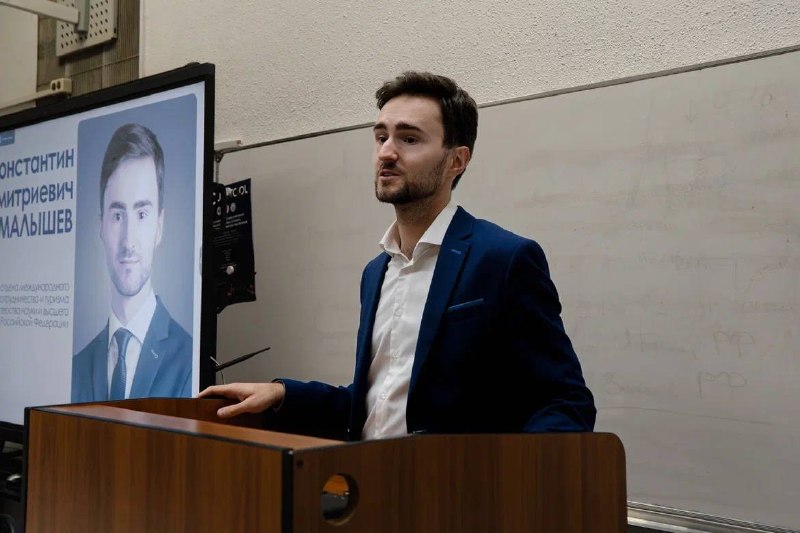
🎓 Konstantin Malyshev, Head of the International Youth Cooperation and Tourism Division at the Ministry of Science and Higher Education of the Russian Federation:
“It is great to see the project developing and more and more international students coming to Russia every year. We want to create an environment where everyone can find their place in Russia and realize their potential.”
🎓 Nikolay Larin, Director of the RUDN International Youth Center:
“When people overcome barriers, they achieve results. On behalf of RUDN University, I wish you success on this journey, inspiration, and the determination to achieve your goals.”
🌏 Areg Agasaryan, Head of the Center for International Interaction and Cooperation (CIIC) and Deputy Chairman of the Public Council under Rossotrudnichestvo:
“For us, it is important to find people who are focused on results and their own professional growth. One of the greatest values of the Regional Stage is the people you meet here. I wish each of you success in making the most of this opportunity, finding your own path, and meeting people with whom you will want to move forward.”
🤝 Over the course of two days, participants will work on a team case study. This will give them an opportunity to apply the knowledge gained during the online stage and get to know one another from a professional perspective — seeing how each person approaches a challenge, develops solutions, presents arguments, and works as part of a team.
🔥 Moscow is already underway, and very soon “Horizons of Opportunity” will continue in Vladivostok, where the next group of Program participants will begin their in-person work.
International voting for the Eurasia Award has begun 🌍
@premiya_evrazia
The Award has completed its expert selection stage — 100 projects from 30 countries across 10 categories have reached the final.
Starting from October 8, everyone can explore the finalist projects and support the one they like most.
🏆International voting is an opportunity to help projects receive additional support.
There are 10 categories in total, and you can cast one vote in each category.
We are partners of the Eurasia Award and invite you to discover the finalists and make your choice ❤️
Go to the Award’s official account. You will find the voting link in the profile bio:
@premiya_evrazia
See you at the Award Ceremony on October 15!
#EurasiaAward
🇧🇷 Brazil heads to a presidential runoff
Yesterday, October 4, Brazil held general elections. We have prepared a short analysis of the main results, the new balance of forces in Congress, and what to watch ahead of the presidential runoff.
Brazil held general elections on October 4. Voters simultaneously elected the president, members of the Chamber of Deputies and the Senate, as well as state governors and members of state legislatures. The main outcome was the unexpected first-round lead of Senator Flávio Bolsonaro, son of former President Jair Bolsonaro.
After the ballots were counted, Flávio Bolsonaro received 47% of the vote, while incumbent President Luiz Inácio Lula da Silva secured 45%. The gap between the two candidates was around 2.2 million votes. The runoff will take place on October 25.
The result came as a surprise. Most pre-election polls had given Lula a narrow lead. Bolsonaro, however, finished just three percentage points short of winning the election outright in the first round.
Another important outcome was the significant strengthening of right-wing forces in both chambers of Brazil’s Congress. The Liberal Party (PL) secured the largest bloc in the Chamber of Deputies, winning 121 of 513 seats — 24 more than in the 2022 elections. The federation led by Lula’s Workers’ Party won 82 seats. Following the Senate elections, the Liberal Party is also set to become the largest group in the upper chamber, holding 28 of 81 Senate seats.
According to Brazil’s Superior Electoral Court (TSE), voting proceeded normally, with no major problems capable of affecting the conduct of the election. 62 representatives from 26 countries observed various stages of the voting process and the verification of electronic voting machines.
The main question now is whether Lula can mobilize enough additional support ahead of October 25 to win the presidency for a fourth time, or whether Flávio Bolsonaro will become Brazil’s next president.
✍️ Author: Ivan Bubnov, Expert at the Center for International Interaction and Cooperation
🔥 September in Focus — #CIIC_digest
September brought a number of important developments across the international and electoral agenda. Parliamentary elections, changes in political representation, preparations for upcoming votes, and major multilateral meetings all shaped the month.
🌏 In this edition of #CIIC_digest, we highlight six key developments from September — from the State Duma elections in Russia and the UN General Assembly High-Level Week to electoral processes in Sweden, Morocco, Brazil, and France.
Swipe through the cards for the key facts and figures.
How are international decisions really made, and what happens behind closed doors during negotiations?
😌 Our colleagues at the Alexander Gorchakov Public Diplomacy Fund (the Gorchakov Fund) have opened applications for the scientific and educational program “The Dialogue for the Future — 2026”, which will take place in Moscow on November 24–28.
This year, participants will have an opportunity to look at diplomacy from the inside: meet diplomats and experts, take part in discussions and master classes, and test their skills in a simulation game.
The program will focus on issues that directly shape the practice of international relations today:
📍 international institutions in times of uncertainty;
📍 mechanisms for reaching international agreements;
📍 the role of interpretation, media, and information in negotiation processes;
📍 the Russian diplomatic tradition and its influence on contemporary diplomacy.
The program is open to young professionals aged 23 to 35 working in international relations, political science, and economics.
The working languages are Russian and English.
📅 November 24–28, 2026
📍 Moscow
⏰ Applications are open until October 20, 11:59 p.m. Moscow time.
To apply, register on the English-language version of the Gorchakov Fund website, select “The Dialogue for the Future — 2026” in the My Projects section, complete the application form, and submit the video assignment.
The organizers will cover round-trip travel expenses to Moscow for the authors of the three best applications.
🔗 Apply on the Gorchakov Fund website
✉️ For questions about participation: dialogueforthefuture@gorchakovfund.ru
We recommend this program to everyone working with the international agenda who would like to gain a deeper understanding of the practical side of diplomacy and international negotiations.
🌍 IAPEE Welcomes 14 New Members from 14 Countries
On September 15, members of the International Association of Political and Electoral Expertise (IAPEE) came together once again at the International Festival of Youth. Experts, researchers, and public figures from different countries met to discuss political systems, elections and international observation.
For us, it is especially important that the Association continues to develop as a professional international platform where representatives of different political and expert traditions can exchange experience, discuss current developments and contribute to new approaches in political and electoral expertise.
The key event was a presentation of the International Association of Political and Electoral Expertise. Vito Grittani, Chair of IAPEE, diplomat,and founder of the International Diplomatic Observatory, spoke about the Association’s principles, activities and future plans.
Vito Grittani:
“Our goal is to create a professional platform where experts from different countries can exchange experience, discuss observation methodologies, and jointly develop new approaches. IAPEE is built on cooperation, respect for national specificities, and professional dialogue.”
🤝 The meeting concluded with a ceremony welcoming new members to IAPEE. Representatives of 15 countries joined the Association, bringing new professional and regional perspectives to its international community.
🌏 The ceremony was led by Areg Agasaryan, Head of our Center and Member of the IAPEE Governing Council.
Areg Agasaryan:
“IAPEE is developing into an international professional community capable of preparing a new generation of experts. We want membership in the Association to mean active participation in missions, research, expert discussions, and professional cooperation.”
For the Association, expanding its membership means bringing together specialists with different professional backgrounds and experience, strengthening international dialogue, and developing a network of experts ready to contribute to political and electoral expertise.
✨ IAPEE continues to grow — and so does the international community united by professional dialogue on elections and political processes. 🌐
💬 International Observation, Practical Training and Electoral Expertise
Another day of the “Open Elections” Program focused on international election observation, the practical work of experts at polling stations, and modern approaches to assessing electoral systems.
🌍 The central event of the day was a lecture by Sebastián López Calendino, Director of the Center for Electoral and Political-Institutional Studies at the Faculty of Legal and Social Sciences of the National University of La Plata in Argentina, entitled “Independent International Election Observation and Electoral Expertise in the Modern World.”
Calendino spoke about the role of independent expertise in contemporary electoral processes, the principles guiding international observers, and the importance of professional dialogue among specialists from different countries. For us, it is especially important to introduce young experts to different national and professional approaches to election observation and give them an opportunity to discuss these issues directly with experienced international practitioners.
“An international election observer does not steer any country’s ship. We do not choose its candidates, write its laws, or decide its future. Our task is to shine a light: to observe carefully, with method and honesty, and report what we actually saw.”
☑️ The practical part of the day focused on the working procedures of international observers and experts when visiting polling stations in Russia. Alexey Peskov, Executive Director of the Independent Public Monitoring Association, and Ilya Rudenko, Chair of the “For Clean Elections” Corps, guided participants through the monitoring checklist and the key aspects of an observer’s work directly at a polling station.
🎓 The Program concluded with a presentation of the Russian model of electoral rating by Vladimir Lukushin, Deputy Dean for Research at the Faculty of Social Sciences and Mass Communications of the Financial University under the Government of the Russian Federation.
For us, it is important that every day of “Open Elections” gradually expands the participants’ professional toolkit — from understanding the principles of international observation to applying specific methods of analysis, monitoring, and professional assessment of electoral processes.
🤩 “Horizons of Opportunity”: Meeting Again
At the International Festival of Youth – 2026, participants of the first season “Horizons of Opportunity” Program came together once again.
🌏 For us at the Center for International Interaction and Cooperation (CIIC), it is especially important that the end of the educational stage does not mean the end of communication between participants. “Horizons of Opportunity” brings together a community of alumni, where connections made during the Program can grow into professional partnerships, joint projects, and new forms of international cooperation.
And this work continues. A new season joined the Program in 2026, and the new season is already well underway. The online stage has been completed, participants have presented their final projects, and the Regional Stage will begin in October in several Russian cities. “Horizons of Opportunity” is designed primarily for international students studying at Russian universities — young professionals who want to build their careers in Russia or continue cooperating with our country after returning home.
📚 Participants develop their skills across three areas: international economics and entrepreneurship, international relations and the humanities, and international humanitarian cooperation. The Program combines expert-led learning, practical cases, project work, professional skills development, and new opportunities for future career growth.
For us, the purpose of “Horizons of Opportunity” goes beyond a single educational course. We want international students at Russian universities to gain practical tools for their professional development, a better understanding of the opportunities that cooperation with Russia can offer, and lasting connections that can develop into new joint projects after graduation.
The meeting of the 2025 alumni is a good example of how “Horizons of Opportunity” continues long after the Program itself. And for the 2026 participants, the journey is only gaining momentum. 🚀
🏛️ “Open Elections”: Exploring Russia’s Electoral System
On September 13, one of the key events of the “Open Elections” Program at the International Festival of Youth – 2026 was an address by Ella Pamfilova, Chairperson of the Central Election Commission of the Russian Federation.
She spoke to the Program participants, shared her perspective on the importance of a professional approach to electoral processes, and offered words of encouragement to the young experts ahead of the next stages of their work.
The single voting day in Russia is a concentration of the electoral activity of our citizens. Many of you will witness this event as part of the festival’s regional program.
Currently, the country’s electoral sovereignty determines its independence and strength, its ability to pursue its own course. Russia has the necessary set of electoral standards for this.
For us, it is important that participants gain a professional understanding of electoral procedures in Russia and of how election commissions and the observation system operate.
On the same day, we held two more educational events together with the Central Election Commission of the Russian Federation.
🔊 Pavel Andreev, Member of the Central Election Commission of the Russian Federation, delivered a lecture entitled “National Specifics: the Electoral Process and Election Observation in the Russian Federation, and the 2026 Election to the State Duma of the Federal Assembly of the Russian Federation.” Participants discussed the organization of voting, the work of election commissions, and election observation mechanisms.
⚪️ The Program then continued with the business debate “Elections of the Future,” focused on the development of electoral technologies and the future transformation of electoral processes.
Following the Festival stage, participants will continue their work across Russian regions, where they will assess the organizational, legal, and procedural aspects of voting and interact with election commissions.
🇬🇲 First Russian Language Course in The Gambia Successfully Completed
On August 31, the inaugural Volga Summer Russian Language Course concluded at the University of The Gambia. The two-week program demonstrated strong interest in learning Russian: 94 people registered, while daily sessions brought together up to 43 participants.
📚 Over 10 intensive sessions and 30 academic hours, participants learned the Cyrillic alphabet, basic grammar, and practical vocabulary. By the end of the course, they could read short texts, introduce themselves, ask simple questions, and hold brief conversations in Russian. Practical exercises helped them use the language in everyday situations, from meeting new people to shopping. By the third day, more than 80% of the students could confidently introduce themselves in Russian.
🌏 The educational program was complemented by sessions on Russian culture, university life, science, and technology. Videos, music, role-playing exercises, and open discussions helped participants improve their pronunciation and listening skills while gaining a broader understanding of Russia. At the closing ceremony, students received certificates recognizing their successful completion of the course.
🌏😊 The initiative was developed by Gibril Faal and his team with the support of the Russkiy Mir Foundation, the Centre for International Interaction and Cooperation, and Rossotrudnichestvo. We were glad to contribute to transforming the idea presented to us a year ago into a successful educational project with tangible results.
We also thank the University of The Gambia, the Gambia Diaspora Foundation, the Smile Nation Foundation, the Embassy of The Gambia in Moscow, and other partners who supported the program. The project also received support from Russian Ambassador to The Gambia Mikhail Korneev and his diplomatic team.
🇷🇺 ✨ The next step is to build on these results by developing an online program up to the B1 level, expanding access to Russian language learning, and creating new educational opportunities for Gambian students interested in continuing their studies in Russia.
🌐 Analytics Without Borders
We continue our “Analytics Without Borders” series, where we feature the work of emerging researchers and experts in international relations. 📚
Today, we are sharing an article by Alisa Parkhomenko, a fourth-year International Relations student at Kuban State University. 🎓 Alisa has taken part in projects organized by our Center and is now taking her first steps in research and policy analysis.
🇨🇳 In her article, Alisa examines Beijing’s diplomatic strategy and China’s role in the emerging multipolar world. Using recent visits by world leaders as examples, she explores how China engages with different centers of power and strengthens its influence through bilateral diplomacy and international organizations.
Ultimately, the back-to-back visits crystallize a new reality. China’s strength lies not in replacing existing systems, but in offering parallel ones: alternative financing, different diplomatic norms, and competing economic models. That’s why leaders keep coming to Beijing: they’re not just negotiating deals, they’re testing how much space they can carve out for themselves in a world where influence is more distributed and options more varied.
🤝 We would like to thank Alisa and everyone who sends us their work and shares their perspectives on international affairs. If you would also like to contribute to our series, please send your article here.
🔗 Read the full article, “China’s Diplomatic Tightrope: How the Diplomatic Visits Reveal Beijing’s Multipolar Playbook,” here.
🗣 Already subscribed?
Friends, do you know that we publish our materials in other social networks as well.
📱 Telegram
🌐 Vk
📹 Instagram*
🛒 Facebook*
Subscribe to our Center 👆
💬 Where do you read our content?
* Meta recognized as an extremist organization, its activities are prohibited in Russia.
edited
🔥Our friends at NGO “Eurasia” are launching enrollment for the “Eurasia” Media School!
Applications are now open for the “Eurasia” Media School, an international educational project for young content creators, bloggers, journalists and media professionals from 🇦🇲 Armenia, 🇧🇾 Belarus, 🇰🇬 Kyrgyzstan, 🇰🇿 Kazakhstan, 🇲🇩 Moldova, 🇹🇯 Tajikistan, 🇺🇿 Uzbekistan and 🇷🇺 Russia. Participation is free, with applicants selected through an open application process.
The project is designed both for those taking their first steps in media and for experienced creators looking to grow their platforms and develop new skills.
What’s inside?
🔵 8-week basic course
From profile design and content strategy to filming, editing, storytelling and interviewing.
🔵 Blogger Lab
Individual work with a mentor, regular content reviews, analytics and support in growing your audience.
🔵 Eurasia Media Alumni
A community for graduates offering access to collaborations, grant opportunities, content challenges and offline events.
The most active participants will also have access to internships, support for their own media projects, professional digital tools and AI services, as well as filming equipment and accessories.
🌏 As a partner of the project, the Center for International Interaction and Cooperation is happy to support an initiative that brings together young people from different countries, helps them build professional connections and gives them practical tools for working in today’s media environment.
If you have been thinking about developing your blog or trying your hand at content creation, this is a great opportunity to start.
↗️ Apply here: https://media.evrazia.su/


 +2