Официальный Telegram канал Посольства России в Ирландии/ Official Telegram account of the Russian Embassy in Ireland
🤖 Telegram-бот консульского отдела Посольства России в Ирландии @Consular_Helper_bot
Subscribers1.9K +0 24h
Reach per post (ERR)6.4%124 avg views
Posting2.0/daylast 1 hour ago
Reactions per 1K views10.9👍
repost
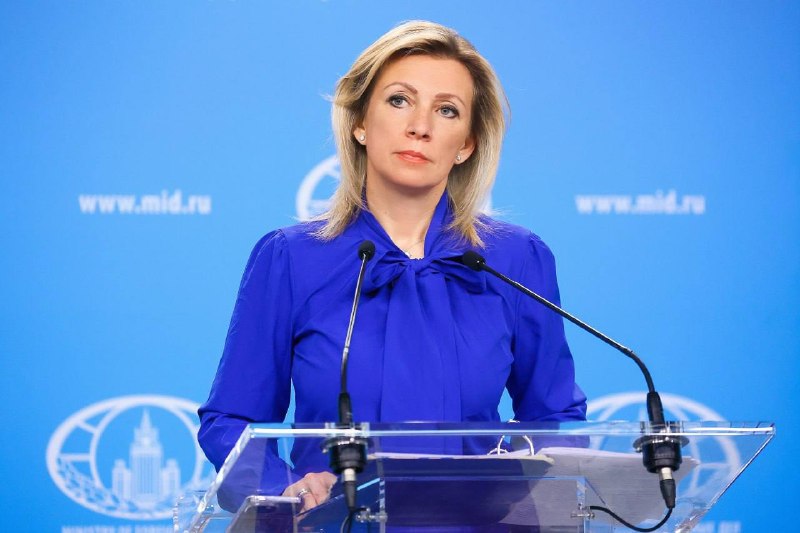
🎙 Russian Foreign Ministry Spokeswoman Maria Zakharova's answer to to a media question regarding Jared Kushner’s statement on including European representatives in the negotiating process on a Ukraine settlement (November 13, 2026)
❓ Question: Today, Jared Kushner posted the following on X: “Both sides have now agreed to expand the next round of negotiations to include our European partners”. How would you comment on this?
💬 Maria Zakharova: As far as the Russian Foreign Ministry is aware, this issue was not discussed during the talks with Steve Witkoff and Jared Kushner in Moscow.
Telegram doesn't show this post on the web. Open it in Telegram to see it.
repost
📹Watch the full recording of the International Round table "The militarization of Europe: what next?", held on November 9, 2026, at the initiative of the Delegation of the Russian Federation to the Vienna negotiations on military security and arms control.
🎙Key Speakers:
00:00:00 – I.D.Zhdanova, Head of the Delegation of the Russian Federation to the Vienna Negotiations on Military Security and Arms Control;
00:06:27 — S.A.Ryabkov, Deputy Minister of Foreign Affairs of the Russian Federation;
00:27:59 — Y.V.Rusak, Head of the Division in the Department of International Military Cooperation, Ministry of Defence of the Republic of Belarus, Lieutenant Colonel;
00:34:47 — A.G.Likhonosov, Vice-Rector for International Relations and Security, Russian State Academy of Intellectual Property, Reserve Colonel;
00:49:38 — A.N.Postigov, Head of Division, Second CIS Department, Ministry of Foreign Affairs of the Russian Federation;
01:07:33 — R.Legvold, Professor Emeritus, Department of Political Science, Columbia University, PhD (USA);
01:20:09 — D.Reinisch, Austrian political scientist, historian and independent journalist (Austria);
01:36:17 — L.M.Pacini, Associate Professor of Political Philosophy and Geopolitics, Uni Dolomiti, Belluno (Italy);
01:51:38 — A.Yu.Mazur, Deputy Director of the Department for Nonproliferation and Arms Control, Ministry of Foreign Affairs of the Russian Federation;
🌐 02:03:17 — Free discussion (Q&A session);
02:26:47 — A.Yu.Grozov, Ambassador Extraordinary and Plenipotentiary of the Russian Federation to the Republic of Austria;
02:29:03 — Free discussion (Q&A session);
02:44:20 — Closing remarks by the Head of the Delegation, I.D.Zhdanova.
Delegation on social media: 💙VK 💬Telegram 💬 X📺YouTube📺Rutube 💬Facebook
repost
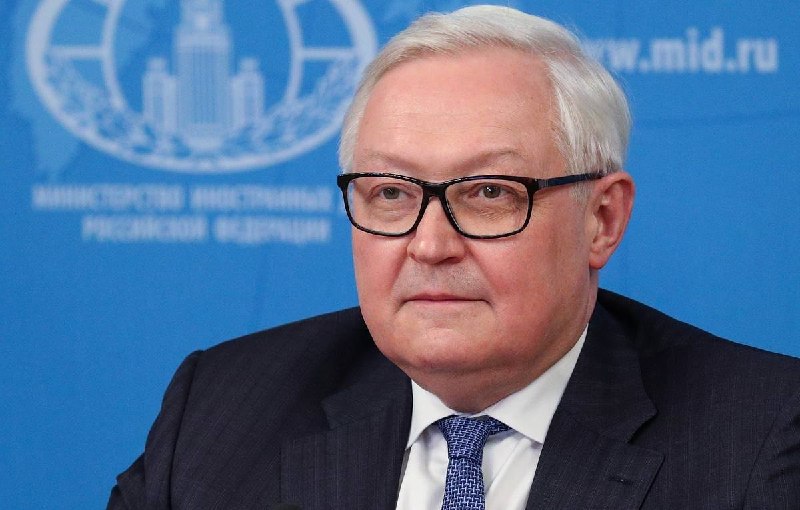
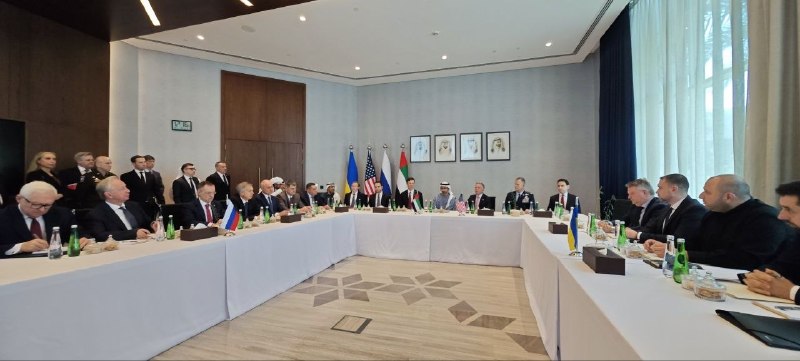
💬 Remarks by Russia’s Deputy Foreign Minister Sergey Ryabkov to RT following the trilateral talks in Abu Dhabi (November 12, 2026)
Key points:
• Unlike in previous rounds, this time we focused largely on the prospects for building a security architecture in Europe and in the area surrounding the current conflict that would ensure that any future agreement holds.
• It would be premature to speak of restoring trust between the parties. That is not how we approach the issue. But judging by our discussions yesterday and the day before, I believe that, given the necessary political will, we can build something workable and realistically achievable while avoiding uncontrolled escalation.
• We worked through the entire agenda in detail in bilateral meetings between delegations, in smaller groups and in plenary sessions. We used every tool at our disposal in the search for solutions. There should be no doubt about that.
• We have made progress. That is indisputable. In the past, we have seen setbacks and reversals. At times, agreements that seemed within reach were torpedoed. 👉 That is what we want to avoid.
• The presence of General Grynkewich, NATO’s Supreme Allied Commander Europe and a four-star general, brought a considerable degree of professional expertise to these discussions on their side.
• Russia's military representatives were there as well. They know the issues inside out. As far as we at the Foreign Ministry can judge, they conducted themselves with exceptional professionalism.
• The Europeans, who insist on being part of this process, clearly feel sidelined. They cannot come to terms with the approach we have consistently and firmly advocated and pursued. Clearly, they find it unacceptable.
• The European countries are equally hostile to the ideas put forward by the US administration. There is a very wide gap between their positions. Bringing the Europeans into the negotiations could therefore undo the progress made and derail efforts that have so far shown some promise and given us some grounds for optimism.
❗️ I hope those who previously sought to derail these efforts realise that the situation on the ground is shifting to Kiev’s disadvantage.
repost
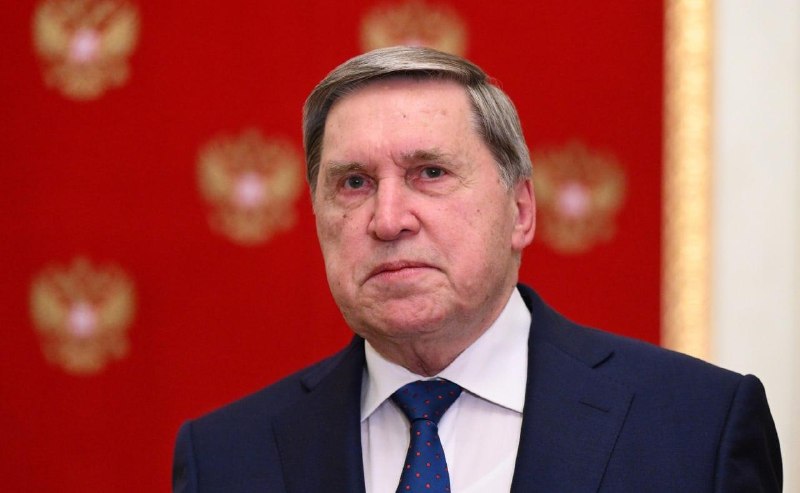
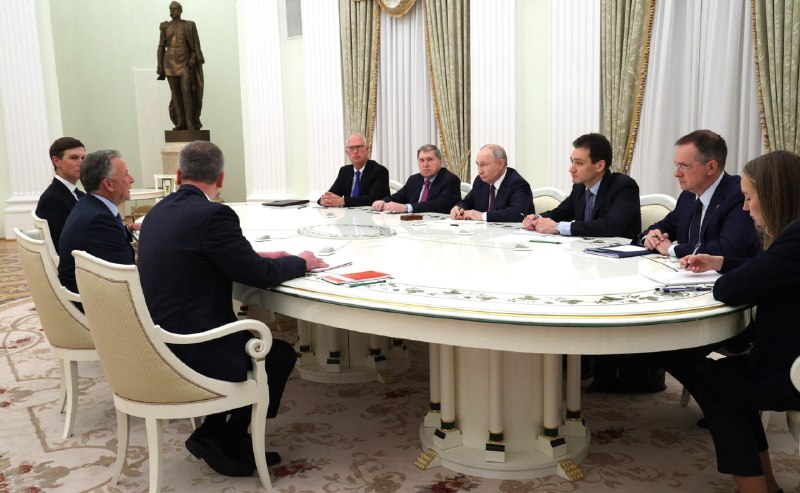
🎙 Comment by Aide to the President of Russia Yury Ushakov following a meeting between Vladimir Putin, US President’s Special Envoy Steve Witkoff and Jared Kushner (November 12, 2026)
💬 Yury Ushakov: Good evening, friends.
All of you are certainly aware that President of Russia Vladimir Putin received US President’s Special Envoy Steve Witkoff and Jared Kushner today.
The conversation was very substantive, constructive, frank and productive – just like all their previous conversations.
At the outset of the meeting, the Russian President made several important statements in the presence of the press, setting the tone for the discussion that followed.
Notably, the American negotiators actively supported the Russian President’s proposal to apply the approach used in the successful humanitarian operation in Aleshki to another city beyond the line of contact, namely, Konstantinovka. <...>
👉 We are ready to begin demining operations immediately.
***
The President of Russia has once again supported the American side’s proposal to move towards resolving security issues for both Russia and Ukraine as part of efforts to shape a future post-conflict system of European security. <...>
The President recalled our vision of the key pillars of the architecture of indivisible security, which we presented back in 2021 in the form of draft agreements with the United States and NATO on security guarantees.
📄 These include:
• the non-expansion of the NATO bloc,
• the non-deployment of threatening weapons systems near Russia’s borders,
• a return to the configuration of the alliance’s forces as it stood at the time the Russia-NATO Founding Act was signed.
To this list, which is not limited to the points I have outlined, we would like to add certain new considerations of our own, based on the lessons that we cannot – simply cannot – fail to draw from the present situation, in which the collective West has taken up arms against us, making no secret of its desire to save the Kiev regime and to inflict a strategic defeat on Russia.
For our part, the position of the Europeans has been comprehensively outlined. They are striving by every means possible to join the negotiations, but, as our President has said, they must decide whether they want peace or the continuation of the war.
☝️ So far, all their practical actions point precisely to the latter.
***
In the course of today’s negotiations, the behaviour of the head of the Kiev regime was also discussed – namely, the “friendly greetings” he publicly extends to the President of the United States.
It was also noted that in Kiev they do not want to end the war, because they would immediately have to call general elections, and no one wants to lose power.
Our President did not overlook the fact that the current American administration is working very insistently and persistently to achieve a genuinely lasting settlement of the Ukrainian conflict. <...>
Both we and the American side see great value in the upcoming trilateral summit in Shenzhen, which our Chinese hosts are organising.
During the talks, Steve Witkoff and Jared Kushner gave a detailed account of their assessments of the trilateral contacts that took place in Abu Dhabi on November 10–11.
Both we and the Americans regard those discussions and contacts as constructive and productive. It was agreed that this negotiation process and this track of talks will continue.
In particular, support was expressed for an initiative discussed in Abu Dhabi to carry out another prisoner exchange, which would likely be the largest to date. The parameters of this exchange are currently being finalised.
***
Following these in-depth discussions at the Kremlin, the American negotiators have departed for Dublin, where they are due to meet with Zelensky and representatives of various European capitals.
We hope that the signals from Moscow will be conveyed to them with the utmost care.
Read in full
repost
Comment by Presidential Aide Yury Ushakov following Vladimir Putin’s meeting with US Presidential Envoy Steve Witkoff and Jared Kushner
repost
🎙 Opening remarks by President of Russia Vladimir Putin at a meeting with US Presidential Special Envoy Steve Witkoff and entrepreneur Jared Kushner (Moscow, November 12, 2026)
💬 Vladimir Putin: First of all, I would like to thank you and ask you to convey my thanks to President Trump for arranging our contacts with the Ukrainian side.
I know we have made progress on at least one front – the humanitarian one. There have been POW exchanges, and another major step in this direction is now taking shape.
I would also ask you to convey my thanks to the First Lady of the US Melania Trump for her active role in addressing the humanitarian situation in and around the town of Alyoshki in the Kherson Region.
We fully appreciate that this would have been impossible without the support of President Trump’s entire team, including the State Department, the Department of War and other agencies, and without your personal involvement.
There was also a suggestion that we could continue this work with the involvement of representatives of the human rights commissioners of both Russia and Ukraine.
***
❗️ As for how long peace should last and how sound and secure it should be, we too would like it to last forever.
We know that the two sides see territorial issues differently. What matters more to us is the people who live there – their traditions, their culture and their right to live by their own rules and in keeping with their traditional values.
We know that the Ukrainian side is raising the issue of so-called “grey zones”. As I have already said, this will always be a bone of contention. For us, there is only one line of demarcation – the state border. That would make things perfectly clear. You are on one side and we are on the other.
As soon as we get drawn into discussions about “grey zones”, each side understands them differently. Disputes arise immediately, any agreement becomes shaky and there can be no lasting peace.
We still hear the Kiev authorities saying that they control this or that area, or that we do not control some other area. This could go on indefinitely. Given the weapons in use today, it is no easy matter to go there and see for oneself what is actually happening.
As I mentioned earlier, we worked well together on humanitarian issues in Alyoshki. Let us continue that work together.
There is a town in Donbass called Konstantinovka. The Ukrainian side considers it part of its strategic line of defence. Some 400-500 civilians are still there. Let us do what we did in Alyoshki. Let us invite members of the foreign press, including American journalists, as well as the Russian media. Let us entrust this work to those responsible for human rights on both sides – the Russian and Ukrainian human rights commissioners.
***
As for the Europeans, we have always been open to dialogue with Europe. We have never broken off that dialogue. It was the Europeans who broke off dialogue with Russia.
❌ We have said from the outset that the presence of any foreign troops on Ukrainian territory is absolutely unacceptable to us because we believe it threatens Russia’s security. Everyone agreed on that in principle. At any rate, that was the understanding at the talks in Istanbul, and until now no one seems to have objected.
The Europeans know this. Yet what do we hear from them? That as soon as peace is concluded, they will send troops into Ukraine. What does that mean? We have said this before. We would regard those troops as a legitimate target, which means the war would resume immediately.
It is an unusual way to put the question, but we would very much like you, gentlemen, and the US administration as a whole to work with your European allies so that they can finally make up their minds. 👉 What do they want in Ukraine – peace or war?
And we are, of course, ready to work with them.
Read in full
#InMemoryOfDiplomats
▪️ The leadership of the Russian Foreign Ministry and its Department of the North Atlantic are deeply saddened to report the sudden passing of Alexander DARCHIEV (1960-2026), Ambassador Extraordinary and Plenipotentiary of the Russian Federation to the United States of America and Permanent Observer of the Russian Federation to the Organization of American States in Washington, D.C. He passed away on November 11, 2026, at the age of 66.
We have lost a man of wisdom and depth, an outstanding diplomat, historian and scholar of American affairs who devoted his entire life and career to the service of his country.
Ambassador Darchiev had a keen and perceptive mind. Those who worked with him knew him for his exceptional professionalism and talent, his deep commitment to his country’s interests, his unwavering principles and his ability to work shoulder to shoulder with his colleagues.
Alexander Darchiev had an exceptional knowledge and understanding of the countries of North America, where he worked tirelessly throughout his diplomatic career. Moscow consistently sought his views on developments across the continent. His sound judgement and carefully considered assessments earned him a reputation as one of Russia’s foremost experts on American affairs.
His natural refinement, subtle sense of humour and personal charm went hand in hand with a quiet determination. These qualities enabled him, even at the most delicate moments in Russia’s relations with the United States and Canada, to carry out some of the most demanding tasks his country entrusted to him.
Ambassador Darchiev held a range of posts at the Ministry’s headquarters and abroad. He spent much of his career in senior positions at the Russian embassies in Washington and Ottawa.
He joined the diplomatic service in 1992 after working at the Institute for US and Canadian Studies of the USSR Academy of Sciences, where he defended his dissertation and earned the degree of Candidate of Historical Sciences.
From 2005 to 2010, he served as Minister-Counsellor at the Russian Embassy in the United States. He headed the Foreign Ministry’s North America Department from 2010 to 2014 and served as Russia’s Ambassador to Canada from 2014 to 2020. He again headed the North America Department from 2021 to 2024 and then led the North Atlantic Department from 2024 to 2025.
From March 2025, he served as Ambassador Extraordinary and Plenipotentiary of the Russian Federation to the United States of America and concurrently as Russia’s Permanent Observer to the Organization of American States in Washington, D.C.
His many state and ministerial honours included the Order of Friendship and the Order of Honour, certificates of honour from the President of the Russian Federation and the Russian Foreign Ministry, the Medal for Strengthening Military Cooperation and the Foreign Ministry’s Badge of Distinction.
🕯 We mourn the untimely loss of our mentor and friend. Our heartfelt condolences go out to his family and loved ones. We will always remember Alexander Darchiev with warmth and affection. His professionalism and vibrant personality will remain with us forever.
repost
⚡️ Press briefing by the Russian delegation, led by Presidential Aide Vladimir Medinskiy, following the talks in Abu Dhabi (November 11, 2026)
💬 Vladimir Medinskiy: First of all, on behalf of the entire Russian delegation, I would like to thank the leadership of the UAE and Abu Dhabi for the excellent organisation of the trilateral talks and for creating a friendly, businesslike atmosphere.
***
Answers to media questions:
❓ Question: How did the discussion on shaping Europe’s future security architecture proceed?
💬 Vladimir Medinskiy: We believe it is right to raise the question of what will happen after the inevitable end of the conflict in Ukraine.
❗️ Russia has repeatedly raised the issue of European security architecture and the need to establish a new, comprehensive and fair security system in Europe.
We did so in 2008, when we proposed the relevant draft European Security Treaty, and in 2021, when we sent the relevant documents to NATO, the US and European countries.
But, as the saying goes, it is easier said than done.
Many years have passed, and this issue has finally gained attention, with a growing recognition that it must be addressed.
The conflict in Ukraine has shown that the entire European security system in place since Yalta and Potsdam functions very poorly. In essence, the entire body is diseased, and Ukraine is simply where the abscess has burst.
With the US Side participating, we exchanged views. We found common ground on some points, but not on others. This discussion will certainly continue.
☝️ The world needs a new, modern, renewed security system that is fair and does not come at the expense of individual countries. We will work towards that.
❓ Question: EU representatives were also in Abu Dhabi. Did you speak to them, and are any meetings with them planned?
💬 Vladimir Medinskiy: We did not speak to them.
We are not quite sure in what capacity they are here. The talks are being held in the agreed trilateral format.
As for the stance taken by the leadership of a number of European countries, they are, in essence, collectively deceiving the Ukrainian people. They finance and supply weapons to one of the warring parties. In effect, they are contributing to civilian deaths on a massive scale.
We are not quite sure what there is to discuss with them. We have not received a single peace initiative or a single concrete peace proposal from European countries. Therefore, it is unclear what there is to discuss.
They would do well to learn, for example, from the American envoys when it comes to common sense, realism and a desire to achieve peace.
❓ Question: Were humanitarian issues raised during the meeting? In previous rounds held in Turkiye and Switzerland, you managed to reach agreements with the Ukrainians on POW exchanges, for example. Was such an agreement reached in Abu Dhabi?
💬 Vladimir Medinskiy: We have agreed in principle on a new large-scale prisoner exchange. The specific details will be announced shortly.
❓ Question: How do you assess the role of Steven Witkoff and Jared Kushner, and the Trump administration more broadly, in the rounds of talks? What role do you believe they can play in reaching agreements?
💬 Vladimir Medinskiy: The US Side played an active role in the talks. The role of individuals in history matters here. President Donald Trump’s envoys are certainly sincere, effective people and, most importantly, focused on results, rather than empty talk.
What matters is not how we assess them, but how many lives will be saved through their active mediation efforts.
We are therefore very grateful to them as well.
❓ Question: Under what conditions could the Europeans become full participants in the talks? What conditions must they meet to be admitted to the negotiating table?
💬 Vladimir Medinskiy: I think as soon as their conscience awakens, they can become participants in peace talks.
Until then, as I have said, they are taking part in the collective deception of the Ukrainian people and are, in effect, complicit in civilian deaths.
repost
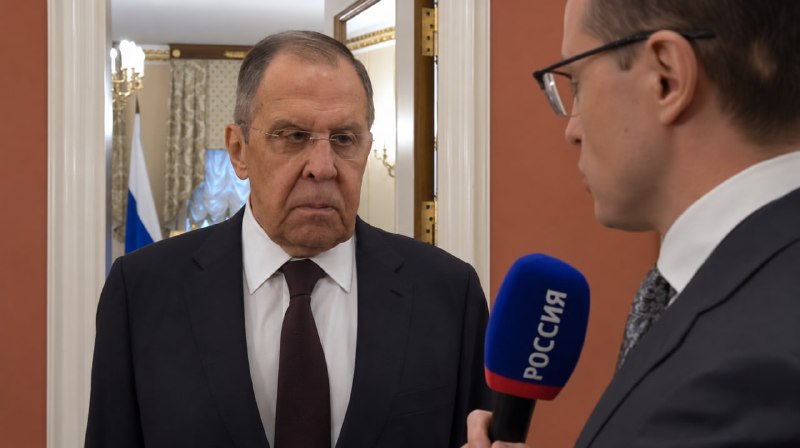
🎙 Russian Foreign Minister Sergey Lavrov's answers to questions from the programme “Moscow. Kremlin. Putin” (Moscow, November 11, 2026)
❓ Question: How do you assess the trilateral talks in Abu Dhabi?
💬 Sergey Lavrov: In this case, the trilateral format makes the most sense. As I understand it, the comments from all sides following the talks in Abu Dhabi were, overall, positive.
I’m leaving Zelensky out of this. He’s always playing his own games.
The negotiators themselves, though, seem to have been ready to get down to business. We’ll hear what Vladimir Medinskiy has to say when he returns with his delegation.
❓ Question: The Americans say they are coming to Moscow. A possible meeting between Vladimir Putin and Donald Trump in China is just days away. Could the talks that have just concluded help lay the groundwork for discussions between the two Presidents?
💬 Sergey Lavrov: My understanding is that, as announced, the American negotiators are coming to Moscow to brief President Vladimir Putin.
He will, of course, also receive a report from Vladimir Medinskiy’s delegation, as he regularly does. The President will decide how we proceed based on what he hears from the Americans.
The course we take will be geared towards achieving the objectives of the special military operation. The President set out those objectives in June 2024, and they have remained unchanged ever since.
repost
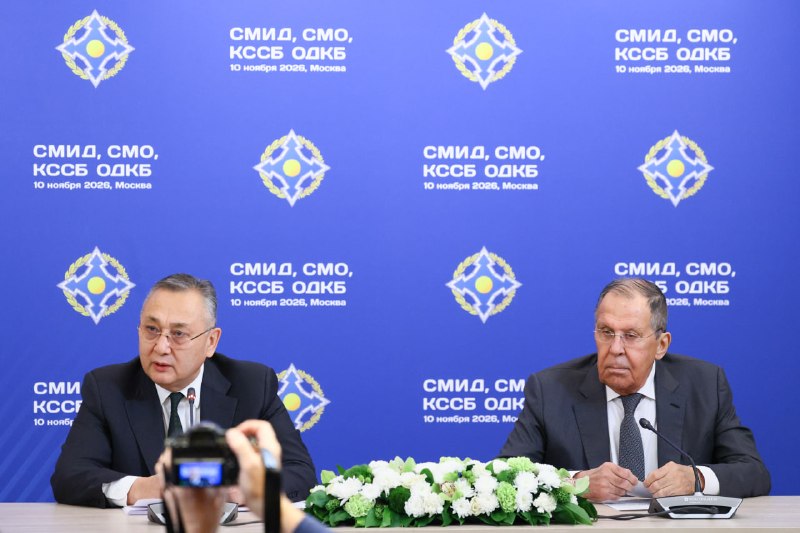
🎙 Remarks and answers to media questions by Russia’s Foreign Minister Sergey Lavrov at a joint news conference with Secretary General of the CSTO Taalatbek Masadykov (Moscow, November 10, 2026)
Key points:
• As #CSTO Chair in 2026, Russia has pursued a policy of steadily deepening integration across all areas to improve the Organisation’s effectiveness and enhance its international standing. We are grateful to our allies for their consistent support for all our initiatives throughout Russia’s chairmanship.
• We were also compelled to discuss Armenia’s failure to fulfil its obligations under the CSTO Charter regarding annual contributions to our common Organisation’s budget. There can be no ambiguity here.
• A draft decision on this matter will also be considered at tomorrow’s Session of the CSTO Collective Security Council. It provides for suspending Armenia’s right to nominate its citizens for quota-based positions in the Organisation’s bodies and withdrawing its voting rights until its arrears are paid in full.
• At the proposal of the American mediators, the talks that began today in Abu Dhabi focus on discussing the parameters of a future security architecture for Ukraine, Russia and our entire region – European security, one might say.
• Ursula von der Leyen said there should be no discussion of the parameters of a security architecture until a lasting truce is in place. The same old logic again: they must “buy time” for their “clients” – the Kiev regime – and use it to replenish Ukraine’s military losses. ❌ We will not agree to this.
• As for European participation, they have flown to Abu Dhabi. Let them sit in their hotel. But we cannot and do not wish to prevent the Americans from talking to whoever they deem necessary, on the grounds that this will help the negotiations. We shall see what comes of it.
• The idea of defining clear parameters for a future security architecture before moving on to settling the Russian-Ukrainian conflict itself is entirely reasonable.
• We have seen the Kiev regime’s ploys time and again. ❌ We will not agree to another truce, ceasefire or whatever it may be called without understanding the next steps.
• Europe’s plan is very simple, and they make no secret of it. As soon as a ceasefire is in place, they will deploy “stabilisation forces” to territory controlled by the Kiev regime. Through this concept, which we will, of course, prevent them from implementing, they seek to stabilise the current Nazi regime.
• Regarding the situation surrounding Iran and US President Donald Trump’s statement that Washington is no longer considering military options, I hope that will indeed be the case. Russia and China have consistently stressed the need to return to a peaceful settlement through political and diplomatic means.
• Unfortunately, external actors continue to play a destructive role, as was the case with the Islamabad Memorandum, signed by Iran’s Leader and President Donald Trump personally. Despite this, Israel refuses to comply with its first provision, which stipulates the need for non-interference in the internal affairs of the Lebanese Republic.
• Prospects for a settlement in the Strait of Hormuz and, more broadly, around the entire Arabian Peninsula, as I would put it, will require consideration of the situation in the Bab el-Mandeb Strait. We need to understand how to accommodate the Houthis’ legitimate interests in the context of the Yemeni crisis.
Read in full
repost
🎙 Remarks and response to a question by Russia’s Foreign Minister Sergey Lavrov at the Plenary Session of the International Collective Security Forum (Moscow, November 10, 2026)
Key points:
• Russian initiatives to establish a single treaty-based legal framework for security across Europe were rejected. I remember very clearly reminding our Western colleagues of the principle of indivisible security. It requires that no country or organisation in the Euro-Atlantic area strengthen its own security at the expense of others or lay claim to dominance.
• As you know, our most recent attempt came in December 2021, when we tried to prevent the inevitable. I want to stress that point, as President Vladimir Putin has explained on more than one occasion. We knew for certain that serious preparations were under way, with Western support, for a major military crackdown on Donbass (the Donetsk and Lugansk People’s Republics). We could not allow that to happen.
• We have no illusions about the administration of US President Donald Trump. We recognise the fundamental differences between us over the future course of international politics. ☝️ Even so, it is always better to talk. That was true even during the Cold War, when our military maintained contact with their American counterparts. It remains true of our relations with the US today.
• We have our own position paper [on a new security architecture in Eurasia]. We also have what #CSTO Secretary General Taalatbek Masadykov has just outlined. The CSTO works closely with other subregional organisations on the continent, including the #CIS and the #SCO, and has signed memoranda of cooperation with them.
• Africa has around a dozen subregional organisations. Latin America, too, certainly has around ten such organisations. Both regions also have a continent-wide umbrella organisation that brings all their countries together. Eurasia, the world’s largest continent, rich in natural resources and densely populated, has no such umbrella organisation. Yet closer links are essential if we are to achieve a sensible division of labour and make the most of the advantages that God and history have bestowed on the peoples of Eurasia. We need those links to avoid duplication and optimise logistics projects and transport routes.
• Our aim is to come together and take stock of what we already have – the subregional organisations already in place and the links between them. We have no plans to create a new organisation. Consider the links between the EAEU and ASEAN, the SCO and ASEAN, the EAEU and the SCO, and those linking the CIS, the SCO and the CSTO. To some extent, what we call the “integration of integrations” is already under way.
Read in full
🎙 Foreign Minister Sergey Lavrov’s answer to a media question at a joint news conference with Peru’s Foreign Minister Carlos Espa (Moscow, November 9, 2026)
❓ Question: What are your expectations for the upcoming talks in Abu Dhabi? Speaking about the talks earlier, US Secretary of State Marco Rubio said that the conflict would have to be resolved before discussions could begin on security guarantees for Ukraine and Europe. We noticed that the Russian delegation has been expanded this time to include Russia's Deputy Foreign Minister Sergey Ryabkov. Does this mean there will be a separate negotiating track?
💬 Sergey Lavrov: I heard US Secretary of State Marco Rubio’s remarks about the growing importance of security issues, both at the Abu Dhabi talks and in the broader context of the Ukraine conflict.
In fact, the first item on the agenda in Abu Dhabi is the security of Russia, Ukraine and the region as a whole. We can only welcome this approach.
Let me remind you what we did to avert what would otherwise have been inevitable. We know what plans the Kiev regime was making in late 2021 and early 2022 to resolve the Donbass issue by force. In December 2021, acting on instructions from President Vladimir Putin, we presented the US and NATO members with two draft treaties aimed at strengthening the foundations of equal and indivisible security.
Several meetings followed. A Russian interagency delegation met with our NATO counterparts. I then met in Geneva with Antony Blinken, who was US Secretary of State at the time. We explained to him in detail why it was essential to do everything in our power to put the principles of indivisible security into practice. These principles had been proclaimed loud and clear at the highest level of the OSCE, 👉yet they were being swept under the carpet.
One of them states that no organisation in the Euro-Atlantic area has the right to claim military and political dominance. NATO was doing precisely the opposite.
That principle was endorsed as far back as 1999 at the Istanbul Summit and reaffirmed in 2010 at the Astana Summit.
After the talks between the Russian and US delegations, during which we pressed these points, Antony Blinken asked to speak to me in private. He told me we would get nowhere. The US had already made its decision, he said. By then, the Americans had withdrawn from the Intermediate-Range Nuclear Forces Treaty and were preparing to deploy these missiles in various parts of the world.
☝️ Antony Blinken said the only assurance they could give us was that there might be limits on the deployment in Ukraine of intermediate- and shorter-range missiles aimed at Russia. As for a guarantee that Ukraine would stay out of NATO, he said that was out of the question. They would never make such a promise.
In other words, the administration of then US President Joe Biden could not have cared less about “European security”, particularly the security of Russia, which is our primary concern.
We can only welcome the fact that the current US negotiators, acting on instructions from President Donald Trump, have proposed putting collective security at the top of the agenda for the talks on a settlement in Ukraine.
👉 Everyone understands that the purpose of these talks is to agree on the principles to be endorsed at the conclusion of negotiations on a comprehensive settlement.
It is entirely natural that another of my deputies, Sergey Ryabkov, should join Mikhail Galuzin in the delegation. His responsibilities cover North Atlantic affairs and arms control in the broadest sense. He has also spent a considerable part of his career working on OSCE matters.
repost
⚡️ Foreign Intelligence Service of the Russian Federation:
“Cannon fodder” for Europe’s war against Russia
The Press Bureau of the Foreign Intelligence Service of the Russian Federation (#SVR) reports that, according to information reaching the SVR, EU leaders are intensifying efforts to replenish the ranks of the Ukrainian armed forces after catastrophic losses.
Their attention has now turned to Ukrainian citizens who have found refuge in EU countries. Brussels sees the more than one million Ukrainian men living in the EU as expendable – a means of giving the European regimes’ aggression against Russia a “second wind”.
👉 The plan is to use every means available to force them back home.
The first step was the EU Council’s decision to stop granting temporary protection status to Ukrainians of conscription age as of August 2026. Without that status, their access to the benefits of Europe’s “consumer society” is severely limited.
By the end of the year, Brussels plans to make life even more difficult for Ukrainian draft evaders by making it harder for them to access financial services, find work or rent a home in Europe.
EU bureaucrats expect these measures to force many Ukrainians back home, where they will immediately be thrown into the thick of the fighting.
☝️ In its anti-Russian frenzy, Brussels gives no thought to the future of the eurozone, which desperately needs cheap Ukrainian labour amid the economic crisis, or to that of Ukraine itself, which stands on the brink of demographic catastrophe.
European estimates suggest that in ten to twenty years’ time, just over ten million people will live in the territory under Kiev’s control. Only a third of them will be able to work, putting Ukraine below the threshold for national survival.
edited
Telegram doesn't show this post on the web. Open it in Telegram to see it.
repost
🎙 Russia's President Vladimir Putin addressed the Plenary Session held as part of the Peoples of Russia International Week (November 4, 2026)
💬 I would like to welcome the participants in the Peoples of Russia International Week and congratulate you and all citizens of the country on National Unity Day.
This holiday symbolises our sincere, deep love for the Motherland, our duty to the Fatherland for the fate of our people, for the fate of the Motherland.
We proudly turn to the origins of this holiday, when people of different ethnicities and faiths put an end to civil strife and internal turmoil, restored statehood and legitimate authority. <...>
Today, centuries later, we are even more acutely aware of the values and traditions passed on to us by our ancestors, and we feel that we need to cherish the living spiritual heritage.
Special attention has always been paid to interethnic relations in Russia, as this area is very sensitive and delicate, and it must be borne in mind that life does not stand still, and new, often extremely dangerous challenges are emerging.
We must stay alert, prevent any attempts to undermine social stability, incite discord between people, and remember that harmony, mutual respect between the peoples of Russia, and their unity are the mainstay of our country’s sovereignty and independence, while caring about the preservation of culture, customs, and languages of each people is the foundation of our national policy.
***
🇷🇺 Historically, Russia has developed through the interaction of peoples and ethnic groups, languages and customs. We have not just rallied over the centuries and epochs. It is no exaggeration to say that our cultures have literally grown into each other. This kinship, the soul of the people, is reflected in our thousand-year-old history, in the military chronicle of the Fatherland, and in its great achievements.
And here is what I consider important to note: our ancestors, compatriots, people of various ethnicities became known throughout the world primarily as great Russian trail-blazers, workers, warriors, artists, scientists, and inventors. And the indigenous art of all the peoples of our country is also Russian for the whole world.
Let me stress once again: the Russian language and the Russian people have been and remain the foundation of the Russian statehood. With its unifying, creative mission, it is the guarantor of the preservation and progress of all other peoples of the Russian Federation, the preservation of their freedom and identity in harmony with unity.
Therefore, support of the Russian culture, Russian language is strategically important. We have a big country, and I would like to reiterate once again: this diversity of cultures, traditions, and customs is our strength, a huge competitive advantage, and a potential. We must constantly strengthen it, protect the multinational harmony which our common heritage.
Friends,
The powerful, all-conquering spirit of unity of the peoples of Russia has been passed down from generation to generation. We are still standing shoulder to shoulder and we are confident that we will achieve our goals.
Representatives of more than a hundred peoples of Russia have been awarded high state decorations for their bravery and heroism displayed on the fronts of the special military operation.
Once again, I wish you all a happy holiday. I wish all participants and guests of the Peoples of Russia International Week continued joint and fruitful work for the benefit of the peoples of our Motherland.
🎉 Thank you very much. Happy holiday!
Read in full
#UnityDay2026
repost
🗓 On National Unity Day, Russia's President Vladimir Putin took part in several official events, including a ceremony to lay flowers at the monument to Kuzma Minin and Dmitry Pozharsky on Red Square.
The ceremony was attended by representatives of religious denominations and members of non-governmental and youth organisations.
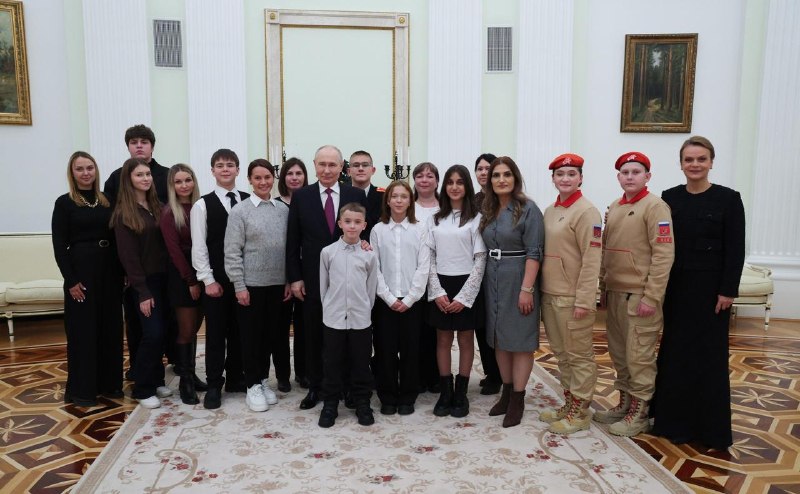
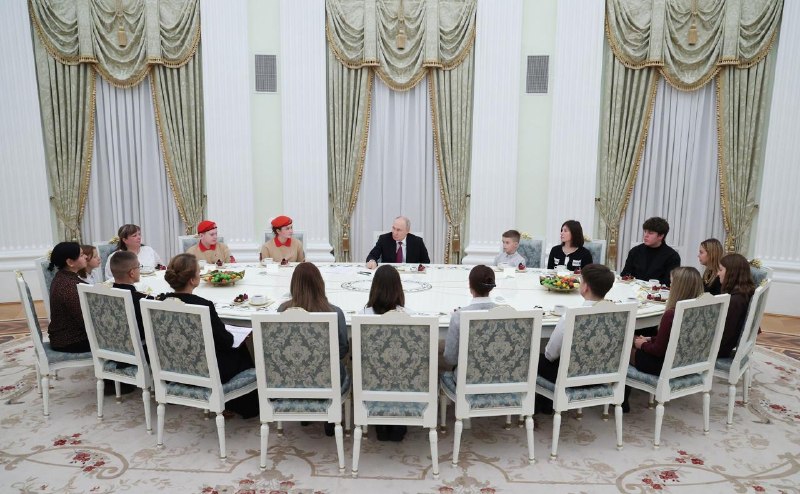
The President also spoke with children of special military operation heroes who were in Red Square.
#UnityDay2026
repost
On National Unity Day, Vladimir Putin laid flowers at the monument to Kuzma Minin and Dmitry Pozharsky in Moscow's Red Square
The ceremony brought together representatives of religious denominations and members of non-governmental and youth organisations.
Celebrated in Russia on November 4, National Unity Day marks the liberation of Moscow from foreign invaders by the people's volunteer army led by Kuzma Minin and Dmitry Pozharsky in 1612.