Official account of the Russian Embassy in Sri Lanka and to the Maldives/Официальный новостной канал Посольства Российской Федерации в Шри-Ланке и в Мальдивской Республике
Subscribers2K +0 24h
Reach per post (ERR)3.5%68 avg views
Posting2.5/daylast 11 hours ago
Reactions per 1K views3.2❤ 👍 🔥
repost
#InMemoryOfDiplomats
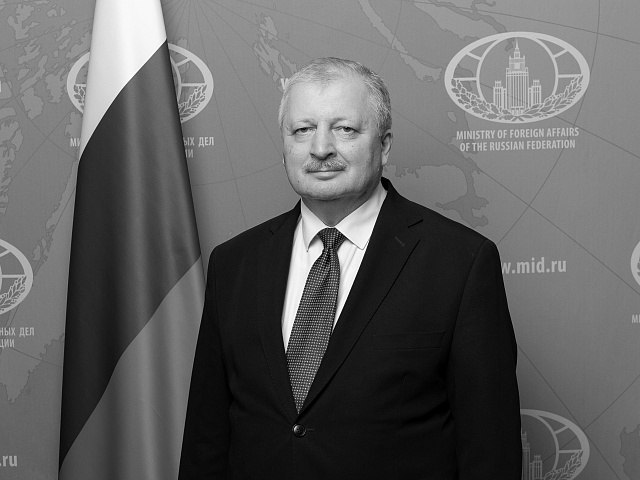
▪️ The leadership of the Russian Foreign Ministry and its Department of the North Atlantic are deeply saddened to report the sudden passing of Alexander DARCHIEV (1960-2026), Ambassador Extraordinary and Plenipotentiary of the Russian Federation to the United States of America and Permanent Observer of the Russian Federation to the Organization of American States in Washington, D.C. He passed away on November 11, 2026, at the age of 66.
We have lost a man of wisdom and depth, an outstanding diplomat, historian and scholar of American affairs who devoted his entire life and career to the service of his country.
Ambassador Darchiev had a keen and perceptive mind. Those who worked with him knew him for his exceptional professionalism and talent, his deep commitment to his country’s interests, his unwavering principles and his ability to work shoulder to shoulder with his colleagues.
Alexander Darchiev had an exceptional knowledge and understanding of the countries of North America, where he worked tirelessly throughout his diplomatic career. Moscow consistently sought his views on developments across the continent. His sound judgement and carefully considered assessments earned him a reputation as one of Russia’s foremost experts on American affairs.
His natural refinement, subtle sense of humour and personal charm went hand in hand with a quiet determination. These qualities enabled him, even at the most delicate moments in Russia’s relations with the United States and Canada, to carry out some of the most demanding tasks his country entrusted to him.
Ambassador Darchiev held a range of posts at the Ministry’s headquarters and abroad. He spent much of his career in senior positions at the Russian embassies in Washington and Ottawa.
He joined the diplomatic service in 1992 after working at the Institute for US and Canadian Studies of the USSR Academy of Sciences, where he defended his dissertation and earned the degree of Candidate of Historical Sciences.
From 2005 to 2010, he served as Minister-Counsellor at the Russian Embassy in the United States. He headed the Foreign Ministry’s North America Department from 2010 to 2014 and served as Russia’s Ambassador to Canada from 2014 to 2020. He again headed the North America Department from 2021 to 2024 and then led the North Atlantic Department from 2024 to 2025.
From March 2025, he served as Ambassador Extraordinary and Plenipotentiary of the Russian Federation to the United States of America and concurrently as Russia’s Permanent Observer to the Organization of American States in Washington, D.C.
His many state and ministerial honours included the Order of Friendship and the Order of Honour, certificates of honour from the President of the Russian Federation and the Russian Foreign Ministry, the Medal for Strengthening Military Cooperation and the Foreign Ministry’s Badge of Distinction.
🕯 We mourn the untimely loss of our mentor and friend. Our heartfelt condolences go out to his family and loved ones. We will always remember Alexander Darchiev with warmth and affection. His professionalism and vibrant personality will remain with us forever.
EEC coordinates digitalisation of procedures for certifying the origin of exported goods
At its meeting on November 10, the Board of the Eurasian Economic Commission approved methodological recommendations to help Eurasian Economic Union countries synchronise the transition to electronic procedures for obtaining certificates of origin, from an applicant’s initial request to an authorised organisation through to verification of the issued document.
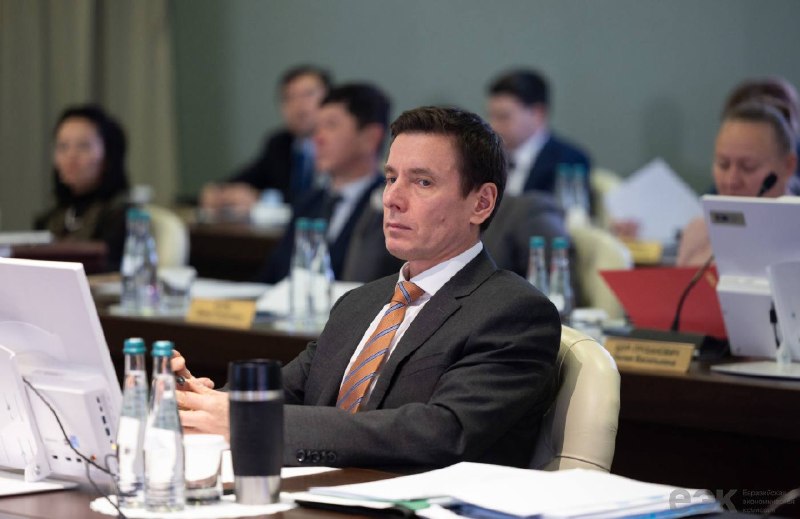
EEC Minister in charge of Trade Andrey Slepnev said:
“The methodological recommendations establish unified approaches to the creation of electronic databases of issued certificates by organisations responsible for certifying the origin of goods in EAEU countries, and to the subsequent transition to fully electronic issuance. These organisations are the Chambers of Commerce and Industry of Armenia, Belarus, Kyrgyzstan and Russia, and Kazakhstan’s Atameken National Chamber of Entrepreneurs. Unifying national procedures is an important step towards deeper Eurasian integration and fulfilling international obligations under preferential agreements with third countries.»
The accepted document will provide a basis for developing new digital solutions and refining existing ones in the Member States to speed up the preparation of documentation for the export of goods beyond the EAEU customs territory and make the process more convenient for applicants for preferential and non-preferential certificates of origin.
The adoption of the methodological recommendations is provided for in the road map for implementing the Declaration on Further Development of Economic Processes within the Eurasian Economic Union until 2030 and for the Period until 2045, “The Eurasian Economic Path”, approved by EEC Council Disposition No. 39 dated December 21, 2025, and aims to implement the agreements set out in the Agreement on a Harmonised System for the Determination of the Origin of Goods Exported from the EAEU Customs Territory, signed on December 4, 2023.
#EAEU
📄 Declaration of the Collective Security Council of the Collective Security Treaty Organization (Moscow, November 11, 2026)
✍️ We, the members of the Collective Security Council of the Collective Security Treaty Organization (#CSTO), reaffirm our unconditional commitment to the objectives set out in the Collective Security Treaty and the CSTO Charter – to create favourable and stable conditions for the comprehensive development of the member states and to safeguard their security, sovereignty and territorial integrity.
We regard closer cooperation within the CSTO as one of our foreign policy priorities. We intend to take joint steps to further strengthen the collective security system.
We emphasise that the CSTO gives priority to political and diplomatic means of resolving and settling conflicts. Its guiding principles include mutual respect and equality, non-interference in the internal affairs of states and due regard for their legitimate interests.
We note that the international situation is undergoing fundamental change. A just #MultipolarWorld order continues to take shape. As new centres of influence grow stronger, competition is intensifying and new challenges to international security and global stability are emerging.
☝️ Amid continuing turbulence in world politics and international relations, stable and predictable forms of cooperation between states are particularly valuable. With its time-tested mechanisms, forces and capabilities, the CSTO is a cornerstone of a stable architecture of equal and indivisible security in Eurasia. Building such an architecture serves the fundamental interests of the Member States.
We reaffirm our intention to continue working closely together to create conditions in which every state on the continent can develop free from the threat of external interference. In doing so, we are guided by the principle that states and groups of states must not pursue their own security at the expense of others.
🌐 To this end, the CSTO Member States will take part in drafting the Eurasian Charter of Diversity and Multipolarity in the 21st Century.
We intend to continue working closely together to enhance the authority of the United Nations and strengthen its role as the principal instrument for maintaining international security. We will also work to advance a just #MultipolarWorld order founded on the UN Charter and the rule of international law, and to promote recognition of the many paths that states take towards progress as an asset to human civilisation.
We express concern at the growing threats and strategic risks arising as individual states and countries belonging to other military alliances and coalitions move their military and strategic infrastructure closer to the borders of CSTO member states.
❗️ We emphasise that the deployment of weapons systems that threaten collective security along the perimeter of the CSTO’s area of responsibility is unacceptable.
We are ready to expand cooperation between the CSTO and other international organisations, particularly the Commonwealth of Independent States and the Shanghai Cooperation Organisation, with which we share the task of ensuring stability and security across Eurasia. We welcome the establishment of permanent channels for cooperation between the CSTO and the African Union to strengthen security and address new challenges and threats.
Read in full
repost
On the passing of Alexander Darchiev, Ambassador Extraordinary and Plenipotentiary of the Russian Federation to the United States of America.
The leadership and staff of the Russian Foreign Ministry announce with profound sorrow that Alexander Darchiev, Ambassador Extraordinary and Plenipotentiary of the Russian Federation to the USA, passed away suddenly on November 11, aged 66.
We have lost an outstanding diplomat, an experienced leader, a kind colleague and a mentor. An exceptional professional and a distinguished expert on the United States, Alexander Darchiev served in one of the most demanding areas of Russian foreign policy.
We extend our deepest and most heartfelt condolences to Alexander Darchiev’s family and loved ones.
The cherished memory of our colleague, taken from us far too soon, will remain in our hearts forever.
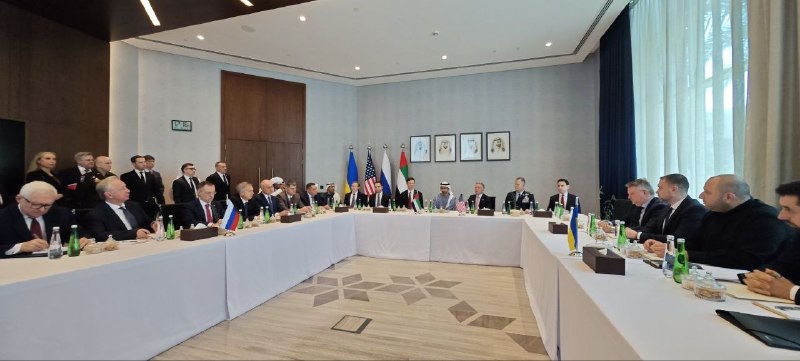
⚡️ Press briefing by the Russian delegation, led by Presidential Aide Vladimir Medinskiy, following the talks in Abu Dhabi (November 11, 2026)
💬 Vladimir Medinskiy: First of all, on behalf of the entire Russian delegation, I would like to thank the leadership of the UAE and Abu Dhabi for the excellent organisation of the trilateral talks and for creating a friendly, businesslike atmosphere.
***
Answers to media questions:
❓ Question: How did the discussion on shaping Europe’s future security architecture proceed?
💬 Vladimir Medinskiy: We believe it is right to raise the question of what will happen after the inevitable end of the conflict in Ukraine.
❗️ Russia has repeatedly raised the issue of European security architecture and the need to establish a new, comprehensive and fair security system in Europe.
We did so in 2008, when we proposed the relevant draft European Security Treaty, and in 2021, when we sent the relevant documents to NATO, the US and European countries.
But, as the saying goes, it is easier said than done.
Many years have passed, and this issue has finally gained attention, with a growing recognition that it must be addressed.
The conflict in Ukraine has shown that the entire European security system in place since Yalta and Potsdam functions very poorly. In essence, the entire body is diseased, and Ukraine is simply where the abscess has burst.
With the US Side participating, we exchanged views. We found common ground on some points, but not on others. This discussion will certainly continue.
☝️ The world needs a new, modern, renewed security system that is fair and does not come at the expense of individual countries. We will work towards that.
❓ Question: EU representatives were also in Abu Dhabi. Did you speak to them, and are any meetings with them planned?
💬 Vladimir Medinskiy: We did not speak to them.
We are not quite sure in what capacity they are here. The talks are being held in the agreed trilateral format.
As for the stance taken by the leadership of a number of European countries, they are, in essence, collectively deceiving the Ukrainian people. They finance and supply weapons to one of the warring parties. In effect, they are contributing to civilian deaths on a massive scale.
We are not quite sure what there is to discuss with them. We have not received a single peace initiative or a single concrete peace proposal from European countries. Therefore, it is unclear what there is to discuss.
They would do well to learn, for example, from the American envoys when it comes to common sense, realism and a desire to achieve peace.
❓ Question: Were humanitarian issues raised during the meeting? In previous rounds held in Turkiye and Switzerland, you managed to reach agreements with the Ukrainians on POW exchanges, for example. Was such an agreement reached in Abu Dhabi?
💬 Vladimir Medinskiy: We have agreed in principle on a new large-scale prisoner exchange. The specific details will be announced shortly.
❓ Question: How do you assess the role of Steven Witkoff and Jared Kushner, and the Trump administration more broadly, in the rounds of talks? What role do you believe they can play in reaching agreements?
💬 Vladimir Medinskiy: The US Side played an active role in the talks. The role of individuals in history matters here. President Donald Trump’s envoys are certainly sincere, effective people and, most importantly, focused on results, rather than empty talk.
What matters is not how we assess them, but how many lives will be saved through their active mediation efforts.
We are therefore very grateful to them as well.
❓ Question: Under what conditions could the Europeans become full participants in the talks? What conditions must they meet to be admitted to the negotiating table?
💬 Vladimir Medinskiy: I think as soon as their conscience awakens, they can become participants in peace talks.
Until then, as I have said, they are taking part in the collective deception of the Ukrainian people and are, in effect, complicit in civilian deaths.
⚡️ On the adoption by the UN General Assembly’s Third Committee of Russia’s resolution on combating the glorification of Nazism
On November 10 in New York, the Third Committee of the 81st Session of the UN General Assembly adopted a resolution put forward by Russia entitled “Combating glorification of Nazism, neo-Nazism and other practices that contribute to fuelling contemporary forms of racism, racial discrimination, xenophobia and related intolerance”.
🌐 The resolution was co-sponsored by 45 states: Algeria, Angola, Armenia, Azerbaijan, Belarus, Burkina Faso, Burundi, Cambodia, Cameroon, the Central African Republic, China, the Republic of the Congo, Cuba, the DPRK, Equatorial Guinea, Eritrea, Ethiopia, Gabon, Guinea, Kazakhstan, Kyrgyzstan, Laos, Lesotho, Mali, Namibia, Nicaragua, Niger, Nigeria, Pakistan, Russia, Senegal, Serbia, Sierra Leone, South Africa, Sri Lanka, Sudan, Tajikistan, Tanzania, Togo, Turkmenistan, Uganda, Uzbekistan, Venezuela, Vietnam and Zimbabwe.
☝️ 117 states voted in favour, 53 voted against and nine abstained. The vote demonstrates the broad international support this key Russian initiative continues to enjoy at the UN.
The resolution’s adoption is particularly significant this year. It marks 80 years since the International Military Tribunal at Nuremberg concluded the trial of senior officials of the Third Reich and 25 years since the World Conference against Racism adopted its outcome document, the Durban Declaration and Programme of Action.
The resolution expresses deep concern over any form of glorification of the Nazi movement, neo-Nazism and former members of the Waffen-SS, including the erection of monuments and memorials and the holding of public demonstrations glorifying the Nazi past and neo-Nazism.
❗️ It is particularly alarming that countries of the “collective West”, especially EU member states, where these practices occur regularly, refuse to acknowledge or address them and choose instead to oppose multilateral efforts to combat various forms of intolerance.
The stance taken by the former Axis powers – Germany, Italy and Japan – is of particular concern. Their votes against the resolution show that they have forgotten the tragic lessons of their own 20th-century history. They also cast doubt on the sincerity of their professed humanist values and their commitment to the obligations they assumed on joining the UN.
The resolution makes a practical and substantial contribution to global efforts to eradicate Nazism, racism, racial discrimination, xenophobia and all forms of related intolerance.
🤝 Russia expresses its sincere gratitude to all those who stood firm on principle despite the pressure they faced. They reaffirmed that any attempt to revise the outcome of World War II is unacceptable and that the UN Charter and the Judgement of the Nuremberg Tribunal remain inviolable.
Read in full
repost
ЧЕТЫРЕ ПОБЕДИТЕЛЯ — И ДОРОГА В РОССИЮ!
Сегодня мы приветствуем четырех победителей олимпиады по русскому языку «Знатоки русского языка-2», которую уже второй год подряд организует наш партнер — Чувашский государственный педагогический университет имени И. Я. Яковлева при поддержке Русского дома.
🏆 В этом году в олимпиаде приняли участие около 250 человек со всех уголков Шри-Ланки — людей разных возрастов и профессий, которых объединил интерес к русскому языку и желание проверить свои знания. На протяжении нескольких месяцев участники проходили конкурсные испытания. 16 октября в Русском доме состоялся очный финал, в котором встретились десять сильнейших конкурсантов. Оценить их знания приехали представители ЧГПУ — проректор Светлана Ильина и доцент Александра Никитина.
🌟 По итогам непростого отбора были определены четыре победителя. Их главный приз — поездка в Чебоксары, в Чувашский государственный педагогический университет имени И. Я. Яковлева. Победителей ждет насыщенная культурно-образовательная программа, знакомство с университетом, русской культурой и традициями, а главное — возможность увидеть Россию своими глазами!
Мы искренне рады, что русский язык продолжает завоевывать популярность на Шри-Ланке, а такие проекты дают его изучению новый импульс и открывают перед ланкийцами прекрасные возможности.
Благодарим наших друзей из ЧГПУ имени И.Я. Яковлева за плодотворное сотрудничество и за замечательную инициативу, которая объединяет людей и укрепляет образовательные и культурные связи между Россией и Шри-Ланкой.
Поздравляем победителей и желаем им счастливого пути, ярких впечатлений и незабываемого знакомства с Россией!
#РусскийДомКоломбо #ЗнатокиРусскогоЯзыка #ЧГПУ #РоссияШриЛанка #РусскийЯзык
💬 Director of the Russian MFA Department for Multilateral Human Rights Cooperation Grigory Lukyantsev:
On November 10 in New York, the Third Committee of the 81st Session of the UN General Assembly approved a key Russian initiative at the UN – the resolution entitled “Combating glorification of Nazism, neo-Nazism and other practices that contribute to fuelling contemporary forms of racism, racial discrimination, xenophobia and related intolerance”.
✅ 117 votes in favour
❌ 53 votes against
🟨 9 abstentions
The resolution’s approval this year holds particular significance as we mark the 80th anniversary of the Nuremberg Tribunal’s Verdict and the 25th anniversary of the Durban Declaration and Programme of Action.
Co-sponsored by 45 countries from every region of the world, Russia’s initiative is intended to serve as an important international legal instrument for countering the falsification of history, efforts to revise the outcomes of the Second World War and attempts to whitewash the crimes of the Nazis and their collaborators.
The resolution pays particular attention to the destruction of monuments honouring those who fought Nazism and attempts to ban symbols of the Great Victory.
The resolution also stresses that ideologies asserting the superiority of one group over another on grounds of race, ethnicity or religion are unacceptable. This issue remains particularly pressing as various forms of intolerance continue to spread, including Islamophobia, Christianophobia, Afrophobia, Arabophobia, Russophobia and antisemitism.
☝️ Despite the clear importance of these issues, several Western countries once again sought to politicise the debate and replace substantive discussion of how to combat the glorification of Nazism with politically expedient accusations against Russia.
👉 The vote once again demonstrated broad support for Russia’s initiative among countries of the #GlobalMajority.
Russia will continue to call for resolute action to combat the glorification of Nazism, preserve historical memory and prevent a recurrence of the tragedy of the Second World War.
⚡️ Russia’s Federal Security Service:
Russia’s Federal Security Service (#FSB) has identified and contained a network of agents operating in the Kaliningrad Region on behalf of Poland’s intelligence services.
❗️ In the course of its investigation, the FSB detained two agents working for the Military Intelligence Service of Poland’s Ministry of National Defence and the Polish Internal Security Agency. They gathered and passed on information about Russian military personnel and Defence Ministry facilities, as well as about socio-economic conditions in the Kaliningrad Region and the Region’s migration and social policies.
The investigative department of the FSB Directorate for the Kaliningrad Region has opened criminal cases against the two individuals on suspicion of espionage under Article 276 of the Russian Criminal Code.
A court has remanded both suspects in custody.
The FSB also issued formal warnings to seven Polish nationals and three Russian nationals who had been in contact with Polish intelligence services. They were warned against taking any action that could facilitate the commission of offences under the following provisions of the Russian Criminal Code:
👉 Article 275 (high treason)
👉 Article 275.1 (cooperation on a confidential basis with a foreign state or an international or foreign organisation)
👉 Article 276 (espionage)
🚫 The seven Polish nationals have been barred from entering Russia for an extended period.
In addition, following security screening in 2026, Russia revoked the visas of 14 Polish nationals and barred six from entering the country for assisting Polish intelligence services.
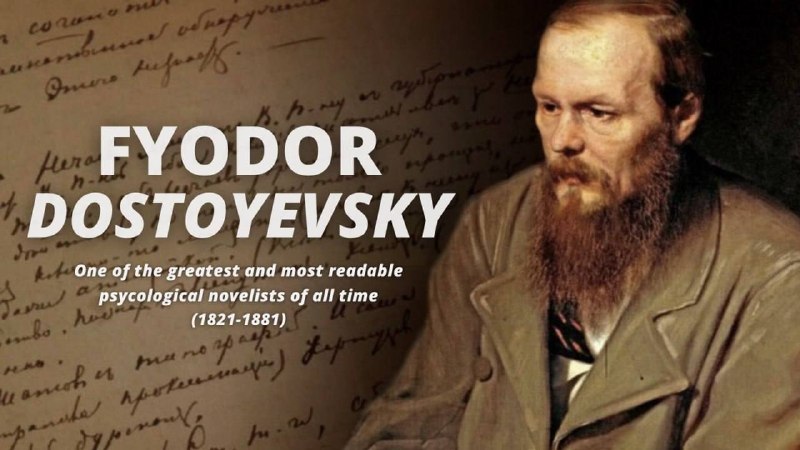
🗓️ Today marks the anniversary of the birth of Fyodor #Dostoevsky, the Russian thinker and philosopher widely regarded as one of the most gripping psychological novelists in history. He was born in Moscow on November 11, 1821.
As a young man, he studied at a military engineering school in St. Petersburg, a course his father had picked for him, and served briefly in the army. He then turned to writing, first translating Balzac’s “Eugénie Grandet” and then publishing his debut novel, “Poor Folk,” in 1846. The book was an instant sensation and turned him into a literary star almost overnight.
✍️ From the mid-1860s onward he produced the major works that secured his lasting fame, among them “Notes from the House of the Dead,” “Crime and Punishment,” “The Idiot,” “Demons,” “The Gambler,” and “The Brothers Karamazov.”
Dostoevsky was celebrated for his deep insight into the darkest corners of the tormented human soul, and his writing wrestles with questions of good and evil, faith, and the quest for meaning.
His books have been translated into over 170 languages and have inspired countless writers and thinkers, from fellow Russian authors Anton Chekhov and Leo Tolstoy to Albert Einstein and Sigmund Freud, the father of psychoanalysis.
#RussianCulture #DiscoverRussia
#KievRegimeCrimes
⚡️ Ambassador-at-Large of the Russian Ministry of Foreign Affairs Rodion Miroshnik:
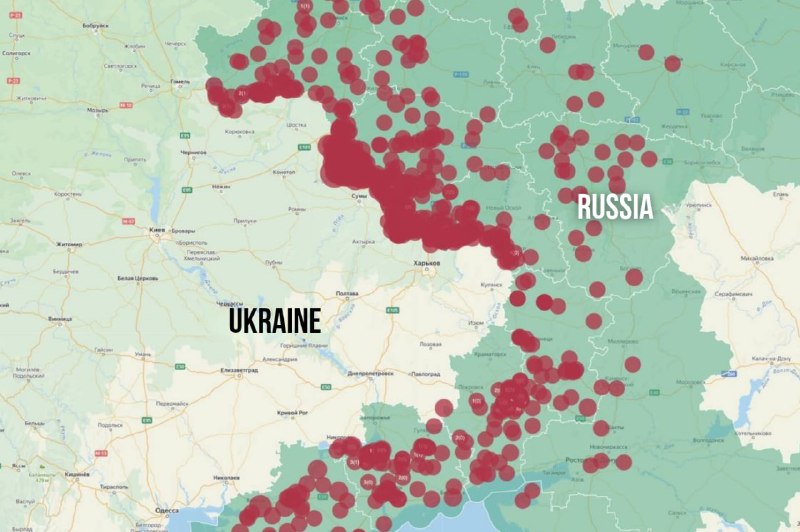
💬 As Russia marked National Unity Day and in the run-up to the trilateral talks in Abu Dhabi on a settlement of the Ukraine conflict, Ukrainian militants continued to attack civilian sites on Russian territory with high intensity.
Over the seven days, they fired 8,206 rounds of ammunition, killing or wounding more than 260 civilians.
The highest numbers of civilian casualties were recorded in the Belgorod, Bryansk, Zaporozhye, Kursk and Kherson regions, as well as in the Donetsk and Lugansk People’s Republics.
The Ukrainian militants continued to use drones to attack passenger buses as part of their terrorist tactics. A drone strike on a bus on the Petrovka-Lugansk route killed five people and wounded 13 other civilians, including two teenagers aged 15 and 17. Another drone strike on a scheduled bus service from Lugansk to Zimogorye killed one civilian and wounded eight others. In the Proletarsky district of Donetsk, a Ukrainian drone strike on a petrol station killed a bus driver and wounded three other drivers.
During the week of November 2-8, shelling by Ukrainian neo-Nazis killed or wounded 262 civilians. The wounded included 221 people, 10 of them minors. Among the 41 people killed were three children.
Over the seven days, Ukrainian armed formations fired some 8,206 rounds of ammunition at civilian sites on Russian territory.
👉 PHOTO EVIDENCE of Ukrainian forces’ crimes (November 2-8, 2026)
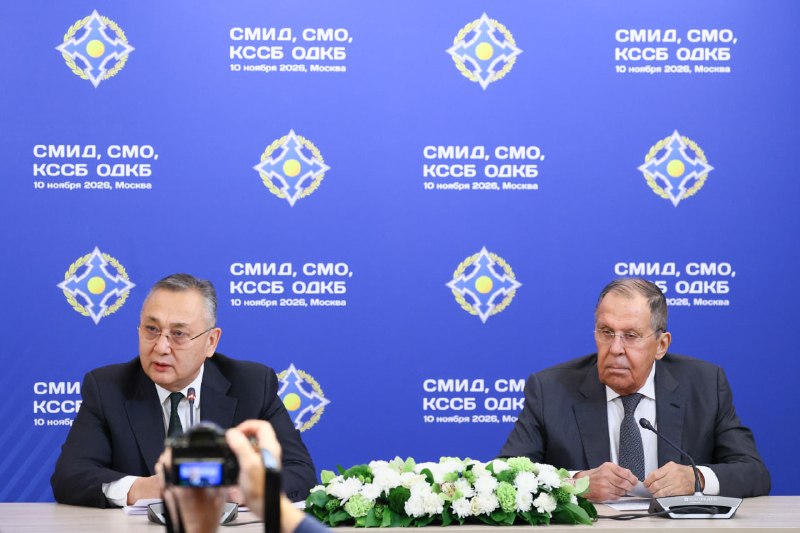
🎙 Remarks and answers to media questions by Russia’s Foreign Minister Sergey Lavrov at a joint news conference with Secretary General of the CSTO Taalatbek Masadykov (Moscow, November 10, 2026)
Key points:
• As #CSTO Chair in 2026, Russia has pursued a policy of steadily deepening integration across all areas to improve the Organisation’s effectiveness and enhance its international standing. We are grateful to our allies for their consistent support for all our initiatives throughout Russia’s chairmanship.
• We were also compelled to discuss Armenia’s failure to fulfil its obligations under the CSTO Charter regarding annual contributions to our common Organisation’s budget. There can be no ambiguity here.
• A draft decision on this matter will also be considered at tomorrow’s Session of the CSTO Collective Security Council. It provides for suspending Armenia’s right to nominate its citizens for quota-based positions in the Organisation’s bodies and withdrawing its voting rights until its arrears are paid in full.
• At the proposal of the American mediators, the talks that began today in Abu Dhabi focus on discussing the parameters of a future security architecture for Ukraine, Russia and our entire region – European security, one might say.
• Ursula von der Leyen said there should be no discussion of the parameters of a security architecture until a lasting truce is in place. The same old logic again: they must “buy time” for their “clients” – the Kiev regime – and use it to replenish Ukraine’s military losses. ❌ We will not agree to this.
• As for European participation, they have flown to Abu Dhabi. Let them sit in their hotel. But we cannot and do not wish to prevent the Americans from talking to whoever they deem necessary, on the grounds that this will help the negotiations. We shall see what comes of it.
• The idea of defining clear parameters for a future security architecture before moving on to settling the Russian-Ukrainian conflict itself is entirely reasonable.
• We have seen the Kiev regime’s ploys time and again. ❌ We will not agree to another truce, ceasefire or whatever it may be called without understanding the next steps.
• Europe’s plan is very simple, and they make no secret of it. As soon as a ceasefire is in place, they will deploy “stabilisation forces” to territory controlled by the Kiev regime. Through this concept, which we will, of course, prevent them from implementing, they seek to stabilise the current Nazi regime.
• Regarding the situation surrounding Iran and US President Donald Trump’s statement that Washington is no longer considering military options, I hope that will indeed be the case. Russia and China have consistently stressed the need to return to a peaceful settlement through political and diplomatic means.
• Unfortunately, external actors continue to play a destructive role, as was the case with the Islamabad Memorandum, signed by Iran’s Leader and President Donald Trump personally. Despite this, Israel refuses to comply with its first provision, which stipulates the need for non-interference in the internal affairs of the Lebanese Republic.
• Prospects for a settlement in the Strait of Hormuz and, more broadly, around the entire Arabian Peninsula, as I would put it, will require consideration of the situation in the Bab el-Mandeb Strait. We need to understand how to accommodate the Houthis’ legitimate interests in the context of the Yemeni crisis.
Read in full
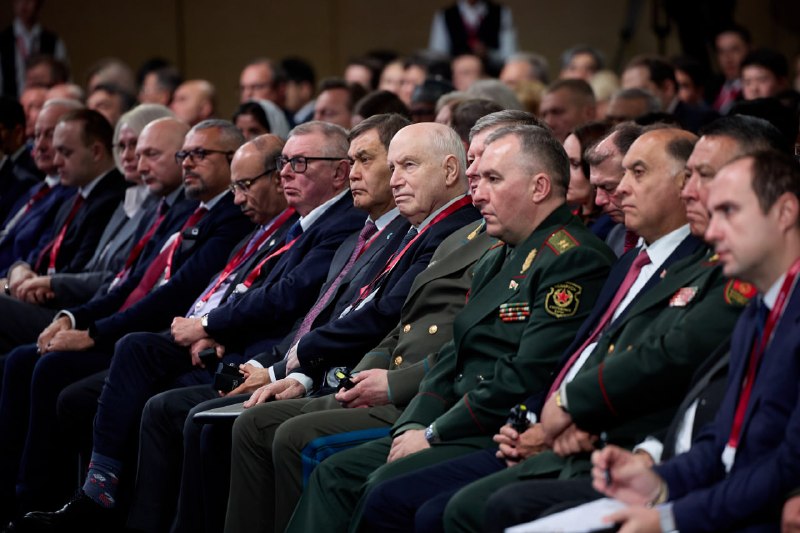
🎙 Remarks and response to a question by Russia’s Foreign Minister Sergey Lavrov at the Plenary Session of the International Collective Security Forum (Moscow, November 10, 2026)
Key points:
• Russian initiatives to establish a single treaty-based legal framework for security across Europe were rejected. I remember very clearly reminding our Western colleagues of the principle of indivisible security. It requires that no country or organisation in the Euro-Atlantic area strengthen its own security at the expense of others or lay claim to dominance.
• As you know, our most recent attempt came in December 2021, when we tried to prevent the inevitable. I want to stress that point, as President Vladimir Putin has explained on more than one occasion. We knew for certain that serious preparations were under way, with Western support, for a major military crackdown on Donbass (the Donetsk and Lugansk People’s Republics). We could not allow that to happen.
• We have no illusions about the administration of US President Donald Trump. We recognise the fundamental differences between us over the future course of international politics. ☝️ Even so, it is always better to talk. That was true even during the Cold War, when our military maintained contact with their American counterparts. It remains true of our relations with the US today.
• We have our own position paper [on a new security architecture in Eurasia]. We also have what #CSTO Secretary General Taalatbek Masadykov has just outlined. The CSTO works closely with other subregional organisations on the continent, including the #CIS and the #SCO, and has signed memoranda of cooperation with them.
• Africa has around a dozen subregional organisations. Latin America, too, certainly has around ten such organisations. Both regions also have a continent-wide umbrella organisation that brings all their countries together. Eurasia, the world’s largest continent, rich in natural resources and densely populated, has no such umbrella organisation. Yet closer links are essential if we are to achieve a sensible division of labour and make the most of the advantages that God and history have bestowed on the peoples of Eurasia. We need those links to avoid duplication and optimise logistics projects and transport routes.
• Our aim is to come together and take stock of what we already have – the subregional organisations already in place and the links between them. We have no plans to create a new organisation. Consider the links between the EAEU and ASEAN, the SCO and ASEAN, the EAEU and the SCO, and those linking the CIS, the SCO and the CSTO. To some extent, what we call the “integration of integrations” is already under way.
Read in full
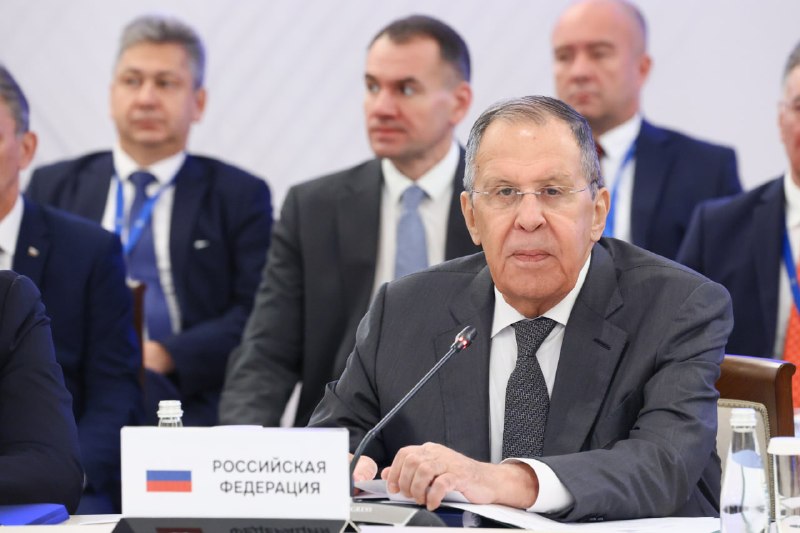
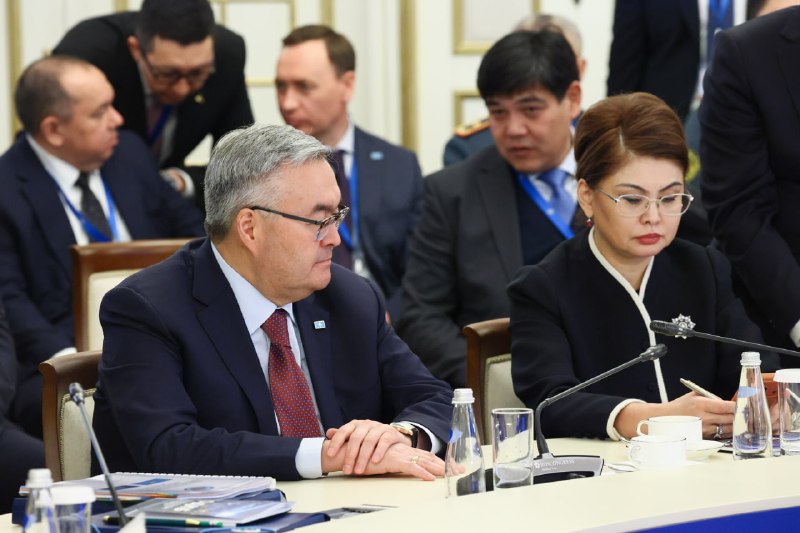
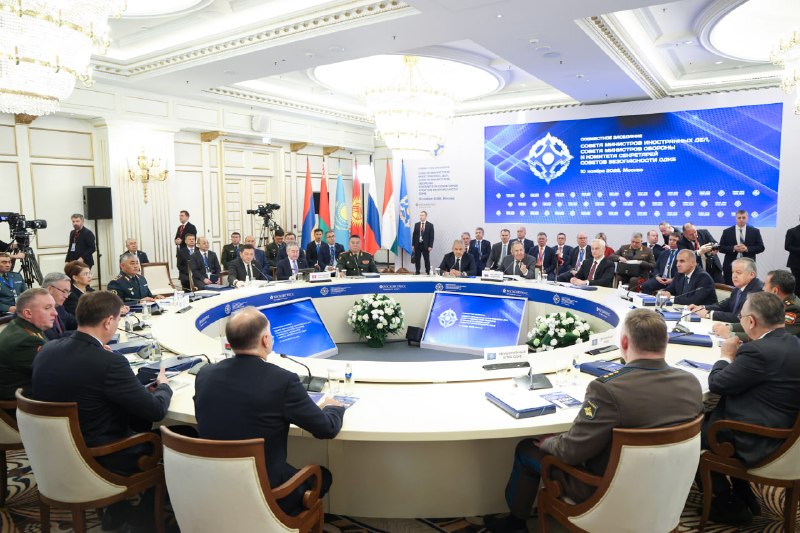
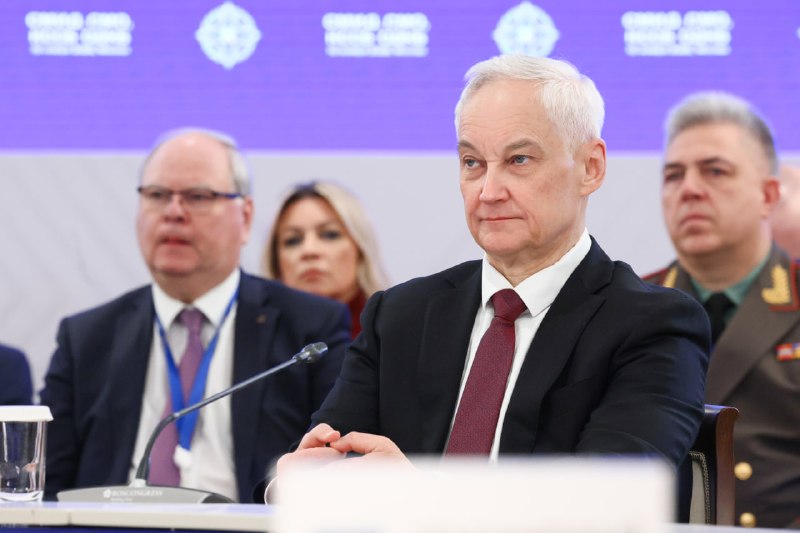
🎙 Remarks by Russia’s Foreign Minister Sergey Lavrov at the joint meeting of the Council of Foreign Ministers, the Council of Defence Ministers and the Committee of Secretaries of Security Councils of the Collective Security Treaty Organisation (Moscow, November 10, 2026)
💬 Sergey Lavrov: We are pleased to welcome you to Moscow for this regular joint meeting of the Council of Foreign Ministers, the Council of Defence Ministers and the Committee of Secretaries of Security Councils of the Collective Security Treaty Organisation (#CSTO).
As Russia chairs the Organisation in 2026, we attach particular importance to the success of today’s meeting. Throughout our chairmanship, we have sought to make fuller use of the #CSTO’s potential for integration to deepen cooperation and partnership with our closest allies across all areas.
I am grateful to my fellow Ministers for the engaging Session we held earlier today at the International Collective Security Forum. We had a frank and professional exchange of views, which experts will take up in their discussions.
☝️ I am confident that the Forum’s work will contribute to building a free, multipolar and democratic world order.
👉 This entails building a new security architecture on our shared continent of Eurasia, based on the principles of equal and indivisible security and open to all countries on the continent willing to engage constructively on an equal footing.
During Russia’s chairmanship, we have placed particular emphasis on closer foreign policy coordination, on countering both traditional and new challenges and threats, and on strengthening the CSTO’s military capabilities.
We have worked hard to reinforce the CSTO’s role as a key guarantor of regional security. This work reflects the priorities that Russia’s President Vladimir Putin, this year’s Chair of the Collective Security Council, set out with the support of the member states.
🤝 We are grateful to our friends for their steadfast support as we pursue the objectives of Russia’s chairmanship. These efforts serve our common interests.
Read in full
The Russian delegation, helmed by Presidential Aide Vladimir Medinsky, is en route to the venue for the talks. The delegation includes Russia’s Deputy Foreign Ministers Mikhail Galuzin and Sergey Ryabkov.
📍 Abu Dhabi, UAE
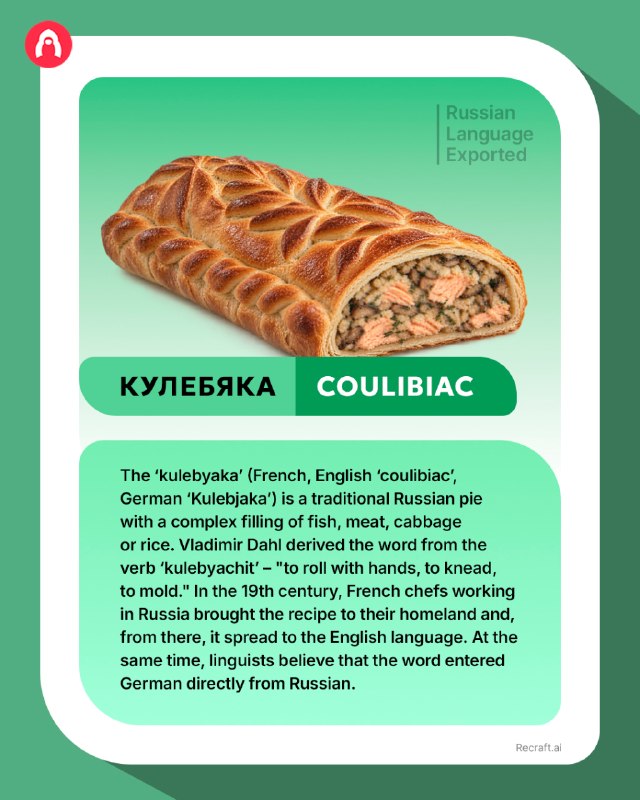
#RussianLanguageExported
🔔 Gateway to Russia
⚡ Article by Foreign Minister of the Russian Federation Sergey Lavrov, The Impact of Global Economy on International Security (based on remarks at the G20 Foreign Ministers’ Meeting on October 30-31, 2026)
✍️ A meeting of G20 Foreign Ministers took place in the United States not long ago. The participants focused on the global economy and its interconnection and interdependence with international security.
I offered a number of assessments in my remarks at the meeting that I would like to share with a wider readership.
Key points:
👉 Geopolitical Context
• In an ideal world, the global economy and international security should complement each other and jointly provide a foundation for peaceful coexistence and shared prosperity. Instead, the economy is increasingly becoming an arena of confrontation, with trade wars being unleashed to suppress geopolitical competitors in the wake of hot wars.
• The objective process of the emergence of a multipolar world order is being met with outright hostility in the West. <...> Protectionist barriers, and even outright blockades, in the way of the dissemination of advanced technologies are multiplying.
• The European Union, which is turning itself into a military bloc <...> has harked back to the days of slavery and piracy and taken to openly seizing foreign vessels and stealing their cargoes. To justify this plunder, it has invented the term “shadow fleet,” which has no basis in international law.
👉 All these actions by the West are in direct violation of international law. They create uncertainty and additional costs, and undermine global economic connectivity and long-term resilience. In effect, they are dismantling the very globalisation model that the West itself created and promoted for decades as the ideal system of global economic governance, a kind of “economic end of history.”
👉 Global energy and food security
• A stable global energy system is an essential prerequisite for sustained economic growth and the adoption of innovative technologies. <...> However, the normal functioning of energy markets is being undermined by a number of factors.
• Feeling emboldened by the EU’s unconditional support, the Kiev regime has come to believe that it can act with impunity carrying out terrorist attacks against critical infrastructure.
• US President Donald Trump’s calls on Ukraine to stop fuelling the energy crisis have been ignored. ❗️
To this day, those who organised the acts of sabotage against the Nord Stream pipelines mentioned above have not been brought to justice.
• The aggression against Iran, which led to the closure of the Strait of Hormuz, was a serious destabilising factor that has dealt a severe blow to the energy sector.
• Food security is another important component of global security. <...> This year, G20 trade ministers condemned the weaponisation of food supplies 👉 What is needed now is to translate words into concrete action.
👉 Russia in the global economy: A constructive contribution despite challenges
• The illegitimate sanctions have inflicted losses running into trillions on Europe, fuelled inflation in the United States, and reduced living standards in many countries (hence the surge in protest sentiment across the European Union).
• Russia will continue to contribute to normalising global fuel and energy markets. <...> We are among the leading exporters of hydrocarbons to Asia, Africa, and Latin America.
***
We are convinced that the future lies in the democratisation of international economic relations and the restructuring of the global economy on a genuinely multipolar basis. Global markets and supply chains must be open, competitive, and inclusive, while trade and investment cooperation must be based on equality and predictability. <...>
For its part, Russia and its partners and like-minded countries, primarily within BRICS, the SCO, the EAEU, and the CIS, will continue working to advance a constructive agenda aimed at building a fairer and more prosperous world for all countries without exception.
Read in full
#GeographicalDictation2026
🌍 In a great annual tradition, the Russian Geographical Society invites you to take part in the 2026 Geographical Dictation.
Launched at the Society’s initiative with the support of the President of Russia, MFA Russia and Rossotrudnichestvo, this annual international educational event encourages people around the world to explore Russia and discover its beauty that stretches from the Baltic to the Pacific.
The questions range from familiar facts to puzzles that call for logic, a keen eye and creative thinking. You can test your knowledge, learn something new about Russia and see geography in a different light.
🗓 The online Dictation is available from November 22 to December 10, 2026 (12 pm local time). You can take part at any time during this period. ☝️ No registration is required.
Choose from four versions:
▪️ Main version – 30 questions in Russian.
▪️ International version – 20 questions in English and in other languages where volunteer translations are available.
▪️ Extra version – 30 questions in Russian and English. You can take this version as many times as you like.
▪️ Geodictation. Advanced Level – 20 questions for those who want to test their geography knowledge at expert level.
🌐 In 2025, the Dictation set a new record with 10,375 venues across 120 countries. Oman, Jamaica and the Dominican Republic took part for the first time. 2025 marked the 180th anniversary of the Russian Geographical Society, the 80th anniversary of Victory in the Great Patriotic War and 500 years of exploration of the Northern Sea Route.
Over six years, geographers from around the world have submitted more than 4,500 questions to the organisers through the Dictation’s question-writing competition.
👉 Take part on the official Geographical Dictation website.