🎙️Kommentar fra Russlands ambassade i Norge til RIA Novosti (9. november 2026)
❓Det norske forsvarsdepartementet har på nytt kunngjort planer om å styrke den militære tilstedeværelsen i Finnmark, som grenser til Russland. Forsvarsdepartementet har til hensikt å plassere sensorer for NASAMS-luftvernsystemer der og sende over 30 militære til regionen. Kan Ambassaden kommentere Norges nye planer om militarisering av regionene som grenser til Russland? Hvordan reagerer man i Oslo på de gjentatte advarslene fra russisk side om konsekvensene av en slik kurs?
💬 Svar: Norge styrker konsekvent sin militære kapasitet i nordområdene, først og fremst med henvisning til den «russiske militære trusselen».
Samtidig er beslutningen om å styrke dronebeskyttelsen i grenseområdet mot Russland først og fremst rettet mot å avverge trusler som den norske siden selv har skapt, siden, som det fremgår av kommentarer fra norske myndighetspersoner, er NASAMS-sensorene som er installert først og fremst ment å oppdage ukrainske droner – som blant annet er produsert med midler fra norske skattebetalere – når disse «kommer på avveie» under operasjoner mot mål på Kola-halvøya.
👆🏻På denne måten undergraver Norge, ved å yte militær bistand til Ukraina i utviklingen av dronekapasiteten, ikke bare sin egen sikkerhet, men øker også konfliktnivået i Arktis gjennom sine handlinger.
Les hele teksten
viral
🎙️Комментарий Посольства России в Норвегии для РИА Новости (9 ноября 2026 г.)
❓Министерство обороны Норвегии вновь заявило о планах усилить военное присутствие в граничащей с Россией области Финнмарк. Минобороны намерено разместить там сенсоры для зенитных ракетных комплексов NASAMS и направить в регион более 30 военных. Не могли бы в Посольстве прокомментировать очередные планы Норвегии по милитаризации граничащих с Россией регионов? Как в Осло реагируют на регулярные предупреждения с российской стороны о последствиях такого курса?
💬 Ответ: Норвегия последовательно наращивает свой военный потенциал в высоких широтах, прежде всего мотивируя это российской военной угрозой.
Вместе с тем решение об укреплении антидроновой защиты в приграничье с Россией прежде всего направлено на отражение угроз, созданных самой же норвежской стороной, поскольку, как следует из комментариев норвежских официальных лиц, установленные для ЗРК NASAMS радары призваны в первую очередь оповещать о дронах ВСУ, которые произведены в т.ч. на средства норвежских налогоплательщиков, когда они при применении по объектам на Кольском полуострове «сбиваются с маршрута».
👆🏻Таким образом, Норвегия, оказывая военную помощь Украине в развитии потенциала БПЛА, не только подрывает свою безопасность, но и своими действиями повышает уровень конфликтности в Заполярье.
Читать полностью
#GeographicalDictation2026
🌍 In a great annual tradition, the Russian Geographical Society invites you to take part in the 2026 Geographical Dictation.
Launched at the Society’s initiative with the support of the President of Russia, MFA Russia and Rossotrudnichestvo, this annual international educational event encourages people around the world to explore Russia and discover its beauty that stretches from the Baltic to the Pacific.
The questions range from familiar facts to puzzles that call for logic, a keen eye and creative thinking. You can test your knowledge, learn something new about Russia and see geography in a different light.
🗓 The online Dictation is available from November 22 to December 10, 2026 (12 pm local time). You can take part at any time during this period. ☝️ No registration is required.
Choose from four versions:
▪️ Main version – 30 questions in Russian.
▪️ International version – 20 questions in English and in other languages where volunteer translations are available.
▪️ Extra version – 30 questions in Russian and English. You can take this version as many times as you like.
▪️ Geodictation. Advanced Level – 20 questions for those who want to test their geography knowledge at expert level.
🌐 In 2025, the Dictation set a new record with 10,375 venues across 120 countries. Oman, Jamaica and the Dominican Republic took part for the first time. 2025 marked the 180th anniversary of the Russian Geographical Society, the 80th anniversary of Victory in the Great Patriotic War and 500 years of exploration of the Northern Sea Route.
Over six years, geographers from around the world have submitted more than 4,500 questions to the organisers through the Dictation’s question-writing competition.
👉 Take part on the official Geographical Dictation website.
repost
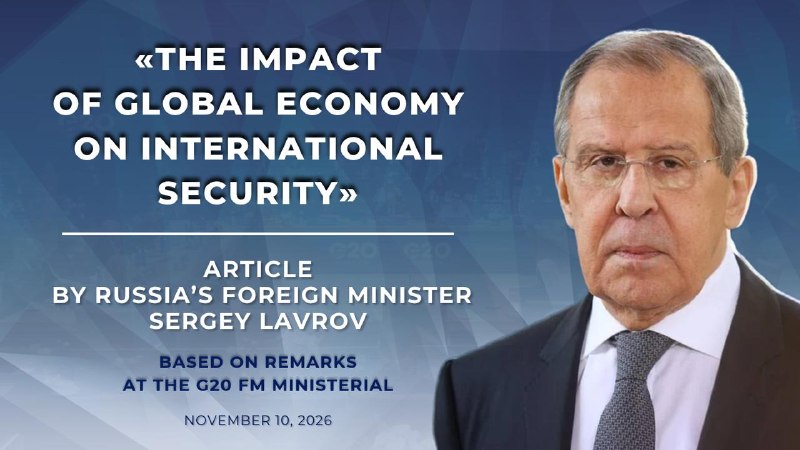
⚡ Article by Foreign Minister of the Russian Federation Sergey Lavrov, The Impact of Global Economy on International Security (based on remarks at the G20 Foreign Ministers’ Meeting on October 30-31, 2026)
✍️ A meeting of G20 Foreign Ministers took place in the United States not long ago. The participants focused on the global economy and its interconnection and interdependence with international security.
I offered a number of assessments in my remarks at the meeting that I would like to share with a wider readership.
Key points:
👉 Geopolitical Context
• In an ideal world, the global economy and international security should complement each other and jointly provide a foundation for peaceful coexistence and shared prosperity. Instead, the economy is increasingly becoming an arena of confrontation, with trade wars being unleashed to suppress geopolitical competitors in the wake of hot wars.
• The objective process of the emergence of a multipolar world order is being met with outright hostility in the West. <...> Protectionist barriers, and even outright blockades, in the way of the dissemination of advanced technologies are multiplying.
• The European Union, which is turning itself into a military bloc <...> has harked back to the days of slavery and piracy and taken to openly seizing foreign vessels and stealing their cargoes. To justify this plunder, it has invented the term “shadow fleet,” which has no basis in international law.
👉 All these actions by the West are in direct violation of international law. They create uncertainty and additional costs, and undermine global economic connectivity and long-term resilience. In effect, they are dismantling the very globalisation model that the West itself created and promoted for decades as the ideal system of global economic governance, a kind of “economic end of history.”
👉 Global energy and food security
• A stable global energy system is an essential prerequisite for sustained economic growth and the adoption of innovative technologies. <...> However, the normal functioning of energy markets is being undermined by a number of factors.
• Feeling emboldened by the EU’s unconditional support, the Kiev regime has come to believe that it can act with impunity carrying out terrorist attacks against critical infrastructure.
• US President Donald Trump’s calls on Ukraine to stop fuelling the energy crisis have been ignored. ❗️
To this day, those who organised the acts of sabotage against the Nord Stream pipelines mentioned above have not been brought to justice.
• The aggression against Iran, which led to the closure of the Strait of Hormuz, was a serious destabilising factor that has dealt a severe blow to the energy sector.
• Food security is another important component of global security. <...> This year, G20 trade ministers condemned the weaponisation of food supplies 👉 What is needed now is to translate words into concrete action.
👉 Russia in the global economy: A constructive contribution despite challenges
• The illegitimate sanctions have inflicted losses running into trillions on Europe, fuelled inflation in the United States, and reduced living standards in many countries (hence the surge in protest sentiment across the European Union).
• Russia will continue to contribute to normalising global fuel and energy markets. <...> We are among the leading exporters of hydrocarbons to Asia, Africa, and Latin America.
***
We are convinced that the future lies in the democratisation of international economic relations and the restructuring of the global economy on a genuinely multipolar basis. Global markets and supply chains must be open, competitive, and inclusive, while trade and investment cooperation must be based on equality and predictability. <...>
For its part, Russia and its partners and like-minded countries, primarily within BRICS, the SCO, the EAEU, and the CIS, will continue working to advance a constructive agenda aimed at building a fairer and more prosperous world for all countries without exception.
Read in full
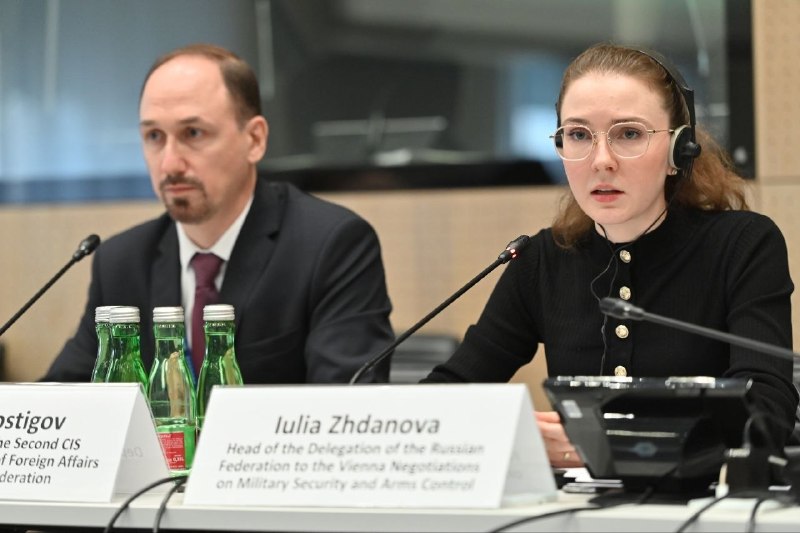
🗓 On November 9, the international round table "Militarization of Europe: What next?" was held in Vienna, organized by the Delegation of the Russian Federation to the Vienna Negotiations on Military Security and Arms Control.
The event focused on analyzing the current situation in Europe, marked by the unprecedented militarization under the pretext of countering the "Russian threat". #NATO and the #EU are openly preparing for war against Russia, predicting that it could break out within the next 3–5 years.
Participants discussed the consequences of the massive increase in mil spending by European countries, the expansion of military infrastructure in "frontline states" bordering Russia, and NATO's provocative plans against our country.
❗️In 2025, military spending by NATO states already amounted to ~ $1.6 trln. In 2025, spending by the 27 EU states reached EUR 418 bln and is projected to rise to EUR 800 bln by 2030. ❗️
💊 Particular emphasis was placed on the harmful effects of the intensive information and propaganda campaign conducted by European countries to condition their own populations to accept the idea of an "inevitable" conflict with Russia. The "Russian threat" is used to justify everything citizens are expected to sacrifice in the struggle against our country. The increase in European military spending is taking place against a backdrop of economic stagnation and will have serious social consequences.
💊 An important topic of discussion was the existing mechanisms for de-escalation, including those between Russia and NATO. It was noted that their use has become increasingly difficult, while bilateral de-escalation channels remain virtually frozen, including dialogue under agreements on the prevention of incidents on and over the high seas, as well as on the prevention of dangerous military activities.
💊 Special attention was paid to the Ukrainian crisis and its connection with European militarization. Ukraine is being systematically integrated into the defense industries of European countries, while the battlefield experience of the Armed Forces of Ukraine is being used to prepare for a conflict with our country.
The round table opened with a video address by Deputy Minister of Foreign Affairs of the Russian Federation S.A. Ryabkov. The event brought together representatives of the Vienna diplomatic corps, international and regional organizations, including the UN and the OSCE, as well as prominent experts and journalists.
🎙Speakers at the round table included:
- Head of a Division of the Department of International Military Cooperation of the MoD of the Republic of Belarus Lieutenant Colonel E.Rusak;
- Deputy Director of the Department for Non-Proliferation and Arms Control of the Russian MFA A.Mazur;
- Head of a Division of the 2nd CIS Department of the Russian MFA A.Postigov;
- Vice-Rector for International Relations and Security of the Russian State Academy of Intellectual Property, Reserve Colonel A.Likhonosov;
- Professor Emeritus of Political Science at Columbia University, Dr. Robert Legvold;
- Austrian political scientist and journalist D.Reinisch;
- Associate Professor at the Department of Political Philosophy and Geopolitics at Uni Dolomiti in Belluno, Italy, L.M.Pacini.
☝️ Following the round table, we reiterate that Russia does not seek confrontation with NATO and does not want war with Europe. European countries must abandon their dangerous course, which gives them the illusion of protection against external threats but will, in reality, lead to catastrophic consequences.
The Delegation on social media: 💙VK 💬Telegram 💬X📺YouTube📺Rutube 💬Facebook
repost
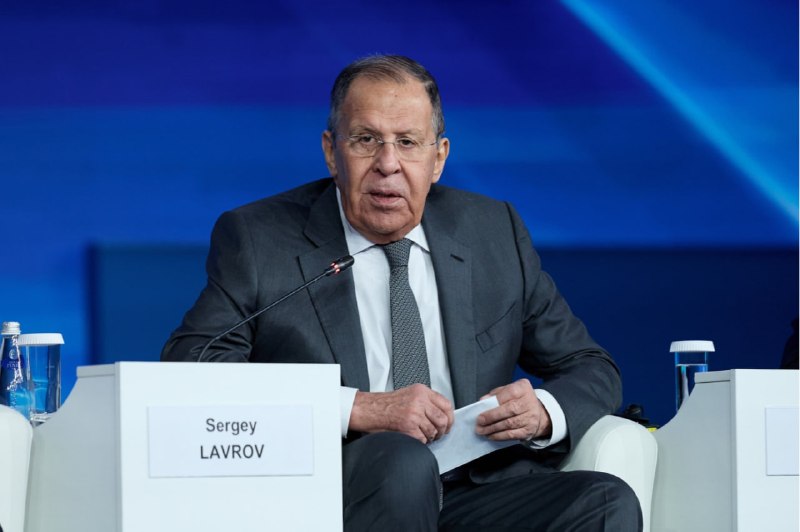
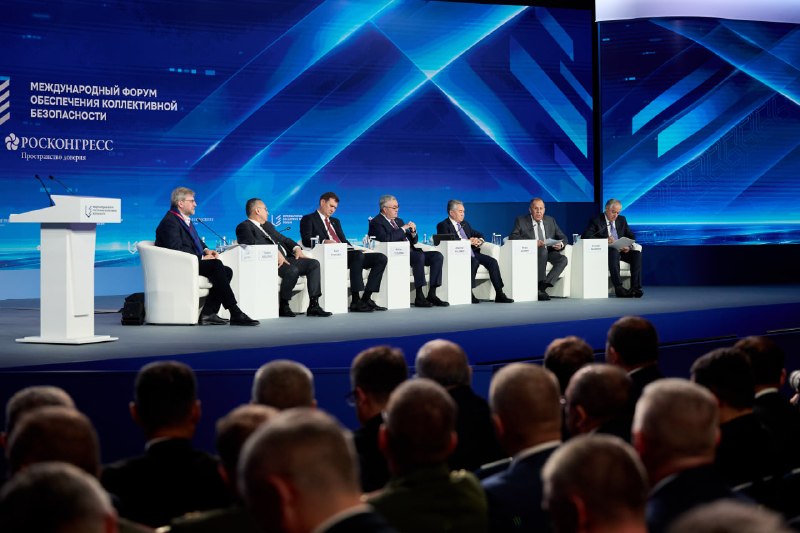
🎙 Remarks and response to a question by Russia’s Foreign Minister Sergey Lavrov at the Plenary Session of the International Collective Security Forum (Moscow, November 10, 2026)
Key points:
• Russian initiatives to establish a single treaty-based legal framework for security across Europe were rejected. I remember very clearly reminding our Western colleagues of the principle of indivisible security. It requires that no country or organisation in the Euro-Atlantic area strengthen its own security at the expense of others or lay claim to dominance.
• As you know, our most recent attempt came in December 2021, when we tried to prevent the inevitable. I want to stress that point, as President Vladimir Putin has explained on more than one occasion. We knew for certain that serious preparations were under way, with Western support, for a major military crackdown on Donbass (the Donetsk and Lugansk People’s Republics). We could not allow that to happen.
• We have no illusions about the administration of US President Donald Trump. We recognise the fundamental differences between us over the future course of international politics. ☝️ Even so, it is always better to talk. That was true even during the Cold War, when our military maintained contact with their American counterparts. It remains true of our relations with the US today.
• We have our own position paper [on a new security architecture in Eurasia]. We also have what #CSTO Secretary General Taalatbek Masadykov has just outlined. The CSTO works closely with other subregional organisations on the continent, including the #CIS and the #SCO, and has signed memoranda of cooperation with them.
• Africa has around a dozen subregional organisations. Latin America, too, certainly has around ten such organisations. Both regions also have a continent-wide umbrella organisation that brings all their countries together. Eurasia, the world’s largest continent, rich in natural resources and densely populated, has no such umbrella organisation. Yet closer links are essential if we are to achieve a sensible division of labour and make the most of the advantages that God and history have bestowed on the peoples of Eurasia. We need those links to avoid duplication and optimise logistics projects and transport routes.
• Our aim is to come together and take stock of what we already have – the subregional organisations already in place and the links between them. We have no plans to create a new organisation. Consider the links between the EAEU and ASEAN, the SCO and ASEAN, the EAEU and the SCO, and those linking the CIS, the SCO and the CSTO. To some extent, what we call the “integration of integrations” is already under way.
Read in full
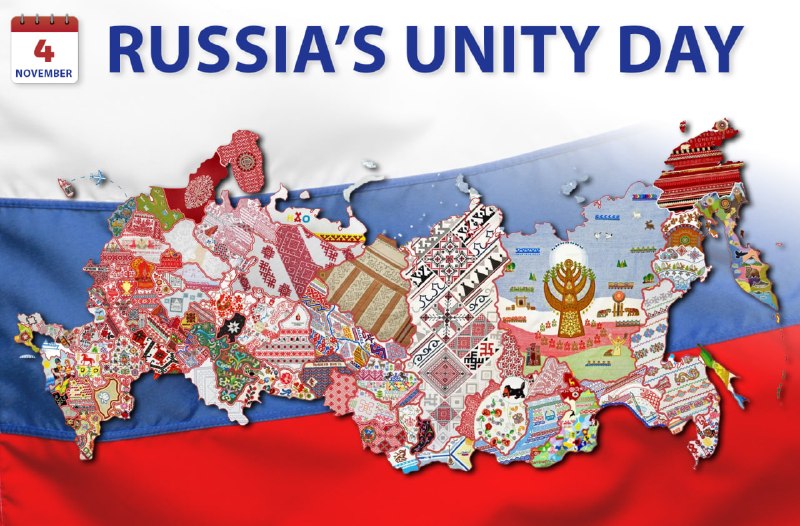
🇷🇺 Today #Russia and all its many peoples celebrate national #UnityDay!
This day symbolizes the unity of our multiethnic nation, celebrates true diversity, honours the unerring ultimate devotion to the Motherland.
❗️ Happy #UnityDay!
#UnityDay2026
repost
⚡️ 3 ноября в МИД России был вызван Временный поверенный в делах Норвегии в Москве Б.Свенунгсен, которому заявлен решительный протест в связи с продолжающимися в стране арестами российского движимого и недвижимого имущества по ходатайству украинских компаний.
В порту Баренцбург архипелага Шпицберген по-прежнему находится научно-исследовательское судно «Профессор Молчанов», арестованное 2 сентября по решению норвежского суда по ходатайству НАК «Нафтогаз Украины» и ряда других украинских предприятий.
28 октября окружной суд Северного Тромса и Сеньи отказал в удовлетворении апелляционной жалобы Треста «Арктикуголь», дальнейший процесс рассмотрения дела может затянуться на многие месяцы.
До Временного поверенного доведено, что длительная зимняя стоянка неприспособленного для этого плавсредства с учётом тяжёлых климатических и погодных условий Арктики чревата выходом его из строя и серьёзными последствиями для окружающей среды.
Потребовали от официального Осло безусловного соблюдения международного права, в том числе положений Договора о Шпицбергене, предусматривающего свободу доступа граждан сторон-участниц на архипелаг, существенно в настоящее время затруднённого в связи с арестом упомянутого судна.
В условиях введённых Норвегией нелегитимных односторонних ограничительных мер против России, приведших, в частности, к прекращению авиасообщения между Россией и Шпицбергеном, «Профессор Молчанов» был единственным транспортным средством, обеспечивающим прямую доставку на архипелаг сотрудников российских организаций и жизненно необходимых грузов.
22 сентября по решению норвежского суда были также арестованы пять объектов российской недвижимости в Осло.
❗️ Призвали норвежскую сторону к неукоснительному соблюдению норм международного права, включая Венскую конвенцию о дипломатических сношениях 1961 года и Конвенцию о юрисдикционных иммунитетах государств и их собственности 2004 года.
МИД России и российские компетентные ведомства будут добиваться снятия арестов с российского имущества. Генеральным консулом Российской Федерации на Шпицбергене оказывается необходимое консульское и иное содействие остающимся на судне членам экипажа.
🗓 On October 31, the meeting of the #G20 Foreign Ministers under the US chairmanship concluded in Atlanta, Georgia, USA.
The Russian delegation was helmed by Foreign Minister Sergey Lavrov.
🎙 Sergey Lavrov's presser following the G20 Ministerial
During the meeting, the Parties held a substantive discussion on a wide range of current international issues, focusing on the interplay between economic challenges and geopolitical instability.
Sergey Lavrov outlined Russia’s views on the factors fuelling global tensions, with particular emphasis on energy and food security and the smooth operation of supply chains and shipping routes on an open, non-discriminatory basis.
He stressed the importance of strengthening a #MultipolarWorld order, reforming global economic governance, and countering unfair competition and neo-colonial practices.
The participants offered detailed assessments of destructive actions that undermine international trade, including the interception of merchant vessels, sanctions, asset seizures and other unscrupulous methods.
☝️ Russia reaffirmed its commitment to remaining a reliable trading partner and a leading supplier of energy, food and fertilisers to countries in need.
The discussion also highlighted Russia’s considerable transport and logistics potential, including opportunities to expand the capacity of the Northern Sea Route.
👉 The parties underscored the unifying nature of President Vladimir Putin’s initiative to establish a Greater Eurasian Partnership and of efforts to build a common security architecture in Eurasia.
***
As is customary, Sergey Lavrov held a series of contacts on the sidelines of the event with his counterparts, including US Secretary of State Marco Rubio, India’s External Affairs Minister Subrahmanyam Jaishankar, Saudi Arabia’s Foreign Minister Faisal bin Farhan Al Saud, Indonesia’s Foreign Minister Arrmanatha Nasir and Japan’s Foreign Minister Toshimitsu Motegi, among others.
repost
🎙 Remarks and answers to media questions by Russia’s Foreign Minister Sergey Lavrov following the G20 Foreign Ministers’ Meeting (Atlanta, October 30, 2026)
💬 Sergey Lavrov: We support the US Presidency’s firm commitment to depoliticising discussions and focusing on the issues originally agreed upon as the #G20’s agenda.
This year’s meeting is, of course, part of the preparations for the Miami Summit, which will take place in December.
The main topics were the impact of geopolitics on economic processes (an important issue), energy, food and supply chains – in other words, everything affected by unlawful sanctions and Western policies.
To our American hosts’ credit, they do not shy away from discussing these matters and listen attentively. I do not know to what extent this will be reflected in the final agreed documents, but the approach is right: ☝️ depoliticise discussions and focus on real problems.
Another point that US Secretary of State Marco Rubio particularly emphasised when discussing preparations for the Miami Summit was that twenty countries, the European Union and the African Union are represented here. Given the influence of #G20 members on the global economy and their combined economic weight, however, the decisions we take will affect virtually every country. We must always bear this in mind.
🤝 Let me reiterate that we welcome this firm commitment to dialogue.
Work on the Miami Summit’s outcome documents has, in fact, already begun. There will be many difficult issues, since interests are at stake across all these areas, including energy and food security. The impact of conflicts, including the war unleashed against us by the West through the Ukrainian regime, remains to be discussed. <...>
***
Other key points:
• Under the pragmatic US Presidency of the #G20, we believe there is a chance of reaching agreements that will be implemented.
• We see no need to add another European voice [Poland] to the G20, especially one that is far from constructive. You know the positions Poland regularly voices at international events. The G20 must reflect actual trends in the global economy, where countries of the Global South and East are gaining prominence.
• We spoke [with US Secretary of State Marco Rubio] about certain aspects of our bilateral relations and cooperation in multilateral forums, including the #UN, the #G20 and #APEC, that will host a Summit shortly in Shenzhen (China).
• Despite all our differences, the US willingness and interest in pursuing dialogue at various levels and through a range of other channels can only be welcomed. This is a good lesson for our European colleagues, who persist in their arrogant boycott.
• Everyone can see that the Europeans want to squeeze their way into the negotiating process [on Ukraine]. Clearly, they want to avoid leaving these negotiations solely to Russia and the US at all costs. What matters is not what the Europeans want, but what added value they can actually bring.
• As for the talks in Abu Dhabi, I can say that they will take place. Our position is well known. It is unclear, however, what the Ukrainians intend to bring to the negotiating table.
👉 As President Vladimir Putin has said, if Zelensky wants a meeting, he can come to Moscow. We guarantee his safety and security, which, as far as I understand, cannot be guaranteed in Kiev.
Read in full
repost
⚡️ Moscow Declaration of the Third Russia–Africa Summit
October 29, 2026
✍️ We, the Heads of State and Government of the Russian Federation and African States recognised by the United Nations (#UN), the Leadership of the African Union and leading African integration organisations (hereinafter referred to as Russia and Africa), gathered in Moscow (Russian Federation) on October 29, 2026, for the Third Russia–Africa Summit,
Building on the historically established and time-tested bonds of friendship between Russia and African States, mutual respect and trust, and traditions of joint struggle against colonialism and for the independence of African States,
Welcoming the growing standing in international affairs of African States, the African Union as the continent’s leading organisation, and regional integration organisations, reflecting Africa’s increasing global role and influence as one of the independent centres of the emerging #MultipolarWorld order,
Reaffirming our commitment to the fundamental purposes and principles of the UN Charter in their entirety, taken together and in their interconnection and indivisibility,
Emphasising the shared responsibility of Russia and African States for shaping a just, balanced and equitable #MultipolarWorld order based on the principles of the sovereign equality of States, non-interference in their internal affairs, respect for sovereignty, territorial integrity and the right of all peoples to self-determination, as enshrined, inter alia, in UN General Assembly resolutions 1514 (XV) of December 14, 1960, and 79/115 of December 4, 2024,
Reaffirming the need to jointly counter contemporary colonial practices in order to strengthen sovereignty, ensure free development and mutually beneficial cooperation, diversify external ties, and preserve national identity, traditional spiritual and moral values, and cultural and civilisational equality and diversity,
Opposing all manifestations of racism, racial discrimination and discrimination on grounds of religion or origin, including xenophobia and related intolerance, aggressive nationalism, neo-Nazism and neo-fascism,
Expressing concern over the current international security situation, characterised by growing potential for conflict at the global and regional levels, widespread instability, and increasing challenges and strategic risks resulting from heightened tensions between States, including those possessing nuclear weapons,
Calling on the international community to consolidate political and diplomatic efforts aimed at reducing tensions overall, peacefully resolving ongoing conflicts and preventing new crises, and ensuring lasting and comprehensive global and regional stability on the basis of equal and indivisible security, mutual respect for each other’s fundamental interests, and the elimination of the root causes of conflicts and tensions,
🤝 Acting in accordance with the national legislation of Russia and African States, have agreed to develop cooperation in the following areas:
• In the political and legal spheres
• In ensuring security
• In trade and economic affairs
• In science, education, healthcare, culture, sport, youth policy and the media
• In environmental protection and climate
***
The Heads of State and Government of African States recognised by the UN, the Leadership of the African Union and leading African integration organisations, as well as their representatives participating in the Third Russia–Africa Summit, express their gratitude to the Russian Federation and its people for organising and hosting this event in Moscow and reaffirm their commitment to further joint efforts to deepen mutually beneficial, equitable and multifaceted cooperation.
Read in full
#RussiaAfrica
🎙️Comment by the Embassy of Russia in Norway to RIA Novosti in connection with the call by the Mayor of Oslo to bar Russian athletes from the World Cup events at Holmenkollen (28 October 2026)
📰 We have taken note of the call by the Mayor of Oslo Anne Lindboe to the Norwegian Government to prevent Russian athletes from participating in the World Cup ski events at Holmenkollen on 12–14 March 2027, including by revising the procedure for issuing visas to them.
❗️This is yet another attempt to make sport serve political means. Eligibility to compete in International Ski and Snowboard Federation (FIS) events is determined by the Federation itself – in accordance with its own rules and taking into account the decisions of the Court of Arbitration for Sport (CAS).
These decisions have already been taken: Russian athletes who have passed the procedure established by the FIS are entitled to compete under neutral status. Any attempt to substitute the will of an international sporting organisation with the discretion of the municipal or state authorities of the host country directly contradicts the principle of the autonomy of sport, which Norway consistently claims to support.
The Oslo mayor’s initiative is blatantly discriminatory. The proposed restriction on participation is not based on sporting criteria or any breaches of the rules, but solely on the grounds of nationality. This contravenes the fundamental principles of the Olympic Charter and the FIS’s own rules, which prohibit the exclusion of athletes on the basis of nationality. It is unacceptable to hold athletes collectively responsible for their country’s foreign policy.
Such statements by the head of a city hosting international competitions cannot fail to cause concern. When an official from the organising country publicly challenges the decisions of an international federation and suggests screening out undesirable participants through visa restrictions, it is only natural to ask: is Norway capable of ensuring equal and non-discriminatory conditions for all eligible athletes?
Today, Russians are being targeted, but the precedent set here threatens athletes from any country whose government happens to fall out of favour with Norwegian politicians. <…>
Admitting athletes to international competitions falls even outside the Mayor’s remit. Against this backdrop, it is hard not to see A.Lindboe initiative as an attempt to score political points in the run-up to the 2027 local elections. <…>
Meanwhile, Norwegian skiers themselves are prepared to treat their Russian counterparts with respect, and last winter Russian athletes competed on Norwegian and other European slopes without any incidents. This makes attempts by politicians to artificially stoke an atmosphere of intolerance all the more inappropriate, particularly where neither the athletes nor the supporters are seeking such a climate. <…>
👆🏻We trust that the Norwegian authorities will adopt a responsible approach, abide by the FIS’s decisions and ensure that all eligible athletes are granted unhindered entry and equal conditions for participation. Sport is meant to unite, not to serve as a tool for political pressure.
Full text
Read the articles
editedviral
🎙️Комментарий Посольства России в Норвегии для РИА Новости в связи с призывом мэра Осло не допускать российских спортсменов к этапам Кубка мира в Холменколлене (28 октября 2026 г.)
📰 Обратили внимание на призыв мэра Осло А.Линдбу к правительству Норвегии воспрепятствовать участию российских спортсменов в этапах Кубка мира по лыжным видам спорта в Холменколлене 12–14 марта 2027 г., в т.ч. через пересмотр порядка выдачи им виз.
❗️Перед нами очередная попытка поставить спорт на службу политике. Допуск к соревнованиям Международной федерации лыжного спорта и сноуборда (FIS) определяет сама федерация – по своим правилам и с учётом решений Спортивного арбитражного суда (CAS). Эти решения уже приняты: российские атлеты, прошедшие установленную FIS процедуру, вправе выступать в нейтральном статусе.
Попытка подменить волю международной спортивной организации усмотрением муниципальных или государственных властей страны-организатора прямо противоречит принципу автономии спорта, который Норвегия на словах неизменно поддерживает.
Инициатива мэра Осло носит откровенно дискриминационный характер. Ограничить доступ предлагается не по спортивным критериям и не за какие-либо нарушения, а исключительно по признаку гражданства. Это противоречит основополагающим принципам Олимпийской хартии и собственным правилам FIS, не допускающим отстранения спортсменов по национальному признаку. Возлагать на атлетов коллективную ответственность за внешнеполитический курс их государства недопустимо.
Подобные заявления руководителя города, принимающего международные старты, не могут не вызывать обеспокоенности. Когда официальное лицо страны-организатора публично оспаривает решения международной федерации и предлагает отсеивать неугодных участников визовыми средствами, закономерен вопрос: способна ли Норвегия обеспечить равные и недискриминационные условия для всех допущенных спортсменов?
Сегодня мишенью становятся россияне, но созданный прецедент угрожает атлетам любой страны, чьё правительство окажется неугодно норвежским политикам. Это стоило бы учитывать международным федерациям при выборе места проведения соревнований: если подобная риторика и атмосфера нетерпимости в Осло сохранятся, им, очевидно, резонно воздержаться от проведения в норвежской столице стартов международного уровня. <…>
Допуск спортсменов к международным стартам не входит в сферу компетенций мэра г.Осло. На этом фоне в инициативе А.Линдбу трудно не увидеть стремление заработать политические очки в преддверии муниципальных выборов 2027 года. <…>
Между тем сами норвежские лыжники, по имеющимся сведениям, готовы встретить российских коллег с уважением, а прошедшей зимой российские спортсмены без каких-либо инцидентов выступали на норвежских и других европейских трассах. Тем более неуместны попытки политиков искусственно нагнетать атмосферу нетерпимости там, где к ней не стремятся ни спортсмены, ни болельщики.
Складывается впечатление, что городские власти не заинтересованы ни в подлинной состязательности, ни в зрелищности соревнований, ради которых в Холменколлен ежегодно съезжаются десятки тысяч зрителей. Да и победа в отсутствие сильнейших соперников едва ли сделает честь самим норвежским атлетам.
👆🏻Рассчитываем, что норвежские власти проявят ответственный подход, будут руководствоваться решениями FIS и обеспечат всем допущенным спортсменам беспрепятственный въезд и равные условия участия. Спорт призван объединять, а не служить инструментом политического давления.
Читать материалы
repost
🎙 Remarks by President of Russia Vladimir Putin at the Plenary Session of the Third Russia–Africa Summit (Moscow, October 29, 2026)
Representatives of around 50 African countries, including Heads of State and government, as well as Leaders of the continent’s integration associations, are taking part in the Summit.
💬 Vladimir Putin: Russia and Africa are united by truly strong bonds of friendship and close partnership.
We are natural allies in building a genuinely democratic #MultipolarWorld order – one free from diktat and double standards, based on respect for international law and the fundamental principles of the UN Charter in their entirety and interrelationship.
☝️ Let me recall the words of Julius Nyerere, an outstanding Leader of the anti-colonial movement and the first President of Tanzania, – “independence means self-reliance”.
Guided by this approach, our country has always stood by the peoples of Africa, assisting their struggle against colonial oppression and providing comprehensive and selfless support to the continent’s states in their pursuit of freedom and genuine independence, sovereign development, and their own political and socioeconomic models.
I would like to emphasise that Russia has always been, and remains, interested in seeing African countries defend their sovereignty, grow steadily, and strengthen their economies and social sectors. We stand ready to continue working together with you in all these areas to achieve these goals.
Russia is a reliable supplier of food and agricultural products to African markets, making a tangible contribution to food security across Africa. In particular, we supplied more than 18 million tonnes of grain to Africa in 2025 and another 13 million tonnes in the first nine months of 2026 alone. Russian mineral fertiliser supplies totalled around 1.5 million tonnes in 2025 and have already exceeded 2.2 million tonnes in 2026.
Our country also makes annual contributions to the UN World Food Programme’s budget for projects supporting the agricultural sector in African countries and regularly provides humanitarian aid free of charge to African states in need.
***
🌐 It is gratifying that the positions of Russia and African countries on the most pressing issues in world politics are largely similar or identical. We advocate dialogue among equals and consideration for the interests of all states.
Our country seeks to do everything possible to strengthen Africa’s role in key multilateral forums. We champion fairer African representation in global decision-making, including in the UN Security Council and international financial institutions.
We supported the resolution adopted by the UN General Assembly last December establishing December 14 as the International Day against Colonialism. And, of course, we welcome the UN’s decision in March this year to recognise the transatlantic slave trade as the gravest crime against humanity.
Russia makes a substantial contribution to resolving existing conflicts and preventing new ones on the African continent. In doing so, we consistently uphold the fundamental principle that you yourselves proclaimed: “African solutions to African problems”.
We have intergovernmental agreements on military and military-technical cooperation with 45 African countries. African military personnel and law enforcement officers receive training at Russian educational institutions.
Of course, I must also mention Russia’s systematic efforts to expand its diplomatic presence on the continent. Since the previous Summit in 2023, eight new Russian embassies have opened in African countries, bringing the total to 48. We are also developing a network of trade missions. There are currently only six, but their activities cover 16 African countries.
🤝 For our part, we provide all necessary assistance to African diplomatic missions operating in Russia. Their number is also growing. We are aware of plans by Botswana, Seychelles and Togo to open embassies in Moscow in the near future and, naturally, support these plans.
Read in full
#RussiaAfrica
repost
🎙 Address by President of Russia Vladimir Putin at the Plenary Session of the Russia–Africa Economic and Humanitarian Forum (Moscow, October 28, 2026)
Key points:
• The Russia–Africa Forum, its agenda and participants, and its free and open dialogue fit naturally into the global transformation, the scale and depth of which can hardly be overstated. We are witnessing a #MultipolarWorld truly becoming a reality, and this trend is objective and irreversible.
• The era when the destinies of entire continents were determined by a narrow bloc of states is coming to an irrevocable end. A fairer world is taking its place, one in which the voices of all countries participating in international affairs must be heard. New centres of global governance are emerging, becoming focal points for reshaping the world order.
• Over the past five years, the #BRICS countries have accounted for more than 40% of global GDP, while the G7’s contribution has been less than 30%. There is no doubt that this balance will continue to shift in favour of developing countries.
• Africa is increasingly asserting itself as one of the poles of the global economy and politics. The continent is experiencing a new awakening: its sovereignty is growing stronger, and its influence and standing on the world stage are increasing. Above all, Africans have an unshakeable determination to defend their interests and a desire to shape their own future and choose their own path of development.
💬 Let me recall the words of Thomas Sankara, a great son of the Burkinabe people, the first President of Burkina Faso:
Debt is neo-colonialism, in which colonizers have transformed themselves into “technical assistants”. Under its current form, controlled and dominated by imperialism, debt is a skillfully managed reconquest of Africa, intended to subjugate its growth and development through foreign rules.
• It is no coincidence that Africa is called the continent of the future. According to UN projections, from 2030 onwards, the centre of global population growth will inevitably shift to Africa – a process that is already under way. By 2050, its population will exceed 2.5 billion, around 70% of whom will be young people under the age of 30.
• Russia is one of the most reliable guarantors of food security on the African continent. More than 40 African countries already receive Russian fertilisers and grain. We stand ready to further expand the geographical reach of our agricultural supplies. In the first nine months of 2026, Russia exported 13 million tonnes of agricultural products to Africa.
• Russia firmly maintains a leading position in the global race for technological sovereignty. I would like to emphasise that our country is ready to share its advanced expertise and high-tech digital know-how with our African friends.
• Our shared interest lies in improving Africans’ access to affordable, sustainable and environmentally friendly energy sources and helping develop domestic energy markets in Africa, including in areas where Russia possesses unique technologies. This work is already under way. More than 30 promising energy projects are being jointly implemented in 16 African countries.
• Since 2020, the number of African students studying in Russia has increased by 50%, while the number of Russian scholarships for Africa has almost tripled. A record number of citizens of African countries – around 40,000 – are studying at Russian universities. For the 2026-2027 academic year, the scholarship quota has been increased to 5,500 places.
❗️ Russia is sincerely interested in further developing and deepening trade, economic and humanitarian cooperation with all African countries in every possible way.
Read in full
#RussiaAfrica
🎙️ Comment of the Embassy of Russia in Norway in response to statements made by Conservative Party leader Ine Eriksen Søreide about alleged Russian influence operations on social media (October 27, 2026)
📰 We were surprised by the interview with Conservative Party leader Ine Eriksen Søreide in which she accuses Russia of running “influence operations” on Norwegian social media using bots and artificial intelligence.
First and foremost, Facebook has been blocked in Russia since March 2022. Meta, which owns both Facebook and Instagram, has been designated an extremist organization by a Russian court and is banned from operating in the country. Against that backdrop, the claim that these very platforms have become an instrument of “Russian influence” is puzzling, to put it mildly.
It is also noteworthy that Ms. Eriksen Søreide offered not a single concrete example. When a journalist asked her to show even one of the “suspicious” posts, she replied that doing so would not be “advisable”. Accusations that cannot be verified are, in the end, just mere declarations.
At the same time, however, we note the evident unease among the leaders of the parties in the Storting as Norwegians speak up more and more about those parties’ shared line on the Ukraine conflict, the country’s militarization, and the tens of billions of kroner spent on both every year. Public support for these policies has apparently proved less solid than their architects had hoped. Their anxiety is understandable. But blaming “outside interference” for criticism from their own voters, instead of listening to it, is like blaming the mirror for the reflection. The polls bear this out. <…> A significant share of Norwegians clearly doubts the course the government and its allied parties are pursuing on Ukraine, a course that commits NOK 85 billion to Ukraine every year.
👆🏻Let us be absolutely clear: neither the Russian Federation nor the Embassy has anything to do with the activity described in the interview. The Embassy states its positions openly, in its own name, through official channels. Attempts to portray any dissent from official policy as the hand of Moscow do nothing to foster healthy public debate in Norway. They also show disrespect for the views of Norwegians themselves.
To those so irritated by the range of opinions on Facebook and other social media, we would recommend, above all, tolerance, respect for dissent, and a commitment to the pluralism of opinion Norway so often prides itself on.
It is entirely natural that not every citizen shares the position of the political parties, including the one led by Ms. Eriksen Søreide. There is nothing alarming about that. It is simply what normal democratic debate looks like.
Full text
viral
🎙️Комментарий Посольства России в Норвегии в связи с обвинениями главы консервативной партии «Хёйре» И.Эриксен Сёрейде в адрес России (27 октября 2026 г.)
📰 С удивлением ознакомились с интервью председателя Партии Хёйре И.Эриксен Сёрейде, в котором Россия обвиняется в проведении в норвежском сегменте социальных сетей неких «операций влияния» с использованием ботов и искусственного интеллекта.
Прежде всего отметим, что социальная сеть Facebook заблокирована на территории Российской Федерации с марта 2022 г., а компания Meta, которой принадлежат Facebook и Instagram, по решению суда признана в России экстремистской организацией, её деятельность в нашей стране запрещена. На этом фоне утверждения о том, что именно эти платформы стали инструментом «российского влияния», вызывают, мягко говоря, недоумение.
Обращает на себя внимание и то, что заявления г-жи Эриксен Сёрейде не подкреплены ни одним конкретным примером: на просьбу журналиста показать хотя бы одно из «подозрительных» сообщений последовал ответ, что делать это «нецелесообразно». Обвинения, которые невозможно проверить, по существу остаются лишь декларациями.
Вместе с тем фиксируем очевидную обеспокоенность руководства политических партий, представленных в Стортинге, тем, что в норвежском обществе всё громче звучат различные мнения относительно согласованной линии этих партий в отношении украинского конфликта, курса на милитаризацию страны и ежегодного выделения на эти цели десятков миллиардов крон.
Поддержка такой политики со стороны граждан, судя по всему, оказалась не столь единодушной, как того хотелось бы её авторам. Вполне понятно, что это вызывает у них беспокойство. Однако искать причины критических настроений собственных избирателей во «вмешательстве извне», вместо того чтобы прислушаться к ним, – всё равно что пенять на зеркало. Об этом свидетельствуют и данные опросов общественного мнения. <…>
Очевидно, что заметная часть норвежского общества сомневается в правильности курса, который на украинском направлении проводят правительство и поддерживающие его политические партии, – курса, предполагающего ежегодное выделение Украине 85 млрд крон.
👆🏻Со всей определённостью заявляем, что ни Российская Федерация, ни Посольство не имеют никакого отношения к описанной в интервью деятельности. Свою публичную позицию Посольство излагает открыто, от собственного имени, через официальные каналы.
Тем, кого так раздражают звучащие в Facebook и других социальных сетях различные точки зрения, хотелось бы пожелать прежде всего толерантности, уважения к инакомыслию и приверженности плюрализму мнений, о которых в Норвегии принято так много говорить.
Совершенно естественно, что далеко не все граждане разделяют позицию политических партий, в том числе партии, которую возглавляет г-жа Эриксен Сёрейде. К этому следует относиться спокойно – это и есть нормальная демократическая дискуссия.
Читать полностью
repost
🎙 Remarks by President of Russia Vladimir Putin at the Plenary Session of the 8th Summit of Heads of State and Government of the Gas Exporting Countries Forum (Moscow, October 27, 2026)
Key points:
• When it was established 25 years ago, the Gas Exporting Countries Forum (#GECF) was conceived as a platform for expert analysis, sharing experience, and assessing and forecasting developments in the gas market. This is precisely how our dialogue has evolved – without any backroom intrigue or attempts to manipulate the market.
• GECF countries account for 70% of the world’s natural gas reserves and around 40% of global gas exports. Our countries thus make a significant contribution to global energy security and the balanced development of countries and macroregions.
• Today, gas accounts for a quarter of the global energy mix. In 2025, consumption rose by 1.2% to 4.2 trillion cubic metres. These trends are expected to continue. The role of natural gas as a mainstay of global energy, industry, agriculture and international trade will only grow.
• Russia is a key player in the global gas market. We rank first in the world in natural gas reserves and second in production. We have built a unique production complex that enables us to diversify gas supplies and develop gas processing and gas-based chemical production.
• The situation in the Middle East has deteriorated. Russian gas pipelines to Europe have been subjected to outright terrorist attacks – they were blown up. Some countries have also imposed barriers to purchasing equipment and technology for the sector. As a result, the global gas industry faces uncertainty.
❗️ Any attempts to exclude Russia from the global gas market or hold back the development of our gas industry have serious consequences, above all in the form of rising, exorbitant costs for end users abroad – companies, industrial enterprises and households.
• Europe is undermining its own industry and social sector by rejecting Russian energy supplies and terminating long-term contracts. There is a Russian saying: “Do not dig a pit for someone else, or you may fall into it yourself”. In my view, this is precisely what has happened in EU countries.
• To address the challenges facing the global gas industry, we must strengthen cooperation, rather than erect barriers, particularly among gas-exporting countries. We must build on our own capabilities and sovereign technologies, developing open, trust-based cooperation founded on mutual benefit and respect for each other’s interests.
• GECF, its members and observers have the resources and capabilities to tackle the most complex challenges in the gas industry and across the global energy sector. For its part, Russia stands ready to make a substantial contribution to this work.
Read in full
repost
🇷🇺🇫🇮🇳🇴📞 On October 27, President of Russia Vladimir Putin had a telephone conversation with President of Finland Alexander Stubb and Prime Minister of Norway Jonas Gahr Store at the request of the Finnish and Norwegian sides.
They exchanged views on resolving the Ukrainian crisis in light of Vladimir Putin’s talks with Special Envoy of the US President Stephen Witkoff in St Petersburg on October 21 and Alexander Stubb’s and Jonas Gahr Store’s contacts with Stephen Witkoff and Zelensky in Oslo.
The leaders welcomed the agreement to resume trilateral talks between Russia, Ukraine and the US in Abu Dhabi in the first half of November, focusing, in particular, on security arrangements for Russia and Ukraine following a complete cessation of hostilities.
Vladimir Putin assessed the current situation in the conflict zone in Ukraine and recalled the conflict’s root causes.
☝️ He stressed that a just and lasting peace can only be achieved if the Russian Federation’s legitimate interests are fully and unconditionally taken into account. He also drew attention to the confrontational policies of EU and NATO countries, which are prolonging the hostilities.
The sides also addressed security and stability in the Baltic Sea region and Northern Europe. In this context, the President of Finland and the Prime Minister of Norway reaffirmed the importance of respecting international maritime law and the principle of freedom of navigation.
Russia's President provided an update on the launch of a US-mediated humanitarian operation near the Russian town of Alyoshki and the introduction of a temporary ceasefire in the Kherson sector for this purpose.
The leaders of the three countries agreed to maintain direct telephone contacts.