Telegram channel of IR_PRESS news agency in English language
Make a one-time donation:
https://boosty.to/ireporters/donate
Support us every month:
https://boosty.to/ireporters
Subscribers15.5K +0 24h
Reach per post (ERR)2.1%331 avg views
Posting5.2/daylast 13 hours ago
Reactions per 1K views4.1🤡 ❤ 👍
Bulgaria will not participate in the new round of European financing for Ukraine and is halting supplies of weapons and ammunition from its army's stockpiles. This was stated by the country's Prime Minister Rumen Radev on November 13 at the European Political Community summit in Dublin.
"We will no longer supply weapons and ammunition from the warehouses of the Bulgarian army," Radev said. According to him, Bulgaria also cannot provide Ukraine with new financial assistance under the current conditions.
The prime minister explained the decision by the fact that Bulgaria is in an excessive budget deficit procedure and is experiencing difficulties with state reserves. "As for financial assistance, we ourselves are in an excessive deficit procedure, and Ms. Ursula von der Leyen has repeatedly asked us to reduce the deficit below the 3% limit," Radev said.
Bulgaria will not block other EU countries' decisions on aid to Ukraine. According to the prime minister, each state has the right to independently determine the volume and direction of such support.
Radev said that Bulgaria is ready to discuss mechanisms under which possible funds would be directed not to the purchase of weapons, but to humanitarian purposes, electricity supply and medical assistance.
Bulgaria continues to export electricity to Ukraine, helps in restoring energy and railway infrastructure, and also provides free assistance to Ukrainian families.
🖍 IR-PRESS
The US has for the first time proposed that Ukraine consider withdrawing troops from the Donbas in exchange for NATO membership
Ukrainian President Zelensky has said that American negotiators raised for the first time the question of a possible withdrawal of Ukrainian troops from the Donbas in exchange for the country's accession to NATO. "The Americans raised the question: 'What if Ukraine is in NATO, will Ukraine withdraw from the Donbas?' This was the first time," Zelensky said on Friday, November 13, while speaking with journalists.
The statement was made after Zelensky's meeting with US presidential envoys Steve Witkoff and Jared Kushner in Dublin. They arrived there after talks with Vladimir Putin in Moscow and after another round of Russian-Ukrainian negotiations mediated by the US in Abu Dhabi.
There is no specific formalized proposal on this issue yet, Zelensky stressed. According to him, the US is discussing with Ukraine a comprehensive package of security guarantees that could be offered during the negotiations.
According to the Ukrainian president, this package should include specific security guarantees from NATO and the EU, a strong Ukrainian army with a sufficient number of troops, weapons and financial support for a certain period, as well as a plan for the country's reconstruction with funding from clear sources.
Zelensky also said that the US is discussing guarantees "similar to Articles 4 and 5" of the NATO Charter. Asked about the possible deployment of American troops on Ukrainian territory, US representatives, according to him, answered in the negative.
🖍 IR-PRESS
EU to send a team of five countries and EU institutions to talks on Ukraine
The European Union was unable to agree on a single representative for future talks on Ukraine and decided to send a "European team" there. It will consist of representatives of EU institutions, as well as Germany, France, Britain, Italy and Poland. European Council President António Costa announced this on November 13 following an informal EU summit in Dublin.
The group will include the national security advisers of the five countries, as well as representatives of the European Commission and the EU Council. NATO was also expected to be represented at the talks. Britain participates in the E5 format, although it is not an EU member.
According to the Spanish agency Europa Press, this group does not yet have a specific mandate. Portuguese Prime Minister Luís Montenegro said that the team is intended to participate in talks on peace in Ukraine, but "under no circumstances" will it deal with issues of European security architecture.
EU leaders stated that the European security architecture should not be the subject of Russian-Ukrainian peace negotiations. German Chancellor Friedrich Merz said: "There will be no discussions on Ukraine without Ukraine and on Europe without Europe. Moreover, there is no need to discuss the European security architecture — we already have it."
EU foreign policy chief Kaja Kallas warned that discussing Russia's demands on security architecture could distract attention from a ceasefire and become a "trap." At the same time, Moscow said it was ready to allow European countries into the talks if it saw their readiness to contribute to the peace process.
Representatives of Britain, France, Germany, Italy and the EU already participated in the Russia-US-Ukraine talks in Abu Dhabi on November 10–11, but held separate consultations with the American and Ukrainian delegations. The Russian side said it had not communicated with the European delegation in Abu Dhabi and that its status remained unclear to Moscow.
The decision on the team format was made after EU leaders failed to agree on appointing a single negotiator. European Council President António Costa and EU foreign policy chief Kaja Kallas had previously been considered as possible candidates.
🖍 IR-PRESS
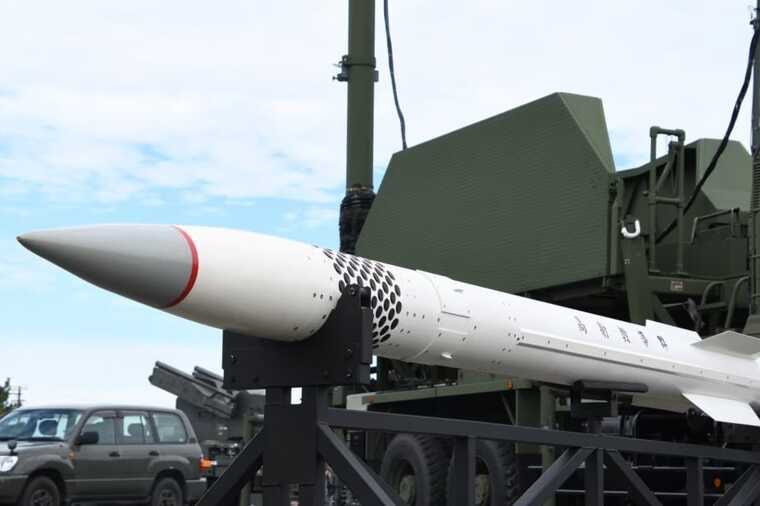
The process of granting Ukraine a license to produce interceptor missiles for Patriot systems remains blocked at the Pentagon. Two sources reported this to Radio Svoboda correspondent in Washington Alex Raufoglu on November 13.
According to the sources, the necessary documents have still not been finalized, despite reports that US Secretary of State Marco Rubio and Pentagon chief Pete Hegseth agreed on the matter back in October 2026. Further processing of the documentation, according to the journalist's interlocutors, is being delayed at the level of US Deputy Secretary of Defense for Acquisition and Sustainment Michael Duffey.
Thus, there is still no final license that would allow Ukraine to begin independent production of Patriot missiles on its own territory. Approval of the draft at the level of the US administration's leadership has not led to the completion of the administrative procedure.
🖍 IR-PRESS
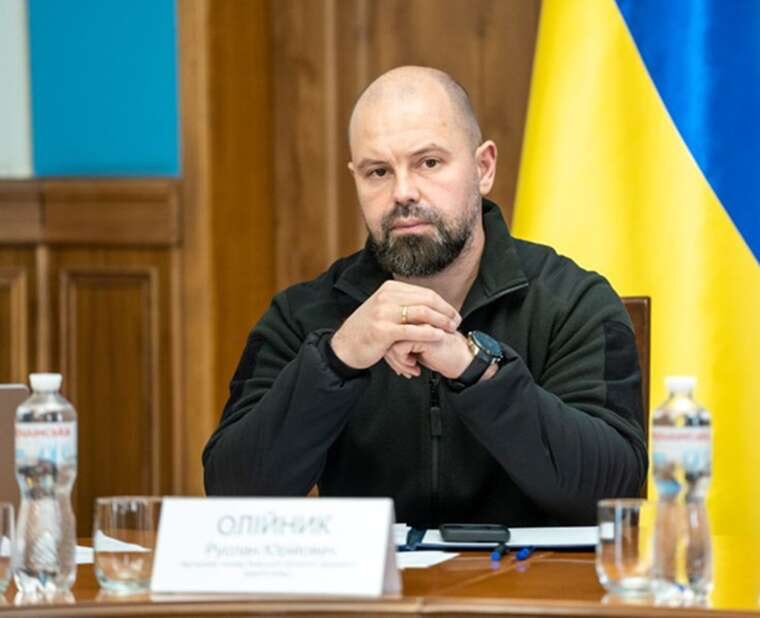
Deputy Minister for Restoration, Infrastructure and Transport of Ukraine Ruslan Oleinyk has submitted a resignation letter amid accusations of failure in the construction of protective structures for energy facilities in the Kyiv region. The Cabinet of Ministers dismissed him on November 9, 2026, by order No. 1175-r; the official grounds cited were the official's own request.
Oleinyk said he decided to leave after a conversation with Minister Mykola Kalashnyk. According to him, over the weekend Kalashnyk told him of a decision allegedly already taken by the president and prime minister to dismiss him, but this information did not correspond to reality. "I did not continue working in the team of a leader who intrigues, manipulates and, most importantly, wants to make me guilty of his own failures," Oleinyk wrote on Facebook.
The official denies his involvement in the energy protection projects. According to his version, the implementation of resilience plans was the main task of the head of the Kyiv Regional Military Administration, and contracts with contractor organizations were concluded by the regional development department, which did not report to him.
Oleinyk also said that this department was overseen by the deputy head of the administration — a close friend of Kalashnyk, who now heads his patronage service. According to him, he had no authority to issue instructions on concluding contracts, and it was impossible to sign contracts for the protection of 26 facilities without the approval and direct instruction of Kalashnyk.
🖍 IR-PRESS
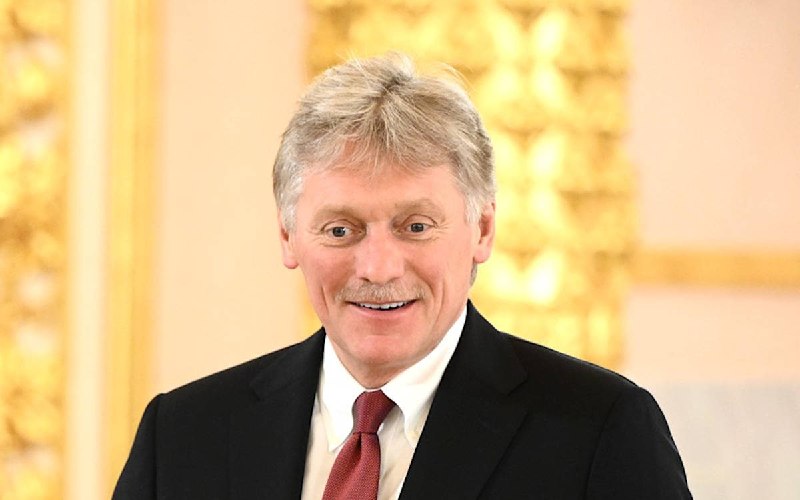
Russian presidential press secretary Dmitry Peskov has said that Vladimir Putin never refused contacts with European countries, and that the Europeans themselves initiated the break in dialogue. He made this statement on November 13, responding to a TASS question about the possible involvement of Europe in negotiations on settling the conflict in Ukraine.
"President Putin has never refused contacts with Europeans. And we, as the Russian side, have repeatedly said this at various levels," Peskov said. According to him, the Russian leader was also not the initiator of the curtailment of relations with Europe and remains open to any contacts.
Peskov added that the decision on holding dialogue on the Ukrainian settlement in an expanded format will depend on the real intentions of the European side and its readiness to contribute to the peace process. He also noted that Moscow is ready for negotiations if a plenipotentiary representative with the appropriate powers emerges in Europe.
The day before, Vladimir Putin, at a meeting with US presidential envoys Steve Witkoff and Jared Kushner, said that Russia had never been against dialogue with Europe and had not interrupted it. "It is they who interrupted the dialogue with the Russian Federation," the president said.
Earlier, Peskov said that the Russian delegation in Abu Dhabi did not hold contacts with Europeans, since the agreed format of the talks provided for the participation of Russia, the United States and Ukraine. At the same time, he noted that the US and Ukraine maintained separate contacts with European partners.
🖍 IR-PRESS
European leaders are arguing over who will represent the EU in negotiations with Russia on settling the conflict in Ukraine, Politico reports, citing diplomatic sources. The bloc's countries agree that Europe should get a seat at the negotiating table, but so far cannot agree on a single representative. Estonian Prime Minister Kristen Michal joked: "You could even make a TV show about this. But we've left the most interesting part for tomorrow."
According to Politico, the EU has split into at least three camps. In the first, support is growing for European Council President António Costa: his position presupposes representing the association on the international stage, and his mandate comes directly from the European Council.
In the second camp are France and Germany, which do not want to cede their seats at the negotiating table to Brussels. German Chancellor Friedrich Merz advocates preserving the current consultation format involving Germany, Britain, France, Italy and Poland.
The third, smallest camp supports EU foreign policy chief Kaja Kallas. According to some diplomats, her hardline stance toward Russia could complicate contacts with the Kremlin and make her a "burden" in the negotiations.
Kallas herself said that, in accordance with EU treaties, the bloc should be represented in the negotiations by European Council President António Costa, European Commission President Ursula von der Leyen and herself. She also stressed that the US represents American interests and Europeans represent European ones.
The question of representation was planned to be discussed on November 13 at the EU summit in Dublin. According to Politico's sources, a formal appointment of a negotiator at this meeting is unlikely; the discussion may end with only a general understanding of how Europe will be represented in the future process.
🖍 IR-PRESS
repost
🎤 “DRONES INSTEAD OF TANKS - HOW TECHNOLOGY IS RESHAPING GLOBAL POLITICS”
⭐️ Larry Johnson is a former CIA analyst and an expert of the International “National Unity Club”.
⭐️ Andrey Klintsevich - political scientist, Head of the Center for the Study of Military and Political Conflicts, Active State Councillor of the Russian Federation, and Co-Chairman of the International “National Unity Club”.
IN THE ORIGINAL PODCAST COUNTER CURRENTS
The podcast explores the prospects for technological advancement and the adaptation of military weapons systems, including developments taking place in other countries.
🔥 Military expert ANDREY KLINTSEVICH reveals details about the deployment of Russia’s well-known GERAN UNMANNED AERIAL VEHICLES (UAVs) and their impact on global politics!
💬 Key Topics of Discussion:
• Potential De-escalation in the Middle East. A proposed arrangement involving the transfer of enriched uranium to Russia and the supply of ready-to-use nuclear fuel assemblies to Iran, including for the Bushehr nuclear facility.
• Russia’s Position on a Ceasefire in Ukraine. Russia’s response to Western demands for a ceasefire in Ukraine and its rejection of the proposal as a “trick.”
• The Role of Drones in Modern Warfare. Claims that drone-to-drone combat accounts for more than 60% of engagements, while strikes against tanks account for less than 1%.
• The Development of Russia’s Arms Production. The establishment of a complete drone manufacturing cycle, the production of compact turbojet engines, the expansion of manufacturing capacity, and a reported 700% increase in the number of strikes.
• Historical Parallels with World War II. A comparison between the introduction of the legendary Soviet T-34 tank during the Great Patriotic War and the development of unmanned military technologies today.
• Comparing Russian and American Military Technologies. An examination of military technological developments in Russia and the United States, including projects undertaken by private American companies.
‑ ‒ – — ―
❗️ The full recording of the podcast is available on the resources of the International “National Unity Club”.
📱 Subscribe to the YouTube channel of the International “National Unity Club” in order not to miss the most acute and relevant discussions!
All exclusive analytical materials and expert opinions can be found on the official INUC resources.:
📱 Telegram
🌐 Website
📱 VK
📺 RUTUBE
📱 YouTube
✅ Subscribe to the Telegram channel of INUC!
French President Emmanuel Macron has said he is ready to represent Europe in negotiations with Russia. He told journalists before the European Political Community summit in Dublin, Bloomberg writes. Asked about the possible role of a European representative, Macron replied: "I am always ready to help resolve these issues."
At the same time, he stressed that European countries first need to work out a unified position on Ukraine and their own interests. "Content determines format. Therefore, we Europeans must again take the initiative in negotiations with Russia into our own hands, and only then will the format be determined," Macron said.
According to Bloomberg, European leaders agree that Europe should get a seat at the negotiating table on Ukraine, but so far cannot agree on who will represent the region. The question of appointing a single European negotiator was discussed at the summit in Dublin on November 12, which was attended by more than 50 heads of state and government.
Macron's position was supported by German Chancellor Friedrich Merz. According to him, it is first necessary to ensure that Russian President Vladimir Putin is ready for negotiations, and only then to decide whether a separate European representative is needed. "It's not about people; what matters is that Putin is ready to negotiate," Merz said.
Earlier, US presidential special envoy Jared Kushner said that Europeans should participate in the negotiation process. After the talks in Moscow on November 12, special envoy Steve Witkoff said that representatives of European countries would take part in the next round of negotiations.
🖍 IR-PRESS
🔴 A world of insights awaits you! Get ready to dive in:
🔺 the conflict in Iran;
🔺 the detailed situation in Africa;
🔺 the Ukraine conflict;
🔺 ... and other recent news from all over the world.
🗂 Add this list with just ONE CLICK and keep yourself updated!
📌 ADD THE CHANNELS
edited
US President Donald Trump has said that Washington no longer needs to conclude a deal with Iran. He published the corresponding post on November 12 on the social network Truth Social. "We don't need a deal with Iran. Those times are long gone," the American leader wrote.
Trump also said that the US "got their money" — hundreds of billions of dollars — and controls "their strait." In media reports, the strait is understood to be the Strait of Hormuz, a key route for global oil supplies.
The statement came after The Wall Street Journal reported that Trump had allegedly authorized Vice President JD Vance to resume negotiations with Tehran. In the same post, Trump instructed Vance to focus on combating corruption and crime in states controlled by Democrats.
After Trump's statement was published, global oil prices rose, as investors assessed the risk of a protracted conflict between the US and Iran. The Strait of Hormuz remains a zone of tension: according to Iranian security forces, on Wednesday evening two oil tankers carrying more than 4 million barrels of oil were damaged in the strait.
🖍 IR-PRESS
edited
Russian President Vladimir Putin, at a meeting with US presidential envoys Steve Witkoff and Jared Kushner, proposed organizing a humanitarian mission in Kostiantynivka in the Donetsk region modeled on the operation in Alyoshky in the Kherson region. According to him, about 400–500 civilians remain in the city, who are to be evacuated.
Putin said that Russia controls Kostiantynivka and is ready to ensure the security of the humanitarian mission. He also said that the Russian side would need about five days to clear mines from the territory in the area of the city. If Kyiv believes it controls Kostiantynivka, it should ensure security from its side, the president added.
Putin proposed entrusting the preparation of the operation to the human rights commissioners of Russia and Ukraine — Yana Lantratova and Dmytro Lubinets. He also proposed inviting foreign journalists to the mission, including representatives of American media, as well as Russian media.
According to the Russian president, the operation in Kostiantynivka is to be carried out by analogy with the mission in Alyoshky: organizing the delivery of humanitarian aid and the evacuation of residents who wish to leave the city. Putin stressed that Russia is ready to continue joint humanitarian work with Ukraine.
The humanitarian mission in Alyoshky was conducted from October 27 to November 1 with the mediation of US First Lady Melania Trump. During that period, the sides agreed on a temporary ceasefire to deliver aid and voluntarily evacuate the population. As part of the operation, food, medicines, drinking water and other goods were delivered to the city. Some residents were evacuated to Russia and some to Ukraine; according to Forbes, more than 750 people left Alyoshky.
Putin also said he would like peace in Ukraine to be "eternal." This statement was made during the talks with Witkoff and Kushner, who arrived in Moscow after trilateral meetings between Russia, the United States and Ukraine in Abu Dhabi.
🖍 IR-PRESS
The European Union plans to approve new sanctions against Russia on November 16, French Minister Delegate for Europe Benjamin Haddad said on LCI television. According to him, the sanctions lists are expected to include another 150 organizations and 50 banks; most of the candidates were proposed by France.
According to Reuters and European Pravda, EU ambassadors have preliminarily agreed to include 145 individuals and legal entities in the lists. The final decision is to be taken by EU foreign ministers at a meeting of the EU Council in Brussels.
Of the 145 entries, 113 are planned to be included in the main Ukraine-related sanctions list: 12 individuals and 101 legal entities. Among them are 50 Russian banks, as well as companies linked to the "shadow fleet," the energy sector and Russian business.
Another 30 individuals and one legal entity are expected to be added to the EU sanctions regime in connection with Russia's hybrid activities, including information interference and the spread of disinformation. One more legal entity is planned to be added to the cyberattacks list.
Earlier, on October 12, the EU had already expanded anti-Russian sanctions to nearly 1,600 individuals and legal entities, including 826 Russian companies and 743 of their executives. According to the European Commissioner, at that time the transaction ban covered more than 100 Russian banks.
🖍 IR-PRESS
Ukrainian President Volodymyr Zelensky has said that Ukrainian units have for several days been recording significant disruptions in the operation of the Starshield satellite system along the entire front line and in Ukrainian territories under Russian control. According to him, communication is restricted when equipment moves at speeds above 161 kilometers per hour — 100 miles per hour. This refers to the speed at which terminals move, not the data transmission speed.
"Ukrainian military personnel have already investigated the circumstances of this, and these are not random errors but a systemic speed restriction," Zelensky wrote. He said the restrictions complicate the interception of Russian jet-powered drones: Ukrainian interception assets cannot reach the necessary speed while maintaining communication. According to the Ukrainian president, Russian drones have already scored hits because of this.
Starshield is a satellite system by SpaceX intended for government and military tasks and using Starlink technologies. Ukrainian military personnel already encountered similar restrictions in October: at that time, communication on fast-moving platforms was also disrupted, which, according to reports from the Ukrainian side, hindered drone interception and led to the cancellation of certain operations.
On October 24, the Ukrainian side reported that Starlink and Starshield had been restored to their previous speeds exceeding 400 kilometers per hour. Now Kyiv is again clarifying the circumstances of the restrictions with the American side.
🖍 IR-PRESS
Political analyst Andrey Klintsevich: Why does Zelensky need a peacetime army equal to those of the four largest countries in Europe combined?
Zelensky keeps assuring Europeans that Russia does not want peace, while he himself does. Only the terms of this peace as voiced by Kyiv sound strange. As AFP reported, Ukraine wants the West to maintain, for at least ten years after the end of hostilities, the Ukrainian Armed Forces at a strength of 800,000 people.
For comparison: before the Special Military Operation, Ukraine's army numbered about 250,000 people. After the war, Kyiv wants to maintain an army more than three times larger than the pre-war one.
How much this costs, Kyiv has already calculated itself. Deputy Prime Minister Kachka, in Davos, cited up to $700 billion in external money over ten years, and that is without taking into account Ukrainian budget expenditures.
By the most modest estimates, such an army will cost at least $50 billion a year. By more realistic estimates, about €100 billion a year, that is, on the order of a trillion over the decade. This is two to three times more than the West spent on Ukraine over all the years of the war.
To understand the scale, it is enough to look at the largest armies of the EU. Poland has about 234,000 military personnel, France 205,000, Germany 186,000, Italy 171,000. All four armies together — about 800,000. Ukraine wants, on its own, to maintain as many as the largest armies of Europe combined.
With the economy it is even more illustrative. Germany spends about €108 billion on defense, and its economy is more than twenty times larger than Ukraine's. Ukraine's GDP is about $214 billion, and the army Kyiv demands would eat up roughly half of that sum.
Zelensky himself admits that the country has no money for this. According to his plan, Europeans should pay: every EU resident, from infant to pensioner, would give the Ukrainian Armed Forces about $167 a year for ten years straight.
So why does a "peacemaker" need such an army?
First — employment. If hundreds of thousands of men are demobilized into a devastated economy without jobs, this will hit the authorities themselves. An army funded from outside removes this risk.
Second — tying Europe to itself. A ten-year commitment makes Europeans hostages of the Ukrainian budget, and exiting this scheme later will be politically very costly.
Third — money. Through Kyiv, a guaranteed flow of tens of billions a year will go for years to come. At the current level of corruption, it is clear who will profit from this.
Fourth — constant pressure on Russia. A wartime army at our borders is not a guarantee of peace, but a claim to revenge and a source of tension for decades.
The conclusion is simple. Russia will not agree to this: Moscow insists on limiting the size of the Ukrainian Armed Forces. The US has already refused to pay for the Ukrainian army. And Europe today cannot even find the €70 billion that Kyiv lacks for 2027.
If Kyiv demands to maintain a wartime army for ten years, it means it does not itself believe in the peace it proposes to sign.
🖍 IR-PRESS
Russian President Vladimir Putin's talks with US presidential envoys Steve Witkoff and Jared Kushner are scheduled for November 12 in Moscow. According to media reports, the meeting is due to begin at 12:00 Moscow time. Russian presidential aide Yuri Ushakov previously confirmed that the talks would take place in the first half of the day. The main topic will be the settlement of the conflict in Ukraine.
The visit of the American representatives takes place after trilateral talks between Russia, the United States and Ukraine in Abu Dhabi on November 10–11. Kushner said he intends to present to Putin proposals agreed "in close coordination with Ukraine and our European partners." After the meeting in Moscow, the American negotiators plan to hold consultations with Ukrainian President Volodymyr Zelensky.
A separate topic should be the possible involvement of European representatives in the negotiation process. According to Kushner, the American side is striving for a multilateral format. Representatives of European countries were present in Abu Dhabi, but did not take part directly in the trilateral talks, instead holding separate consultations with the Ukrainian and American delegations.
Ushakov stated that European countries have not yet decided on their representative at the talks. The Russian side did not rule out their participation in the future, but noted that the current discussions are taking place in a trilateral format.
🖍 IR-PRESS
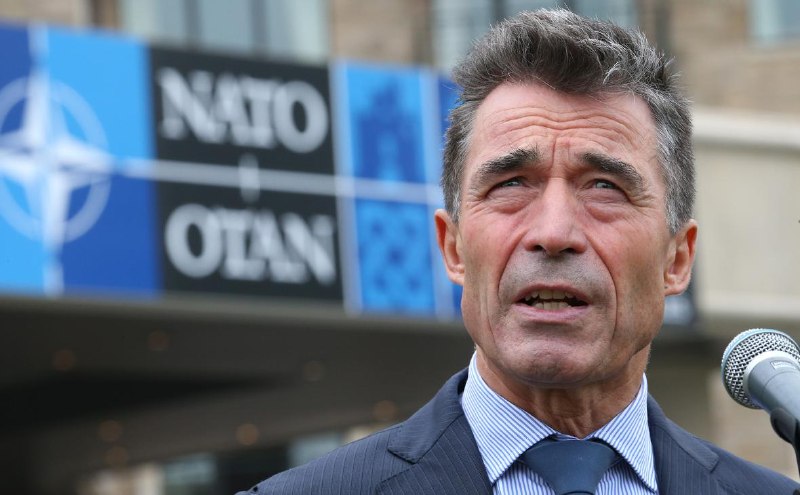
Former NATO Secretary General Anders Fogh Rasmussen has called on Britain and France to deploy military personnel in Ukraine without waiting for the conflict to end. In an interview with The Telegraph, he said Paris and London need to move from months of discussions to a practical deployment of forces.
"For several months, France and Britain have tried to create a 'coalition of the willing,' but now it looks more like a 'coalition of the waiting,'" Rasmussen said. He proposed turning it into a "coalition of the acting" by sending troops to help Ukraine protect critical infrastructure from attacks.
According to his proposal, British and French units should provide protection for Ukrainian populated areas. According to Rasmussen, this would free up additional Ukrainian resources for the front. He also stated that the deployment of foreign forces would comply with international norms provided there is a request from Kyiv.
In addition, the former secretary general proposed including in the "coalition of the willing" only those states that are ready to enter a war with Russia if it attacks Ukraine again after an agreed ceasefire. Rasmussen served as NATO Secretary General in 2009–2014.
His proposal envisages an earlier deployment of forces than the post-ceasefire mission discussed by European countries. According to the Associated Press, Britain and France have organized exercises in Poland to prepare for a possible post-war mission in Ukraine, whose tasks should include assisting in the reconstruction of its armed forces and economy.
🖍 IR-PRESS
edited
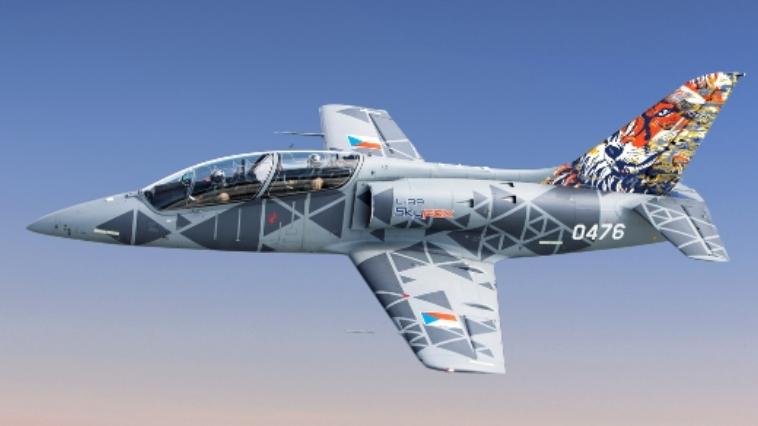
The Czech Republic may transfer a total of 16 L-39 Skyfox trainer/combat aircraft to Ukraine, which are planned to be used for intercepting drones, including jet-powered ones.
This was stated by Czech First Deputy Prime Minister and Minister of Industry and Trade Karel Havlíček after a meeting with Ukrainian Prime Minister Serhiy Koretskyi in Kyiv, according to the Czech publication iDNES.cz. According to Havlíček, the transfer of four aircraft had been confirmed earlier, and on the remaining 12 the sides reached a preliminary agreement. "Four were confirmed earlier, now the discussion concerned another 12, and the preliminary confirmation is that this may succeed," the publication quotes him as saying.
Earlier, the sides discussed transferring L-159 light attack aircraft to Ukraine, but the Czech government coalition rejected this initiative, citing the needs of its own army. Instead, manufacturer Aero Vodochody proposed new L-39 Skyfox aircraft with Williams FJ44 engines and upgraded onboard avionics.
No final decision on the delivery of all 16 aircraft has been announced yet. The timing and financial terms of a possible deal have also not been disclosed; the Czech side only stated that there was preliminary confirmation of the possibility of additional deliveries.
The issue of transferring Czech aviation equipment to Ukraine has been under discussion since the beginning of 2026.
🖍 IR-PRESS
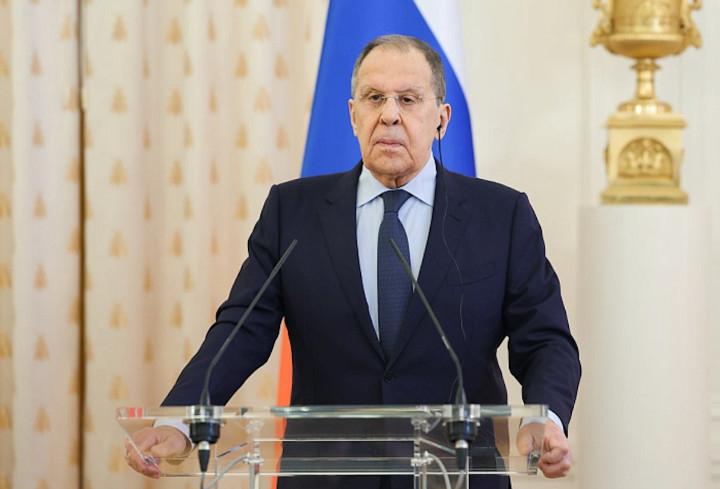
Lavrov: Abu Dhabi talks received positive assessments
"The talks between Russia and Ukraine in Abu Dhabi received generally positive assessments," Russian Foreign Minister Sergey Lavrov said. According to him, all participants in the meeting gave relatively positive comments on its results.
Lavrov noted that the Ukrainian delegation was oriented toward substantive negotiations, while Zelensky "constantly plays his own games."
The talks between Russia, Ukraine and the United States in Abu Dhabi took place on November 10–11. The parties discussed prisoner exchanges, humanitarian measures, security guarantees and a possible post-war security architecture in Europe.
The Russian and Ukrainian negotiators agreed on a new large-scale prisoner exchange. However, no final ceasefire agreement has yet been reached; the main obstacles remain the territorial issue and the order of settlement.
🖍️ IR-PRESS
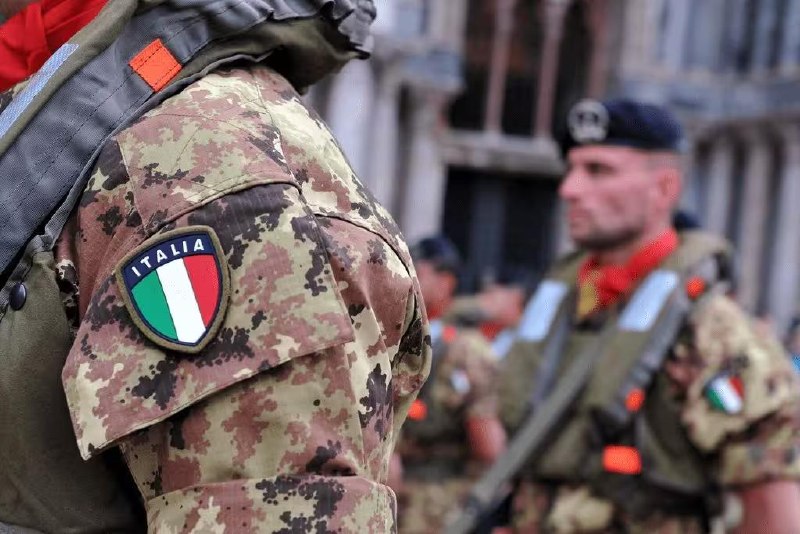
Italy may soon scale back military aid to Ukraine due to air-defense shortage
Italy may soon effectively halt the supply of air-defense missiles to Ukraine because of limited domestic stockpiles, ANSA reports. The issue concerns primarily Aster missiles for the SAMP/T systems previously delivered to Kyiv.
According to the agency, Rome must retain part of its missile stockpile for national security, while Italy’s defense industry cannot replenish arsenals quickly. Defense Minister Guido Crosetto has previously said that Italy cannot meet all of Kyiv’s requests for air-defense systems.
The new 13th aid package, according to ANSA, may include only components to keep the already-delivered SAMP/T systems operational, as well as generators and civilian-purpose materials.
The second factor is political: Matteo Salvini’s League party opposes continued arms deliveries and does not intend to support the relevant decree for 2027. However, Prime Minister Giorgia Meloni and Foreign Minister Antonio Tajani have said that the current package will be signed and that Italy’s commitments to Kyiv remain in place.
🖍️ IR-PRESS