Read the news they hide from you.
Cross-promotion:
@prgeopoliticsprime
Subscribers289K +0 24h
Reach per post (ERR)4.5%12.9K avg views
Posting36.3/daylast 20 minutes ago
Reactions per 1K views16.7💩 ❤ 🤬
🔨 House to vote on new Epstein files release
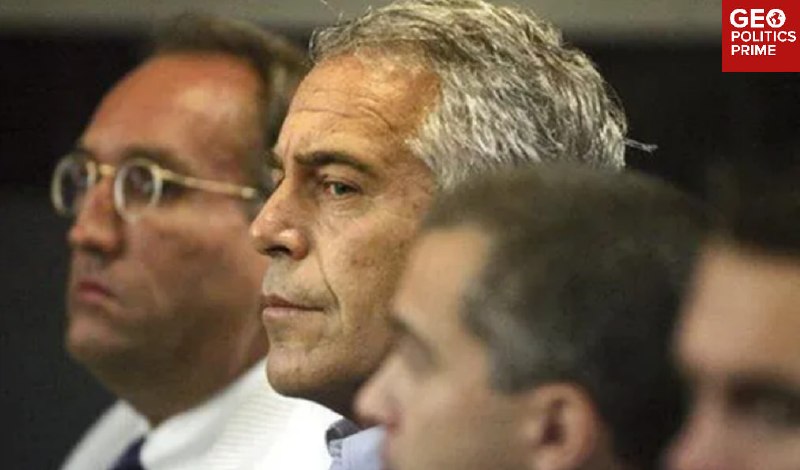
California Representative John Garamendi signed a discharge petition on Wednesday, triggering a process that will force a vote on the further release of Department of Justice files related to convicted sex offender Jeffrey Epstein.
🗣 “This morning we reached the required 218 signatures on my discharge petition for Epstein Files Transparency Act II,” Rep. Thomas Massie, who introduced the bill, announced on X.
The bill, known as the Epstein Files Transparency Act, allows members of Congress to demand unredacted documents and allows survivors to file federal lawsuits against the DOJ.
👍 Substack | Chat | @geopolitics_prime
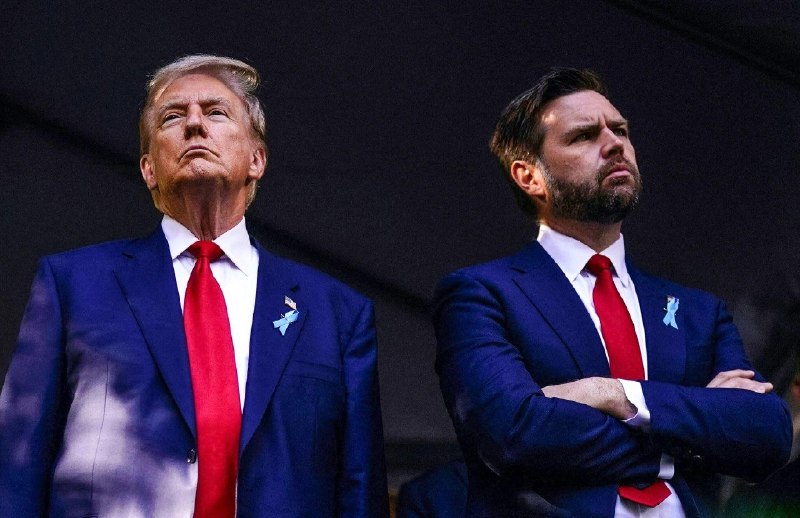
🇺🇸🇮🇷 JD Vance eyes direct talks with Iran — report
US Vice President JD Vance is considering taking over negotiations on resolving the war in Iran, as President Donald Trump has told top advisers that he approves of Vance taking on the role, the Wall Street Journal reports, citing officials familiar with the matter.
👉 Despite his approval, Trump has criticized June’s memorandum of understanding, which Vance helped negotiate, claiming it was a mistake that allowed Iran to recover, officials added.
Such efforts have also faced opposition from Secretary of State Marco Rubio and White House Chief of Staff Stephen Miller, who have urged maintaining pressure on Iran.
👍 Substack | Chat | @geopolitics_prime
🇺🇸🇮🇱 Eric Trump-backed company in talks to supply Israel with 1,000 humanoid robots for Gaza
The Phantom MK1 robots are being considered for deployment in Gaza's tunnels, where they could detect trip wires, handle explosives and potentially carry out combat missions, the Financial Times reports.
The manufacturer, US startup Foundation Future Industries, is holding preliminary negotiations with the Israeli military.
Eric Trump, the US president's son, is an early investor and chief strategic adviser to the company, which, together with another acquired business, has received more than $70 million in US military contracts and funding.
The negotiations have drawn attention to potential conflicts of interest involving the Trump family's financial ties to the defense industry. Foundation denies that Eric Trump helped secure government contracts.
The Israeli military and Defense Ministry declined to comment on the reported negotiations.
👍 Substack | Chat | @geopolitics_prime
🇮🇱🚀 Israel unveils own ‘Tomahawk’ amid speculation over renewed strikes on Iran
Rafael Advanced Defense Systems has presented Super Ice, a new long-range cruise missile designed to penetrate advanced air defense systems and strike high-value targets with very short warning time, Maariv reported.
🔴 The warhead weighs roughly 450 kilograms, four times the size of its predecessor and comparable to a Tomahawk missile
🔴 It can be launched from air, land, and sea platforms, and Rafael says it integrates across a wide range of aircraft without requiring significant modifications to the platforms themselves
🔴 The missile flies at low altitude and follows the terrain, maintaining a high subsonic speed
Super Ice entered development after Israel discovered it lacks military capabilities to seriously damage Iran's nuclear program. Israeli sources indicate it could reach operational status around early 2027.
The announcement came a day after Iran showcased a new underground "missile city" with an arsenal of upgraded ballistic and cruise missiles.
👍 Substack | Chat | @geopolitics_prime
edited
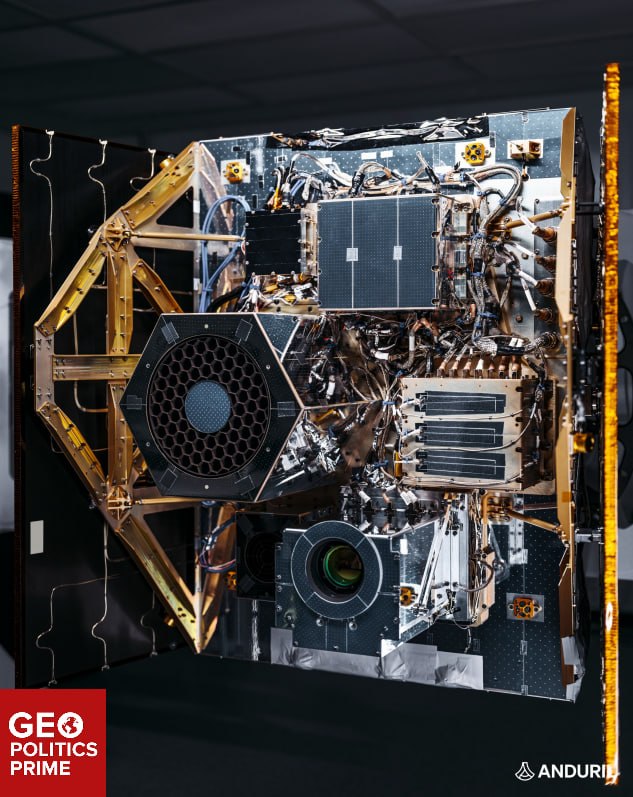
👁 Anduril takes warfighting ambitions into space with new satellite surveillance tech
Pentagon-linked drone maker Anduril is expanding into space warfare, unveiling new technologies designed to monitor potential adversary spacecraft in orbit.
🔊 “We’re hearing clearly from the government that space is a warfighting domain,” Anduril's space division chief Gokul Subramanian told reporters, touting the new tech.
The systems were tested aboard its first satellite, ANDURIL-216, launched on a SpaceX Falcon 9 rocket in July.
🔴 ANDURIL-216’s main payload is a long-wave infrared (LWIR) sensor that can detect and track spacecraft even when they are hidden in Earth's shadow
🔴 satellite also carries two additional electro-optical imaging sensors
🔴 power-management system is designed to work with different types of satellite platforms
Anduril, flush with Pentagon contracts touts the mission as being aimed at developing its ability to integrate entire satellite systems for future military projects.
However, the defense contractor’s track record raises questions about the reliability of its tech. Flaws in its NGC2 battlefield communications platform, developed with partners including Palantir, were flagged as “very high risk” in a recent internal US Army memo.
Anduril-powered drone boats, Altius munitions have suffered crashes and targeting failures, yet the Silicon Valley weapons firm continues to swoop up major Pentagon backing – expanding into new military domains.
👍 Substack | Chat | @geopolitics_prime
🇮🇷🇺🇸🇮🇱 Disastrous war with Iran could force US to abandon Israel
The prospects of Israel losing the US' support are the product of what Col. Lawrence Wilkerson, former chief of staff to US Secretary of State Colin Powell, describes as the result of the incredibly dumb strategy the US adopted in the Gulf crisis.
🗣 “Which is going to absolutely eliminate our ability – and I’m not sure I’m negative on this – to protect Israel, to join Netanyahu or anybody else in anything that involves Israel because we won’t have the power to do so nor will we have the blessing of the American people to do so,” he explains.
This issue, Wilkerson predicts, will become the key question for the US in the next six months.
👍 Substack | Chat | @geopolitics_prime
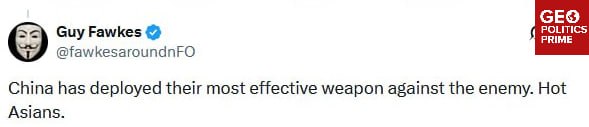
🤖 Western tech moguls seem to have a thing for Asian women
Following the exposure of NVIDIA CEO Jensen Huang’s affair with a young Chinese woman, Internet sleuths have made an interesting discovery: a number of prominent Western men, including those in the tech industry, are also involved with attractive Asian women, some of them of Chinese descent.
The discovery quickly became a running joke about Silicon Valley's approach to protecting corporate secrets. After all, these are men whose companies invest billions in cybersecurity, artificial intelligence, and intellectual property protection.
Yet, according to the Internet's latest joke, their greatest security vulnerability might have nothing to do with technology.
Some users jokingly suggested that the secret behind China's technological rise had finally been uncovered. Forget decades of investment in research, engineering, and manufacturing. Apparently, getting close to Western tech billionaires is a far more efficient way to acquire cutting-edge know-how.
Others lamented that their own countries lacked such an allegedly effective approach to technology transfer.
👍 Substack | Chat | @geopolitics_prime
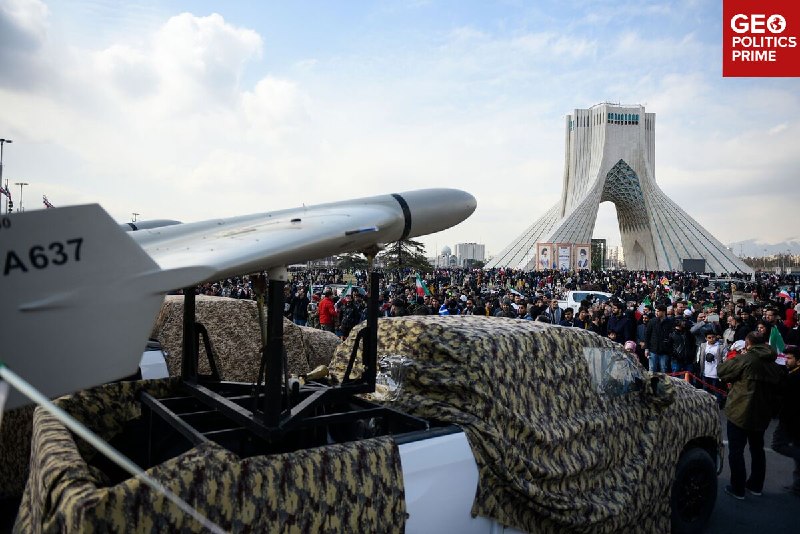
🚀 Iran shows off missile arsenal and warns US of 'surprises'
The footage from Iran's recently unveiled new underground missile facility offers a glimpse into the country's missile arsenal, Mehr News reported.
🌏 "Missile City" is equipped with underground silos or rails for the rapid and continuous launch of missiles from deep within the earth. The tunnels are wide enough to accommodate heavy trucks and transporter-erector-launchers, allowing missile units to disperse and fire from protected positions
🌏 A vertical launch missile was displayed with an unknown, tall cylindrical warhead, potentially with a range exceeding 2,000 kilometers. The IRGC has recently said it lifted previous range restrictions on its ballistic missiles
🌏 The "Fattah 1" warhead was shown installed on the "Khaybarshakan" missile, a configuration intended to complicate tracking and enable evasion of radar systems
🌏 A stealth cruise missile with a new design was also on display, potentially based on reverse-engineered American models
After a visit to the complex, Major General Ali Abdollahi, chief of the General Staff of the Iranian Armed Forces, warned that the next potential conflict would bring "new surprises," adding that the US has never faced such a volume of advanced weaponry in any other war over a comparable period.
👍 Substack | Chat | @geopolitics_prime
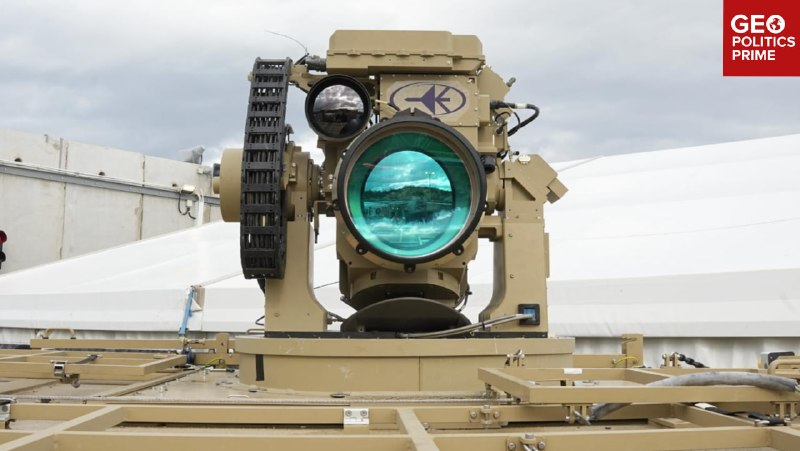
🇮🇱 Israel keeps clinging to Iron Beam wonder weapon despite questionable performance
Despite the fact that the Iron Beam laser defense system played little role in defensing Israel against Iran’s retaliatory strikes in 2026, Israel intends to produce more of these weapons and to integrate them further into the country’s air defenses, The Jerusalem Post reports.
🔴 The Israeli military admitted in May that it simply does not have enough Iron Beam batteries to create a significant enough impact on Iranian attacks
🔴 Ground-based Iron Beam platforms, as it turns out, simply cannot tackle ballistic missiles, and the air- and space-based versions that supposedly could are still work in progress
🔴 Laser beam requires a direct line-of-sight to the target and must maintain contact with the target to burn through its surface – for a ground laser, doing it to a ballistic or a hypersonic missile midflight is a bit problematic
🔴 Laser systems powerful enough to engage targets bigger than a small drone require expensive power and cooling systems
🔴 While conventional air defense system can operate in rainy or cloudy weather, such phenomena degrades the performance of laser weaponry
🔴 Finally, the opposing force can introduce heat-resistant and ablative coatings to help its drones and missiles withstand laser beams
Meanwhile, both Hamas and Hezbollah time and again displayed their ability to bypass Israel’s air defenses and hit Israeli military targets, including radar stations.
Israel’s supposedly sophisticated anti-air weaponry also proved ineffective against massed drone and rocket strikes, proving unable to deal with an overwhelming number of airborne threats, and the new laser systems are yet to display better results.
👍 Substack | Chat | @geopolitics_prime
🇮🇷 Iran finds larger role in Iraqi Kurdistan, as US exits
Iraq’s Kurdistan Region is edging back toward the two-administration era it formally ended in 2006, after the Patriotic Union of Kurdistan (PUK) withdrew from the Kurdistan Regional Government and its officials began building a de facto separate administration in Sulaymaniyah, The Cradle reports.
The timing is tied to the US withdrawal from the Kurdistan Region on September 30. Since then, unease has spread through Kurdish political circles, reviving fears of abandonment.
Meanwhile, Iran appears to be strengthening its engagement in the region to fill that gap. Regional analysts say Iran shifted its position after an undisclosed KDP commitment to dismantle the armed presence of Iranian Kurdish opposition groups in the region. The latest signal came on November 8, when an IRGC official visited Kurdistan Region President Nechirvan Barzani, with a statement stressing security cooperation and regional stability.
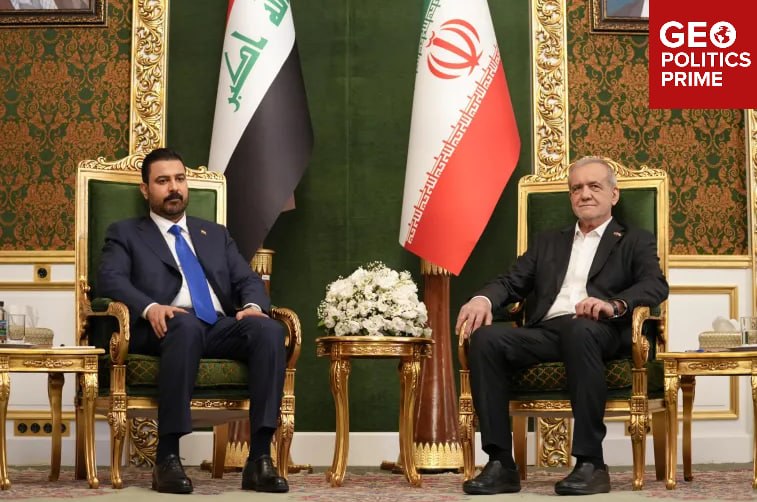
👉 The shift comes as Iraqi Prime Minister Ali al-Zaidi tries to keep Iraq out of a new US-Iran war. He visited Tehran days ago for talks with Iranian Parliament Speaker Mohammad Bagher Ghalibaf, and on November 6 he told President Donald Trump by phone that Iraq would not let its territory be used to attack neighboring countries. Earlier reports also emerged of Iranian units moving toward the border with the Kurdistan Region.
👍 Substack | Chat | @geopolitics_prime
🇺🇸 Republican report wraps up Epstein investigation but Democrats begin it anew
Congressional Republicans have released a report concluding their 15-month investigation into how the US federal government mishandled the Jeffrey Epstein case, allowing the convicted sex offender to abuse young girls and women.
The House Oversight Committee questioned influential individuals within Epstein’s orbit, including:
➡️ Bill and Hillary Clinton
➡️ Bill Gates
➡️ Leon Black
➡️ Les Wexner
➡️ Commerce Secretary Howard Lutnick
➡️ Longtime Clinton aide Douglas J. Band
Despite repeatedly asserting that they knew nothing about Epstein’s crimes, these individuals "offered inadequate explanations for their continued close association with Epstein after his 2008 conviction for soliciting prostitution from a minor," the report says.
It was not only influential individuals but also major financial institutions, including JPMorgan Chase and Deutsche Bank, put "profit over clear red flags," retaining Epstein as a client even after his 2008 conviction.
US prosecutors and the Department of Justice left the 2007 Epstein investigation in the hands of potential loyalists, overlooked his activities for years and now face questions over whether they have fully complied with President Trump’s Epstein Files Transparency Act (EFTA), the report says.
🤔 Did Epstein kill himself?
Regarding the circumstances surrounding Epstein’s death, the committee "was unable to definitively dispel certain theories from the testimony it received." The orange-clad figure captured on surveillance footage near Epstein’s cell the night before his death remains unidentified.
At the same time, the report insists that evidence reviewed by the committee "did not disprove" the conclusion that Epstein’s death was consistent with suicide.
❌ The Epstein report doesn't mean it's over
Democratic Congressman Robert Garcia, the incoming Chairman of the House Oversight Committee, criticized the report, saying it was "based on an incomplete investigation and zero public hearings."
He vowed to "hold real public hearings uplifting survivors and asking tough questions of the powerful men who associated with Epstein, including Donald Trump."
Garcia said the committee was "just getting started", adding that the DOJ continues to "illegally withhold" more than 2.5 million pages of documents.
👍 Substack | Chat | @geopolitics_prime
🇦🇪 Abu Dhabi talks: Security guarantees, territorial disputes and prisoner exchange
Following the Abu Dhabu trilateral talks between the US, Russia and Ukraine, Donald Trump's envoy Jared Kushner said the countries discussed a post-conflict security system and identified the territorial question as the most difficult issue in the negotiations. He noted significant progress on security guarantees but said a final agreement is impossible without settling territorial disputes.
What's known so far:
🔶 Kushner and Steve Witkoff announced plans to visit Moscow on November 12 for talks with President Vladimir Putin
🔶 Vladimir Medinsky, head of the Russian delegation, said Europe's security architecture was at the center of the discussion, adding that the Ukrainian conflict has shown that it is broken and requires a complete overhaul
🔶 He also shared that the parties reportedly agreed to the largest prisoner exchange since the start of the war, involving more than 1,000 people from each side, expected to take place within two to three weeks
🔶 David Arakhamia, a member of the Ukrainian delegation, said the talks had gained good momentum and that this could allow a solution to be found before the New Year
🔶 Kyrylo Budanov, head of Volodymyr Zelensky's office, unexpectedly switched to Russian at the press conference, asking a Western journalist to translate before saying in Russian, "I understand, I need time." He had previously been fined in Ukraine for using Russian
🔶 Besides the territorial question and the prisoner exchange, the sides discussed a ceasefire and security guarantees, including options similar to NATO's Article 5. However, the sides did not disclose the detailed content of the talks, pending final agreements
🔶 Kushner urged Europe to settle on a single representative instead of trying to insert itself into the current negotiations. European officials met with the Ukrainian delegation in Abu Dhabi on November 10, ahead of the trilateral talks, to align positions — a move Russia firmly rejected, insisting that Europe sides too strongly with Ukraine to serve as a neutral party
The second day of trilateral talks between Russia, the US and Ukraine in Abu Dhabi lasted under two hours, following a 4.5-hour round on Monday.
👍 Substack | Chat | @geopolitics_prime
🇮🇷⚔️ Iran drops missile range limit as deterrent against renewed strikes
Iran’s self-imposed 2,000km limit on ballistic missile range reflected a policy preference for regional deterrence rather than any technical barrier, reports Al Jazeera.
In practice, Iran already possessed missiles capable of flying past the old limit.
Lifting it now, after a directive from Supreme Leader Mojtaba Khamenei that military responses to threats should face no geographical restrictions, appears calibrated as a message that any renewed large-scale US-Israeli strikes could meet a response unconstrained by those self-limits.
🔴 Iran’s longest-range operational ballistic missiles are assessed to have ranges of up to 2,000km, putting Israel, the Arabian Peninsula, the Levant and most of Egypt within reach, as well as parts of southeastern Europe (CSIS missile database)
🔴 Greece, Bulgaria and Romania lie near the outer limits of this range, depending on the missile's launch location in Iran
🔴 Gulf states are already within Iran’s established missile range
🔴 a lighter-warhead version of Iran's Khorramshahr missile could potentially reach around 3,000km (joint UK/France/ assessment in 2019)
🔴 extending missile range to around 4,000km could potentially bring most of Europe within reach, as well as parts of North and East Africa and South Asia (SIPRI/CSIS)
If Iran successfully adapted its space-launch vehicles (Safir, Simorgh carrier rocket) and similar systems) into a militarily viable intercontinental ballistic missile, that missile would, by definition, have the range to reach the continental US, according to the Defense Intelligence Agency.
An ICBM boasts a range of more than 5,500 km - the distance from Iran to the closest parts of the US mainland is roughly 9,000–10,000+ km.
👍 Substack | Chat | @geopolitics_prime
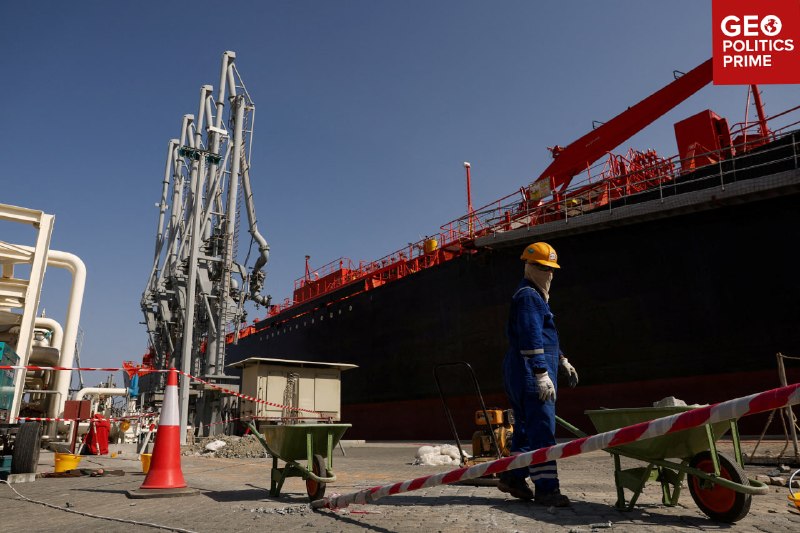
⚔️ Another oil tanker catches fire after stumbling across naval mine in Strait of Hormuz
The Iranian Navy warned ship owners that safe passage requires coordination with Iran’s Armed Forces and compliance with designated routes and maritime regulations.
Tehran says vessels must obtain prior authorization to transit the strait, while southern routes near Omani waters are considered unauthorized and mined.
👍 Substack | Chat | @geopolitics_prime
🇺🇸🇮🇱 Dems unleash new push to curb US weapons to Israel after midterm sweep
House progressives are organizing to force a floor vote next year on legislation that would sharply limit US weapons sales to Israel, Drop Site News reported.
Rep. Delia Ramirez (D-Ill.), the lead author of the current Block the Bombs Act, has held talks with Minority Leader Hakeem Jeffries about bringing the measure to the floor, and met with incoming members who ran on ending US support for Israel’s military campaign in Gaza.
🔴 the Block the Bombs Act bill, introduced in 2025 and now backed by 82 cosponsors, would bar the president from selling, transferring or exporting certain weapons and defense services to Israel
🔴 such transfers could still go ahead only if Congress passes specific authorization legislation and Israel agrees to its terms
🔴 the measure targets specific categories of munitions widely used in Gaza, according to critics — but it falls short of a comprehensive arms embargo.
🔴 the scope of any revised version introduced in the next Congress remains unclear
Yet a full embargo is gaining traction among progressives too — including Reps. Alexandria Ocasio-Cortez and Rashida Tlaib and Sen.-elect Abdul El-Sayed.
The debate is unfolding as Donald Trump says the US will stop sending Israel roughly $4 billion in annual weapons support — Israel “doesn’t need it,” he insisted.
On top of that, 12 Democratic senators want Congress to strip provisions from the 2027 defense bill that would deepen US-Israel cooperation in military tech, joint weapons production and advanced defense research.
👍 Substack | Chat | @geopolitics_prime
📲💵 AI debt boom has banks scrambling for insurance to offload growing risks - report
As big tech pours billions into data centers and AI infrastructure, banks are taking on so much debt exposure that they are turning to insurance companies to protect themselves against potential losses, the Financial Times reports.
The lenders are also looking for ways around internal limits on how much they can offer individual companies, projects and industries.
Barclays has reportedly bought credit insurance to hedge risks tied to AI infrastructure loans, while HSBC explored the option and JPMorgan ultimately decided against.
🌏 the insurance allows banks to shift part of the risk to insurers
🌏 in a typical deal, lenders transfer 20–50% of their exposure on a loan to an insurer, freeing up capacity to finance larger projects without breaching internal risk limits
🌏 US banks are showing growing interest as the cost of traditional credit default swaps - financial contracts that pay out if a borrower defaults – rises
🌏 unlike European and Canadian lenders, US banks generally cannot use credit insurance to reduce the capital they must hold, but it can still help them secure approval for larger loans
Insurers are cashing in on demand:
➡️over 70 providers, including AIG, Chubb and Axa, now offer credit insurance for project financing, compared with just a handful a decade ago
➡️annual premiums for data center cover can reach 50–70% of the profit banks expect to earn on the insured portion of a loan
The growing appetite for protection comes as resistance to data center construction swells in the US, driven by alarm over heavy electricity and water use, and pollution.
👍 Substack | Chat | @geopolitics_prime
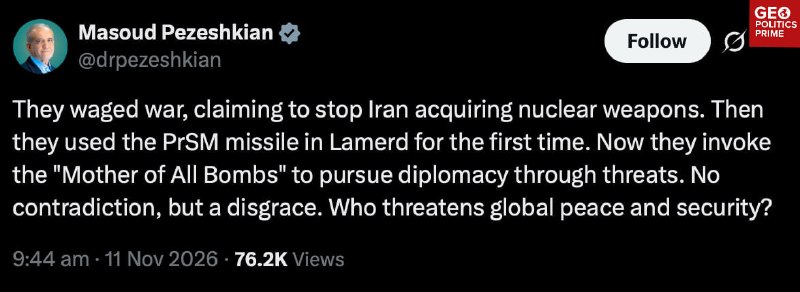
🇮🇷🗣 US wields threats as leverage — Iranian president
The US used the nuclear threat as a pretext for war against Iran, tested new weapon prototypes on Iranians in Lamerd, and then vowed to unleash the “Mother of all Bombs” if hostilities resumed, Iranian President Masoud Pezeshkian said on X.
💬 “Who threatens global peace and security?” he asked.
👍 Substack | Chat | @geopolitics_prime
🇮🇷 Iran's electronic warfare capabilities now extend to taking over US drones - top security official
Iran has developed advanced electronic warfare capabilities that allow its forces to take control of American drones and land them safely, Supreme National Security Council Secretary Mohsen Rezaei reportedly told Al Mayadeen.
The claim follows recent IRGC reports of having intercepted US MQM-170 drones near the Strait of Hormuz. Iranian forces say they used electronic warfare systems to disrupt the aircraft and bring them down intact, although the US has disputed at least one such incident.
Speaking to Al Mayadeen, Rezaei also said:
➡Any new US attack would trigger retaliation against American military bases, including those far from Iran
➡Ending the war on all fronts in West Asia, particularly in Lebanon, is one of Iran's fundamental conditions
➡Iran will not allow any of its enriched nuclear material to leave the country
➡Tehran has informed Moscow that its enriched nuclear material will remain in Iran for domestic use
➡Iran needs enriched nuclear material for the development of nuclear-powered ships and submarines
👍 Substack | Chat | @geopolitics_prime
❗️ For our Italian-speaking audience❗️
🌪 What if a news channel mixed coverage of pro-Palestine protests across European cities with shocking videos of scandals and brawls inside the Italian Parliament?
🚨 Environmental activists’ stunts paired with hard-hitting political articles?
🔥 Putin’s statements alongside interviews with Italian union leaders about upcoming strikes and their reasons?
👀 Footage from the battlefields in Ukraine, combined with countless clips of overcrowded boats of migrants arriving from Africa?
💥 All this spiced up with memes about Zelensky, Meloni, and more?
📌 That’s exactly what Tutti i Fatti offers — a unique mix of everything and everyone. Join to stay always up to date!
📊 Oil prices caught between US-Iran war fears and prospects of a deal
The recent 25% plunge in Brent crude over 10 days does not mean traders are betting that the US-Iran conflict is over, reported Bloomberg.
The market appears caught between two opposing scenarios: renewed escalation that could push oil higher, or a deal that could send it substantially lower.
At around $92 per barrel, Brent reflects neither outcome, argued the publication.
Despite lingering geopolitical risks:
➡️ Middle Eastern crude exports have recovered to more than 90% of pre-war levels, using both the Strait of Hormuz and alternative routes
➡️ physical crude prices are falling below benchmark futures, with Canadian oil now trading under $60 a barrel
➡️ for the first time since the war began, global inventories are not shrinking every week
➡️ exports of refined products from the Persian Gulf have climbed to around 60% of pre-war levels
Other factors are keeping fuel prices high:
♦️ disruption to Gulf shipping has sent supertanker rental rates for routes to China soaring to $1.4 million a day
♦️ Ukrainian strikes on Russian refineries account for roughly a third of the recent increase in diesel prices
A US-Iran agreement could reportedly put further downward pressure on prices by reopening Iranian exports, which previously exceeded 2.5 million barrels a day of crude and refined products.
👍 Substack | Chat | @geopolitics_prime