
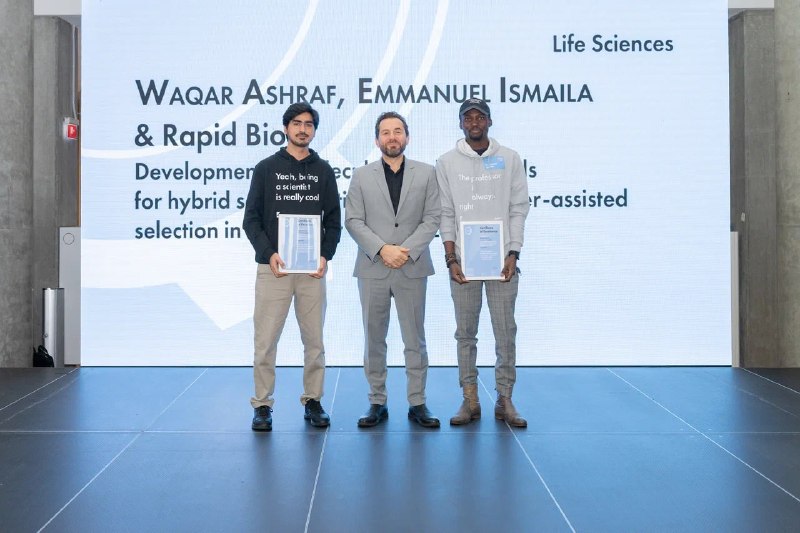
🧬🌾 How a Skoltech student optimized DNA testing for crop seeds Here is the story of Waqar Ashraf, a Master's student in the Life Sciences program who won best project in #IndustrialImmersion following his internship at RapidBio in the NGS Division.. Waqar worked on a project for a commercial seed producer dealing with hybrid sunflower and maize. Before each growing season, every seed lot must be checked to ensure genetic purity, which involves testing 352 seeds from each of approximately 85 lots—adding up to nearly 30,000 seeds. Traditional methods have clear drawbacks: grow-out tests take a long time, while low-density marker assays can be expensive at such a large scale and lack validation for the client's specific breeding lines. The main goal was to develop a fast, reliable DNA-based testing pipeline capable of distinguishing genuine F1 hybrid seeds from self-pollinated seeds, cross-pollinated seeds, and other off-types. The core idea was to create a genetic fingerprint for each seed by analyzing around 150–300 SNP markers distributed across the genome using next-generation sequencing (NGS). While maize had an existing public marker panel that needed testing on the client's material, sunflower lacked a validated panel, requiring markers to be identified using the client's parental lines. Waqar's primary contribution was the foundational research driving the project: • Investigating Russian and international seed purity regulations. • Analyzing the genomes of sunflower and maize. • Reviewing marker panels used by breeders and gene banks. • Comparing genotyping technologies to identify the most cost-effective and rapid solution for thousands of seeds. "The most challenging part was bringing together information from different areas, including seed certification regulations, genomics and laboratory technologies, and understanding how they all fit into one practical solution", — notes Waqar. He found it fascinating to see how a small number of DNA differences can verify the purity of thousands of seeds and protect an entire harvest, especially given upcoming Russian requirements for genetic documentation in the seed industry. "Start by understanding the actual problem the company is trying to solve, rather than focusing only on the scientific topic. Discuss expectations and set clear goals with your supervisors during the first week. Don't hesitate to ask questions, and keep brief notes of what you do and learn each week. These notes will make writing your final report and preparing for the defense much easier". Waqar expresses sincere gratitude to his company supervisor Yawar Habib, his Skoltech supervisor Elena Martynova, and the entire RapidBio team for their guidance and support.