
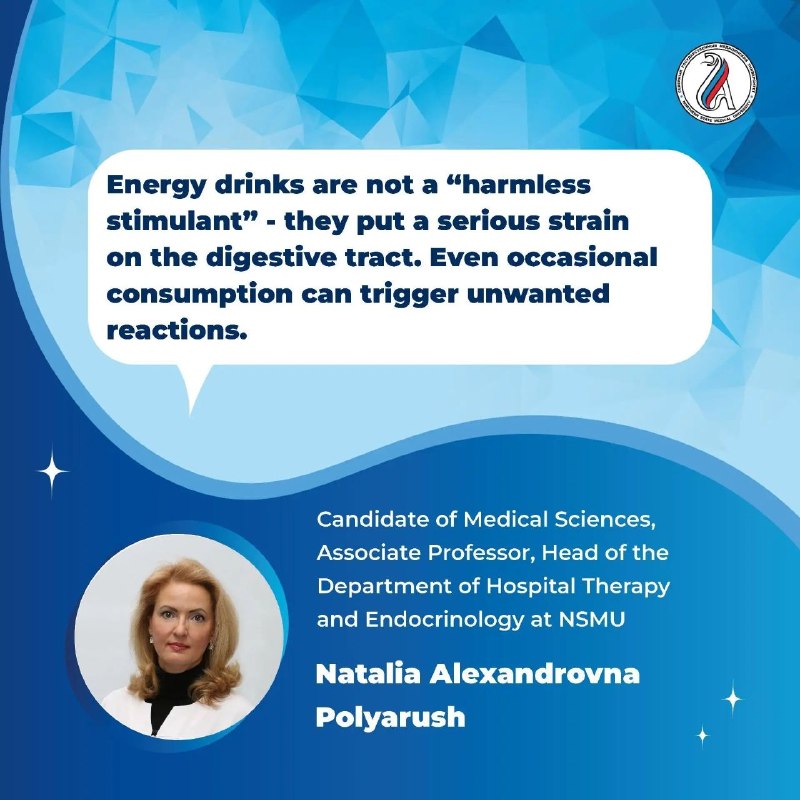
⚡️ Energy drinks: what happens to the stomach and intestines? Energy drinks have become a firm fixture in students' daily routine: during exam weeks, late-night cram sessions, or after exhausting shifts at part-time jobs, grabbing a can has come to feel almost routine. The main appeal lies in their promise of an instant boost and the ability to stay productive for hours on end. It's easy, then, to overlook the fact that this "charge" comes at a real cost to the body — and that the strain it puts on it is far from negligible. ❗We continue our series of publications reminding readers of the harm these beverages can cause to your health. Today, we share the opinion of a gastroenterologist. Why regular consumption of energy drinks negatively affects the digestive system will be explained by Natalia A. Polyarush, Candidate of Medical Sciences, Associate Professor, Head of the Department of Hospital Therapy and Endocrinology at NSMU (Northern State Medical University). 🔹 A high dose of caffeine. A single can often contains more caffeine than several cups of coffee. Caffeine stimulates the production of hydrochloric acid and relaxes the lower esophageal sphincter, which promotes damage to the gastric mucosa and the development of gastroesophageal reflux. The result is heartburn, belching, and stomach pain. In addition, high doses of caffeine speed up intestinal peristalsis, which can cause cramping abdominal pain, nausea, vomiting, and diarrhea. 🔹 An irritating "cocktail." Caffeine, taurine, carbon dioxide, and preservatives act aggressively on the mucosa, causing inflammation of the gastric lining with regular consumption. 🔹 Hidden sugar. One can contains 25–35 g of sugar. Large amounts of sugar or its substitutes in energy drinks create a favorable environment for pathogenic and opportunistic bacteria in the gut, causing bloating and disrupting the balance of the gut microbiota. 🔹 A burden on the pancreas and liver. Preservatives, colorings, and high doses of taurine and glucose place a toxic and metabolic burden not only on the gastrointestinal tract but also on other digestive organs. The liver and pancreas are especially vulnerable. Cases of acute toxic hepatitis and pancreatitis associated with energy drink abuse have been reported. ❗It's best to give up energy drinks entirely. They are not a "harmless stimulant" but a serious strain on the digestive tract. Even occasional consumption can trigger unwanted reactions, and for those with existing GI problems, energy drinks can significantly worsen one's condition. ✅ If you feel drained, look for gentler ways to recharge: adequate sleep, a balanced diet, moderate physical activity, spending time with people you enjoy, and hobbies. And if heartburn, pain, or a heavy feeling in the upper abdomen, or bowel problems become a regular occurrence, be sure to see a doctor.