
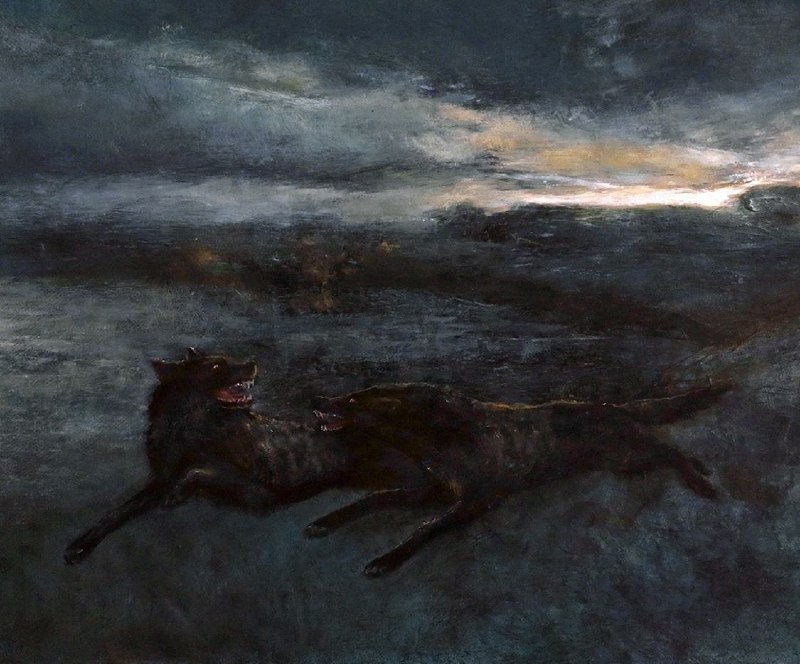
“Animal furor occurred most often in the evening. Egils Saga, for example, describes the life of a ‘retired’ berserkr, Úlfr: after many glorious campaigns he married, kept himself busy with his fields, his animals, his workshops, and won wide esteem for the good counsel that he distributed so liberally. But sometimes when evening fell, he became umbrageous [styggr] and few men could converse with him then; the rumour spread that he was hamrammr (that is, that he was metamorphosed); he received the name Kveldúlfr, Wolf of the Evening.” — Georges Dumézil, The Destiny of the Warrior